Benaki Phytopathological Institute, Department of Entomology and Agricultural Zoology, Kifissia, Greece.
Cary Institute of Ecosystem Studies, Millbrook, New York, United States of America.
PLoS One. 2018 Nov 8;13(11):e0202451. doi: 10.1371/journal.pone.0202451. eCollection 2018.
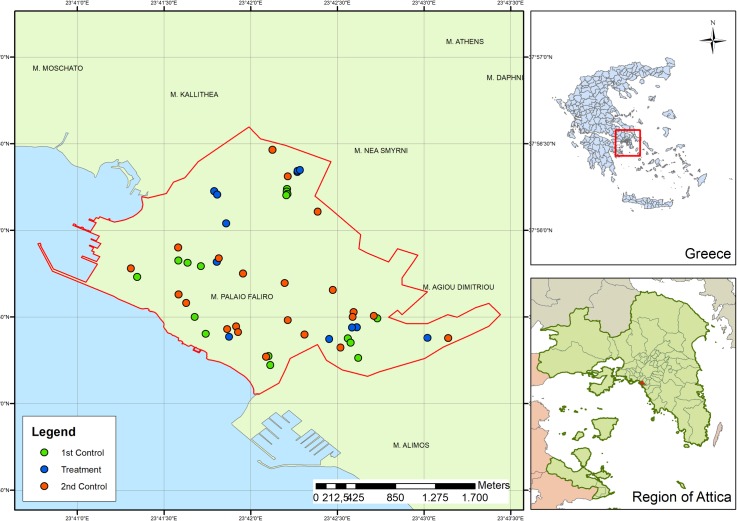
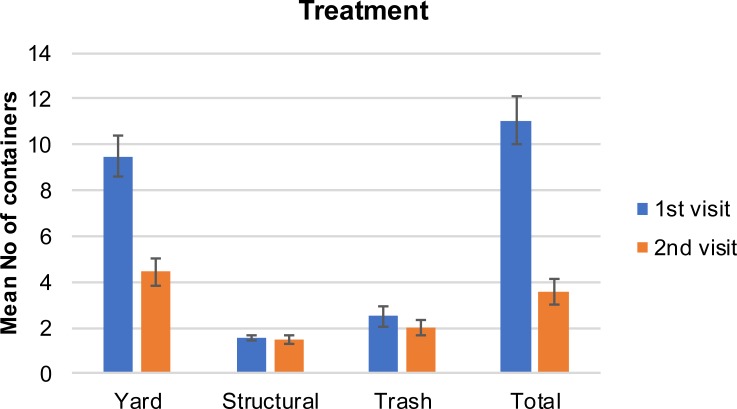
Aedes albopictus tends to proliferate in small, often man-made bodies of water, largely present in urban private areas. For this reason, education and community participation are considered crucial for source reduction and mosquito control. In the current study, we identify mosquito breeding habitat and evaluate the effectiveness of resident education. Since 2010 several outbreaks of West Nile virus infection occurred in Greece however urban population has no previous experience with mosquito-borne disease related to Aedes species, such as Dengue, Zika and Chikungunya. After the introduction of Ae. albopictus in Greece, urban areas have been considered to be at risk of epidemic arboviral outbreaks and identifying effective control strategies is imperative. Our study examines the relationship between mosquito breeding sources and socioeconomic or demographic characteristics of different households in a Greek municipality and evaluates efficacy of resident education. The results revealed that only a minority of residents knew where mosquitoes breed (18.6%) and only 46% felt that residents had any responsibility for managing breeding habitat. Our findings strongly suggest that only the presence of scientific staff inspecting possible habitats in their properties, could be enough to stimulate practices towards source reduction. However, educational interventions alone with printed education material cannot enhance significant community participation and source reduction.
白纹伊蚊倾向于在小型、通常是人为的水体中繁殖,主要存在于城市的私人区域。出于这个原因,教育和社区参与被认为是减少源头和控制蚊子的关键。在本研究中,我们确定了蚊子的繁殖栖息地,并评估了居民教育的效果。自 2010 年以来,希腊发生了几起西尼罗河病毒感染的爆发,但城市人口以前没有经历过与埃及伊蚊等蚊子传播的疾病有关的疾病,如登革热、寨卡和基孔肯雅热。埃及伊蚊在希腊出现后,城市地区被认为有爆发流行虫媒病毒的风险,因此必须确定有效的控制策略。我们的研究调查了希腊一个市的蚊子繁殖源与不同家庭的社会经济或人口特征之间的关系,并评估了居民教育的效果。结果表明,只有少数居民知道蚊子在哪里繁殖(18.6%),只有 46%的居民认为居民有责任管理繁殖栖息地。我们的研究结果强烈表明,只有科学工作人员在其物业中检查可能的栖息地的存在,才能激发减少源头的实践。然而,仅通过印刷教育材料进行教育干预并不能增强社区的显著参与和源头减少。