Ukleja-Sokołowska Natalia, Gawrońska-Ukleja Ewa, Lis Kinga, Żbikowska-Gotz Magdalena, Sokołowski Łukasz, Bartuzi Zbigniew
1Department and Clinic of Allergology, Clinical Immunology and Internal Diseases, Ludwik Rydygier Collegium Medicum in Bydgoszcz, NCU, Bydgoszcz, Poland.
2Division of Ergonomics and Exercise Physiology, Department of Hygiene, Epidemiology and Ergonomics, Ludwik Rydygier Collegium Medicum in Bydgoszcz, NCU, Bydgoszcz, Poland.
Allergy Asthma Clin Immunol. 2018 Oct 31;14:78. doi: 10.1186/s13223-018-0294-1. eCollection 2018.
An allergy to mango is extremely rare. The antigenic composition of the fruit is not fully known. Profilin from mango has a structure similar to birch tree profiling: it is responsible for cross-reactions between mango and pear, apple, and peach. A panallergen with a structure similar to mugwort defensin (Art v 1) which cross-reacts with celery, carrot, peanuts, pepper, aniseed, and caraway has been previously described.
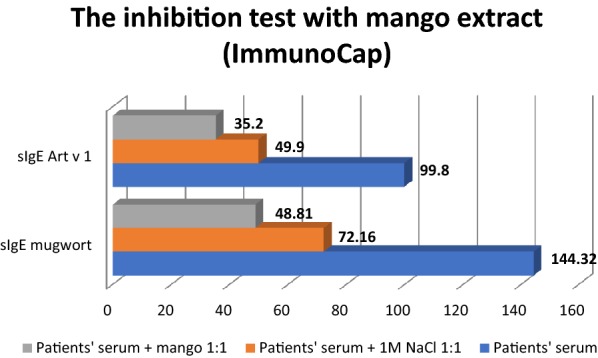
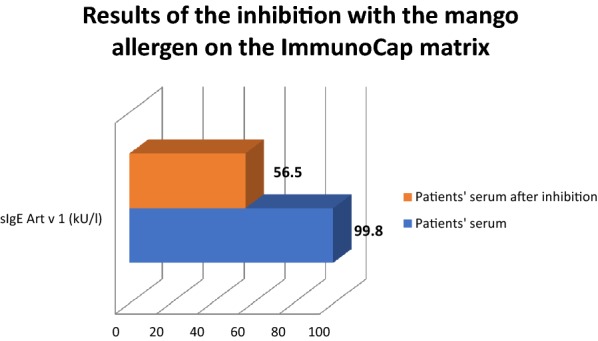
A female patient, 30 years old, was admitted in February 2017 because of recurrent allergic reactions following consumption of various foods. The most severe allergic reaction in the patient's life occurred after eating a mango fruit. Within several minutes the patient developed a generalised urticaria, followed by facial oedema, strong stomach pain and watery diarrhoea. The diagnostics involved skin tests with a set of inhalatory and food allergens, including native skin tests. The patient also experienced symptoms of recurrent, generalized urticaria in connection with consumption of various types of food, especially complex dishes containing many different ingredients. Additionally, an interview revealed that the patient was experiencing symptoms of the oral allergy syndrome after ingesting various fruit and vegetables, especially during late summer and fall. Diagnostics was extended by determining the levels of IgE specific for allergen components, using the ImmunoCap ISAC method. In order to confirm the occurence of a cross-reaction between mugwort and mango allergens, we performed the inhibition test of IgE specific for mugwort using a mango allergen extract and ImmunoCap matrix.
Skin prick tests (SPT) were positive for allergens of grass 7 mm; weeds 8 mm; cat's fur 5 mm; mugwort 6 mm. SPT were also positive for mango. The level of specific IgE was increased for allergens of mugwort, grass, celery, pepper, carrot, mango, banana, peach, and apple. The ImmunoCap ISAC test demonstrated a high level of specific IgE rPhl p 1 (timothy grass) and Art v 1 (mugwort). We also performed the IgE inhibition test using both mango extract and ImmunoCap matrix and confirmed a cross-reaction with Art v 1 in the pathogenesis of symptoms observed in the patient.
An anaphylactic reaction to consumed mango, resulting from cross-allergy with mugwort Art v 1 was diagnosed in the patient. Acute urticarial in this case is a manifestation of IgE-mediated food allergy. During in vitro diagnostic procedures we found an elevated concentration of IgE specific to several food allergens (including celery, peppers, carrot, banana, peach, apple, shrimp). The elimination diet removing allergens the patient was allergic to was recommended. Considering the anaphylactic reaction the patient was instructed to carry a rescue set composed of an adrenaline autosyringe, steroids, and antihistamines.
对芒果过敏极为罕见。该水果的抗原成分尚不完全清楚。芒果中的肌动蛋白与桦树肌动蛋白结构相似:它是芒果与梨、苹果和桃子之间交叉反应的原因。此前已描述过一种与艾蒿防御素(Art v 1)结构相似的泛过敏原,它与芹菜、胡萝卜、花生、胡椒、茴芹和葛缕子会发生交叉反应。
一名30岁女性患者于2017年2月因食用各种食物后反复出现过敏反应入院。患者一生中最严重的过敏反应发生在食用芒果后。几分钟内,患者出现全身性荨麻疹,随后出现面部水肿、剧烈胃痛和水样腹泻。诊断包括用一组吸入性和食物过敏原进行皮肤试验,包括天然皮肤试验。患者在食用各种类型的食物,尤其是含有许多不同成分的复杂菜肴时,也会出现反复全身性荨麻疹的症状。此外,通过访谈发现,患者在摄入各种水果和蔬菜后,尤其是在夏末和秋季,会出现口腔过敏综合征的症状。通过使用ImmunoCap ISAC方法测定过敏原成分特异性IgE水平,扩展了诊断。为了证实艾蒿和芒果过敏原之间交叉反应的发生,我们使用芒果过敏原提取物和ImmunoCap基质对艾蒿特异性IgE进行了抑制试验。
皮肤点刺试验(SPT)对草类过敏原呈阳性反应(7毫米);对杂草呈阳性反应(8毫米);对猫毛呈阳性反应(5毫米);对艾蒿呈阳性反应(6毫米)。SPT对芒果也呈阳性反应。艾蒿、草类、芹菜、胡椒、胡萝卜、芒果、香蕉、桃子和苹果的过敏原特异性IgE水平升高。ImmunoCap ISAC试验显示特异性IgE rPhl p 1(梯牧草)和Art v 1(艾蒿)水平较高。我们还使用芒果提取物和ImmunoCap基质进行了IgE抑制试验,并证实了在患者观察到的症状发病机制中与Art v 1存在交叉反应。
诊断该患者对食用芒果发生过敏反应,是由与艾蒿Art v 1交叉过敏所致。该病例中的急性荨麻疹是IgE介导的食物过敏的一种表现。在体外诊断过程中,我们发现几种食物过敏原(包括芹菜、胡椒、胡萝卜、香蕉、桃子、苹果、虾)特异性IgE浓度升高。建议采用排除饮食法去除患者过敏的过敏原。考虑到过敏反应,指示患者携带由肾上腺素自动注射器、类固醇和抗组胺药组成的急救用品。