IREC, Catalonia Institute for Energy Research, Department of Advanced Materials for Energy, Jardins de les Dones de Negre 1, Planta 2, Sant Adrià del Besós, 08930, Barcelona, Spain.
Universidad Nacional de Colombia, Departamento de Física, Ciudad Universitaria, Bogotá, 111321, Colombia.
Nat Commun. 2018 Nov 12;9(1):4759. doi: 10.1038/s41467-018-07208-8.
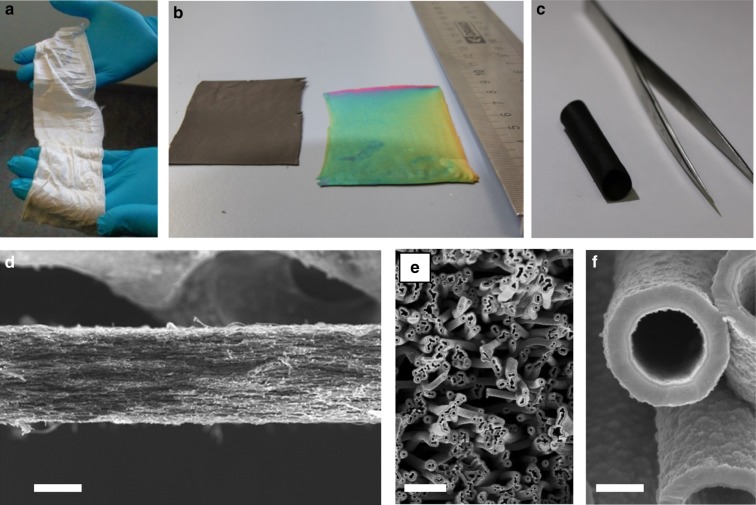
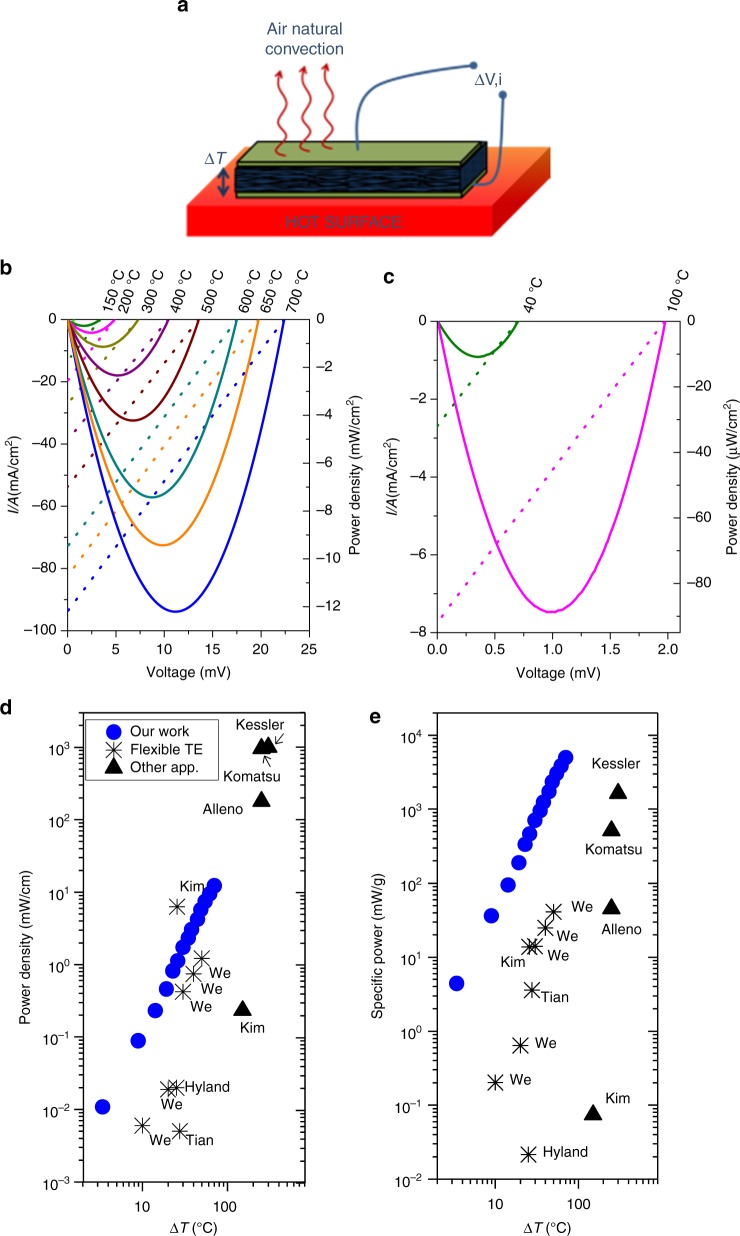
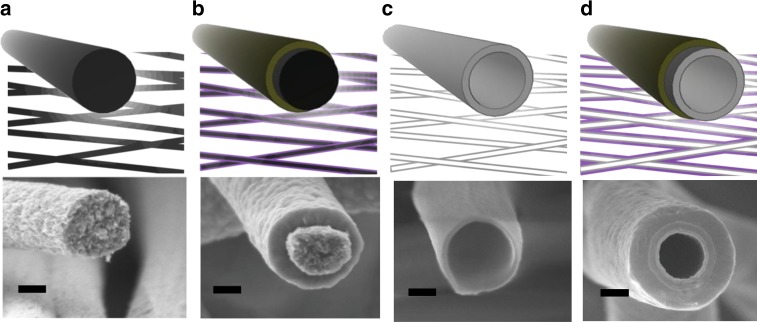
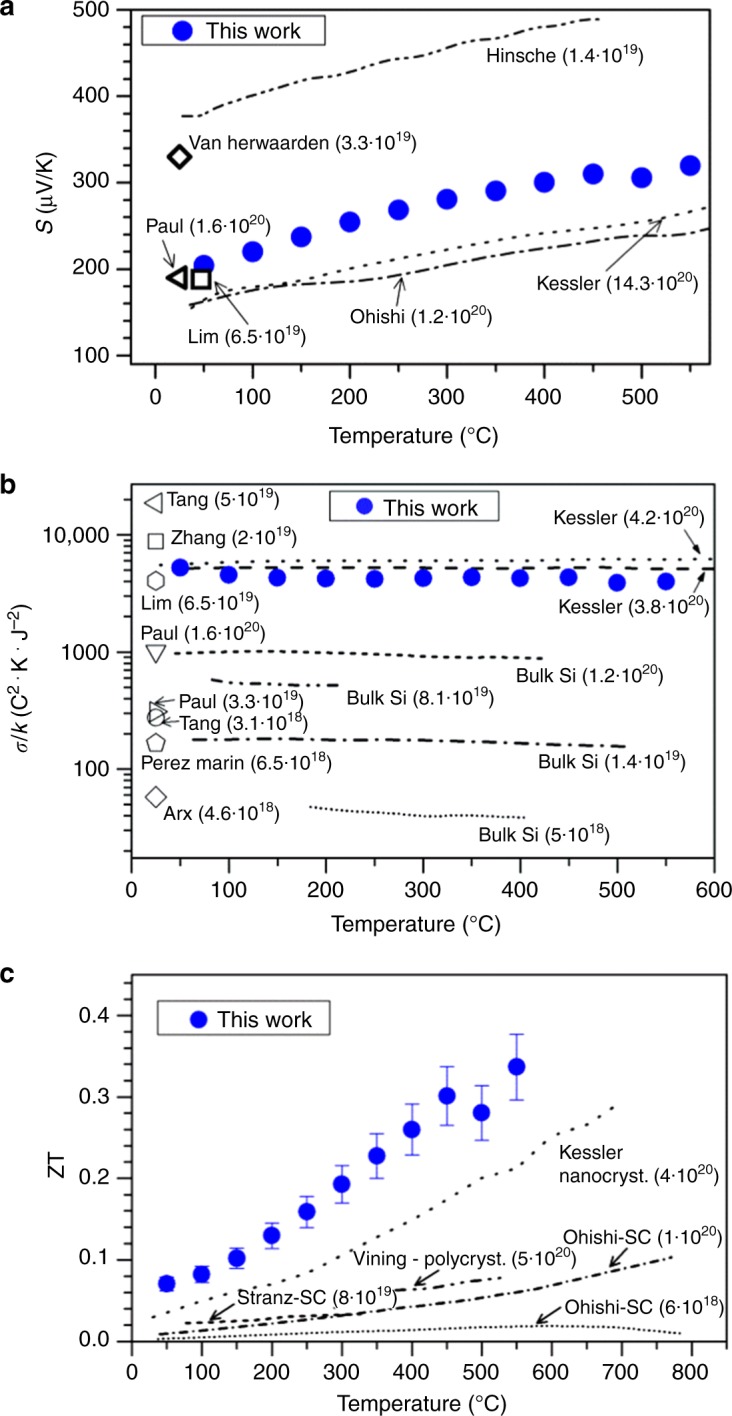
Large amounts of waste heat generated in our fossil-fuel based economy can be converted into useful electric power by using thermoelectric generators. However, the low-efficiency, scarcity, high-cost and poor production scalability of conventional thermoelectric materials are hindering their mass deployment. Nanoengineering has proven to be an excellent approach for enhancing thermoelectric properties of abundant and cheap materials such as silicon. Nevertheless, the implementation of these nanostructures is still a major challenge especially for covering the large areas required for massive waste heat recovery. Here we present a family of nano-enabled materials in the form of large-area paper-like fabrics made of nanotubes as a cost-effective and scalable solution for thermoelectric generation. A case study of a fabric of p-type silicon nanotubes was developed showing a five-fold improvement of the thermoelectric figure of merit. Outstanding power densities above 100 W/m at 700 °C are therefore demonstrated opening a market for waste heat recovery.
大量在我们的基于化石燃料的经济中产生的废热可以通过使用热电发电机转化为有用的电力。然而,传统热电材料的低效率、稀缺、高成本和生产可扩展性差,阻碍了它们的大规模部署。纳米工程已被证明是一种增强丰富和廉价材料(如硅)的热电性能的绝佳方法。然而,这些纳米结构的实施仍然是一个主要挑战,特别是对于覆盖大规模废热回收所需的大面积。在这里,我们提出了一系列纳米增强材料,以大面积纸状织物的形式由纳米管制成,作为一种具有成本效益和可扩展的热电发电解决方案。开发了一种 p 型硅纳米管织物的案例研究,显示出热电优值提高了五倍。因此,在 700°C 时超过 100 W/m 的出色功率密度得到了证明,为废热回收开辟了市场。