Department of Biotechnology & Biophysics, Julius-Maximilians-University Würzburg, Am Hubland, 97074, Würzburg, Germany.
Spiber Technologies AB, AlbaNova University Center, SE-10691, Stockholm, Sweden.
Nat Commun. 2018 Nov 14;9(1):4779. doi: 10.1038/s41467-018-07227-5.
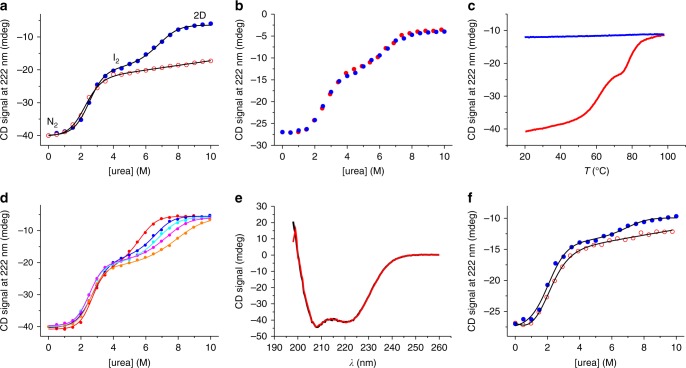
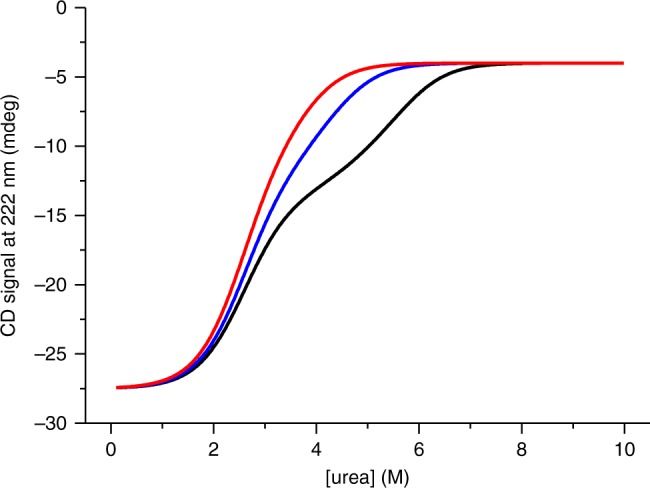
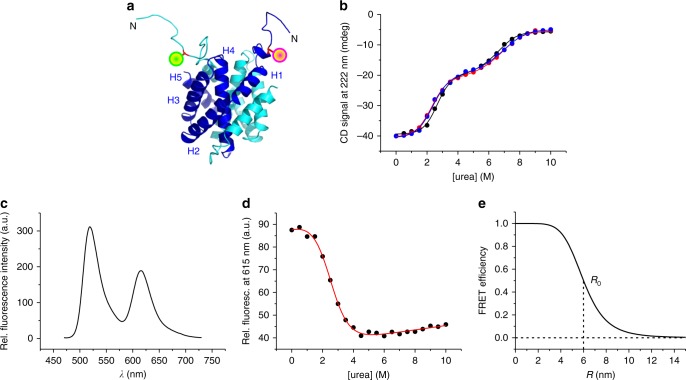
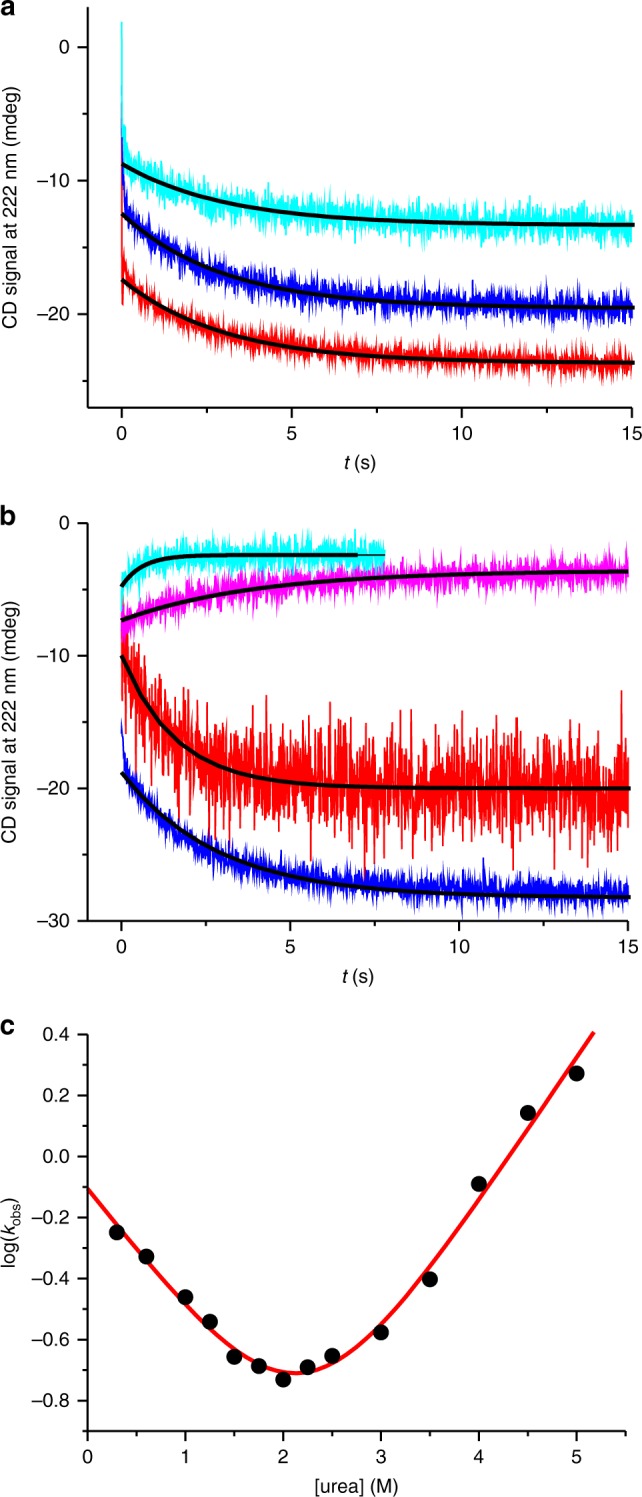
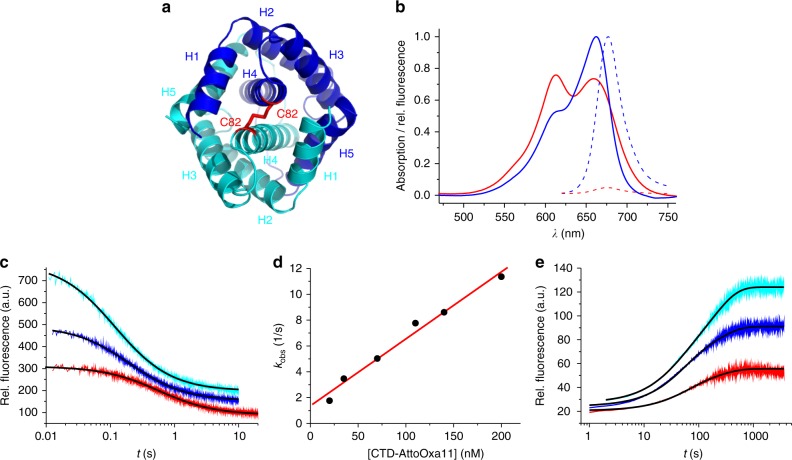
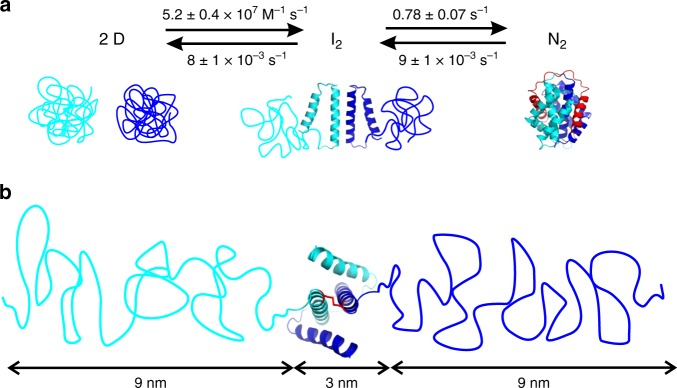
Web spiders synthesize silk fibers of unique strength and extensibility through the controlled self-assembly of protein building blocks, so-called spidroins. The spidroin C-terminal domain is highly conserved and connects two polypeptide chains through formation of an all-helical, intertwined dimer. Here we use contact-induced fluorescence self-quenching and resonance energy transfer in combination with far-UV circular dichroism spectroscopy as three orthogonal structural probes to dissect the mechanism of folding and dimerization of a spidroin C-terminal domain from the major ampullate gland of the nursery web spider Euprosthenops australis. We show that helices forming the dimer core assemble very rapidly and fold on association. Subsequently, peripheral helices fold and dock slowly onto the preformed core. Lability of outer helices facilitates formation of a highly expanded, partially folded dimer. The high end-to-end distance of chain termini in the partially folded dimer suggests an extensibility module that contributes to elasticity of spider silk.
蜘蛛通过对蛋白质构建块(即所谓的蜘蛛丝蛋白)的控制自组装来合成具有独特强度和可拉伸性的丝纤维。蜘蛛丝蛋白 C 端结构域高度保守,通过形成全螺旋、交错二聚体将两条多肽链连接起来。在这里,我们使用接触诱导荧光自猝灭和共振能量转移结合远紫外圆二色性光谱作为三种正交结构探针,从苗圃网蛛(Euprosthenops australis)的主壶腹腺中分离蜘蛛丝蛋白 C 端结构域的折叠和二聚化机制。我们表明,形成二聚体核心的螺旋快速组装并在缔合时折叠。随后,外围螺旋缓慢折叠并停靠在预先形成的核心上。外层螺旋的不稳定性促进了高度扩展的部分折叠二聚体的形成。部分折叠二聚体中链末端的高末端到末端距离表明存在一个可延伸模块,该模块有助于蜘蛛丝的弹性。