CAS Key Laboratory of Animal Ecology and Conservation Biology, Institute of Zoology, Chinese Academy of Sciences (CAS), Beijing, China.
College of Life Sciences, University of Chinese Academy of Sciences (UCAS), Beijing, China.
Mol Biol Evol. 2019 Feb 1;36(2):283-303. doi: 10.1093/molbev/msy208.
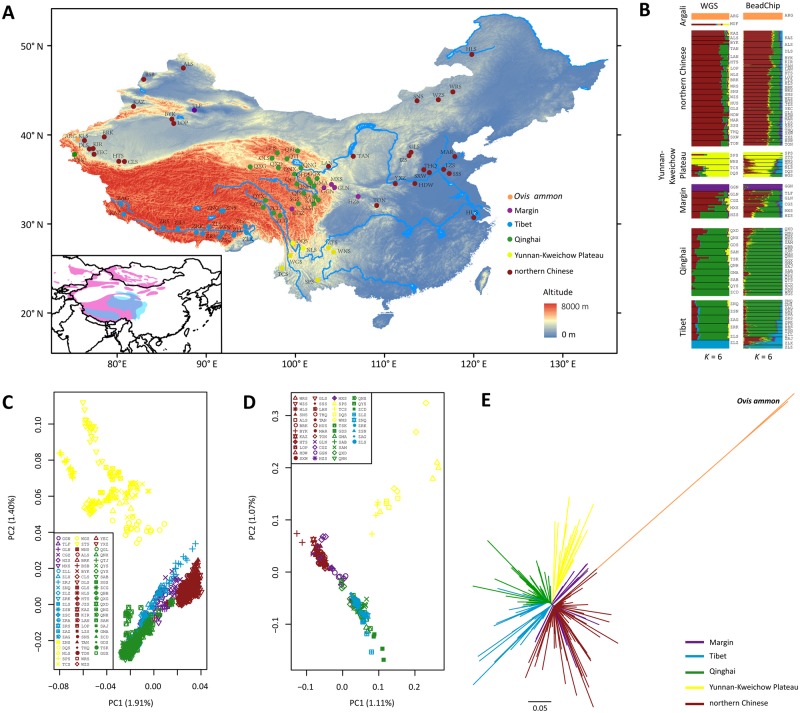
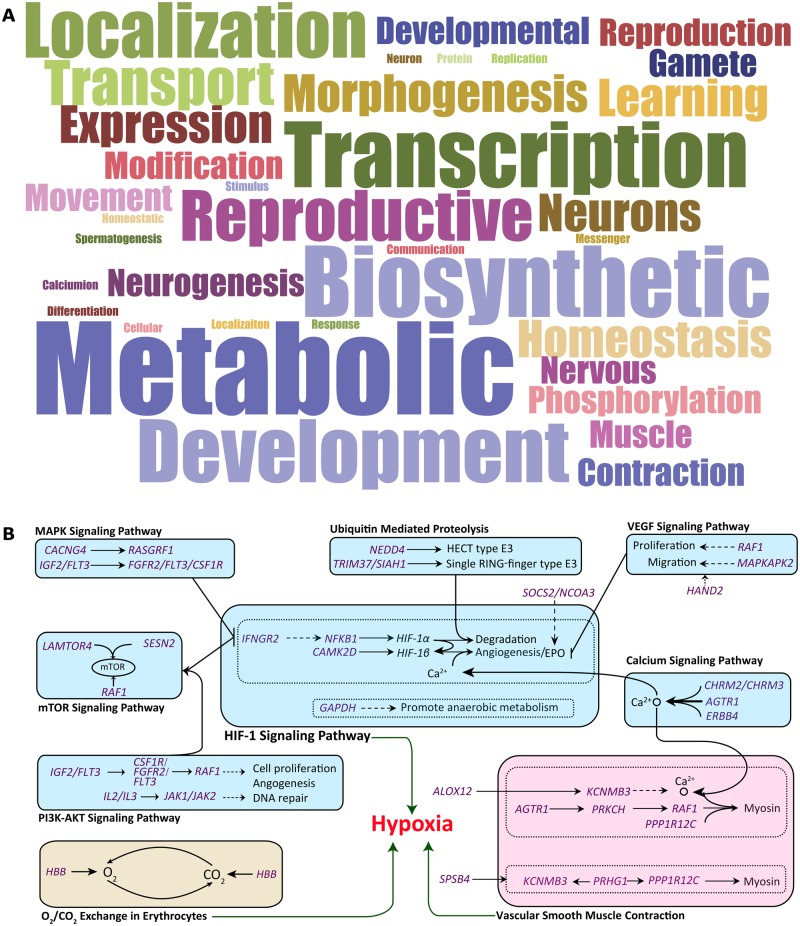
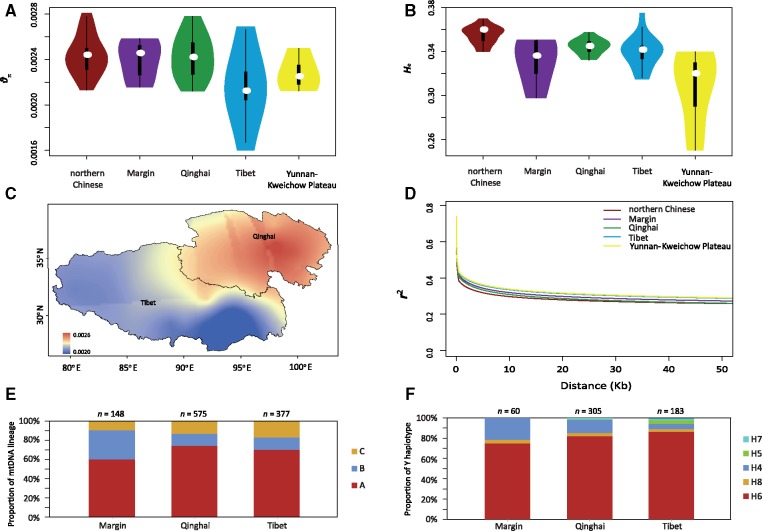
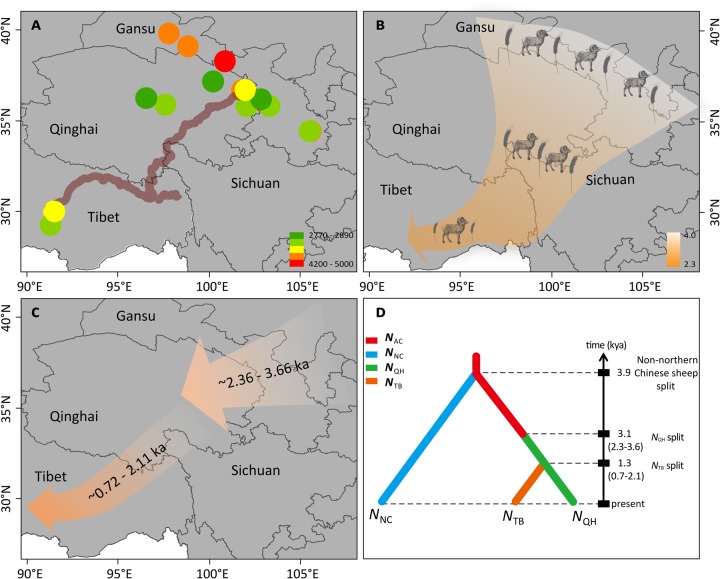
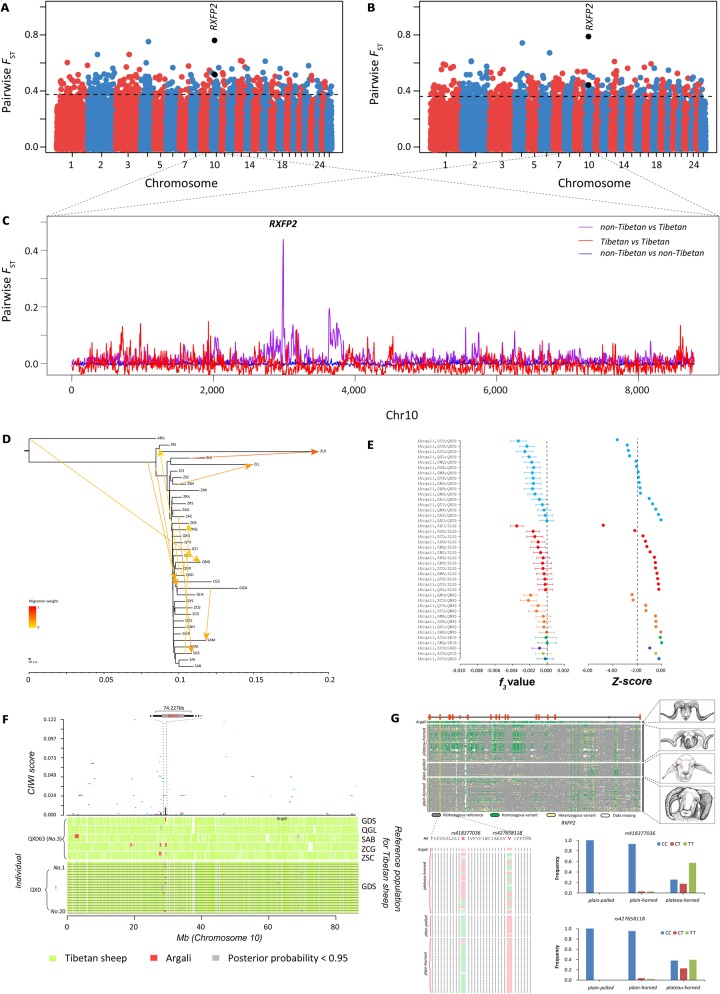
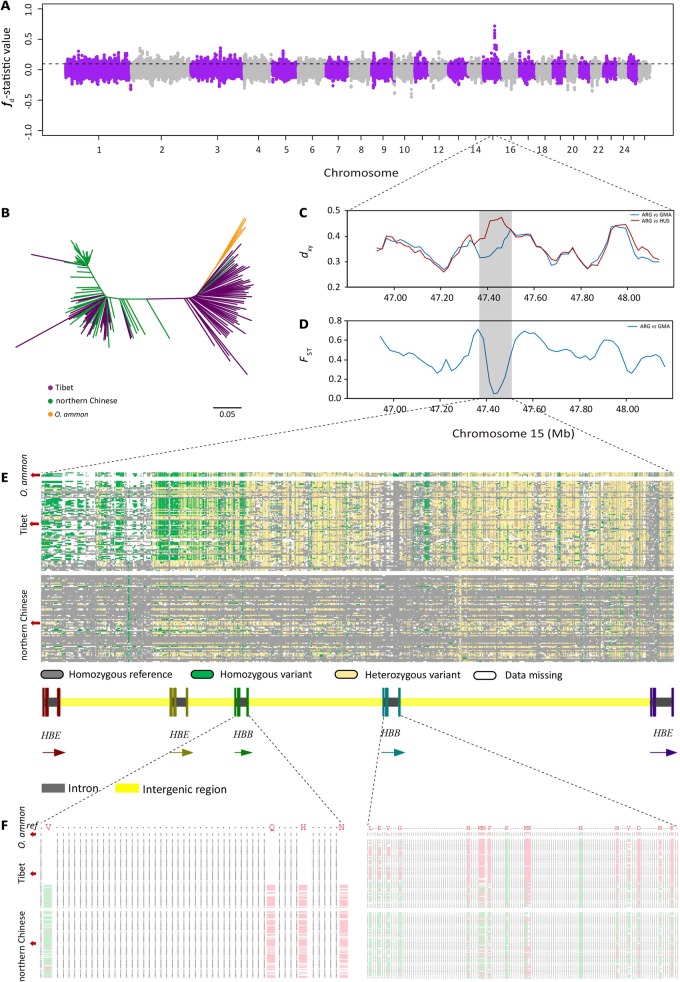
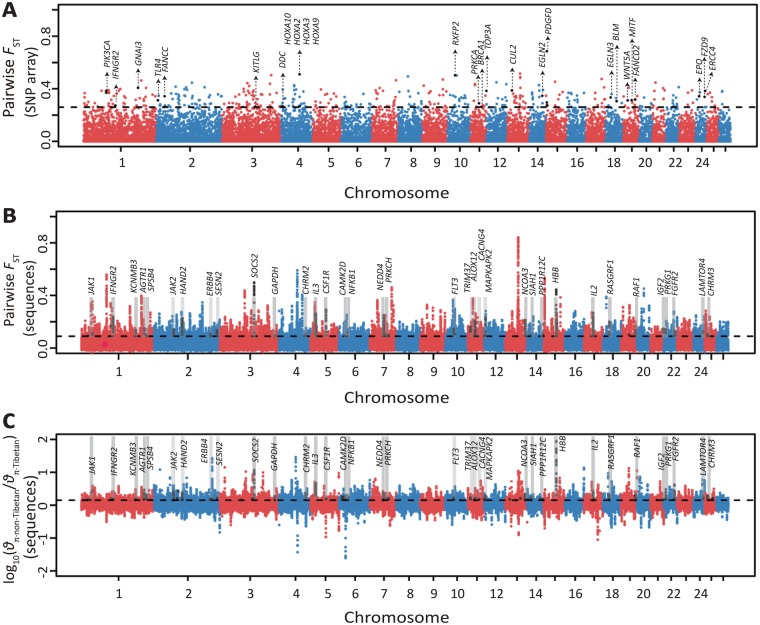
Tibetan sheep are the most common and widespread domesticated animals on the Qinghai-Tibetan Plateau (QTP) and have played an essential role in the permanent human occupation of this high-altitude region. However, the precise timing, route, and process of sheep pastoralism in the QTP region remain poorly established, and little is known about the underlying genomic changes that occurred during the process. Here, we investigate the genomic variation in Tibetan sheep using whole-genome sequences, single nucleotide polymorphism arrays, mitochondrial DNA, and Y-chromosomal variants in 986 samples throughout their distribution range. We detect strong signatures of selection in genes involved in the hypoxia and ultraviolet signaling pathways (e.g., HIF-1 pathway and HBB and MITF genes) and in genes associated with morphological traits such as horn size and shape (e.g., RXFP2). We identify clear signals of argali (Ovis ammon) introgression into sympatric Tibetan sheep, covering 5.23-5.79% of their genomes. The introgressed genomic regions are enriched in genes related to oxygen transportation system, sensory perception, and morphological phenotypes, in particular the genes HBB and RXFP2 with strong signs of adaptive introgression. The spatial distribution of genomic diversity and demographic reconstruction of the history of Tibetan sheep show a stepwise pattern of colonization with their initial spread onto the QTP from its northeastern part ∼3,100 years ago, followed by further southwest expansion to the central QTP ∼1,300 years ago. Together with archeological evidence, the date and route reveal the history of human expansions on the QTP by the Tang-Bo Ancient Road during the late Holocene. Our findings contribute to a depth understanding of early pastoralism and the local adaptation of Tibetan sheep as well as the late-Holocene human occupation of the QTP.
藏羊是青藏高原(QTP)最常见和广泛分布的家养动物,在人类永久占领这一高海拔地区的过程中发挥了重要作用。然而,藏羊在 QTP 地区的放牧的确切时间、路线和过程仍不清楚,人们对这一过程中发生的潜在基因组变化知之甚少。在这里,我们使用全基因组序列、单核苷酸多态性阵列、线粒体 DNA 和 Y 染色体变异,对分布在整个范围内的 986 个藏羊样本进行了研究。我们在涉及低氧和紫外线信号通路(如 HIF-1 通路和 HBB 和 MITF 基因)以及与形态特征相关的基因(如角大小和形状相关的基因 RXFP2)中检测到强烈的选择信号。我们明确识别出与共生藏羊杂交的盘羊(Ovis ammon)的基因渗入,覆盖了它们基因组的 5.23-5.79%。渗入的基因组区域富含与氧气运输系统、感官感知和形态表型相关的基因,特别是具有强烈适应性渗入信号的 HBB 和 RXFP2 基因。藏羊基因组多样性的空间分布和历史的人口重建显示出一种逐步的殖民模式,它们最初从东北方向扩散到 QTP,大约在 3100 年前,然后进一步向西南方向扩散到 QTP 的中心,大约在 1300 年前。结合考古证据,该日期和路线揭示了人类在全新世晚期通过唐蕃古道在 QTP 上的扩张历史。我们的研究结果有助于深入了解早期的畜牧业和藏羊的本地适应性,以及全新世晚期人类对 QTP 的占领。