Multicentric Program of Post-Graduate in Biochemistry and Molecular Biology, Federal University of Bahia, Bahia 40231-300, Brazil.
Center for Biotechnology and Cell Therapy, São Rafael Hospital, Bahia 41253-190, Brazil.
Int J Mol Sci. 2018 Nov 15;19(11):3608. doi: 10.3390/ijms19113608.
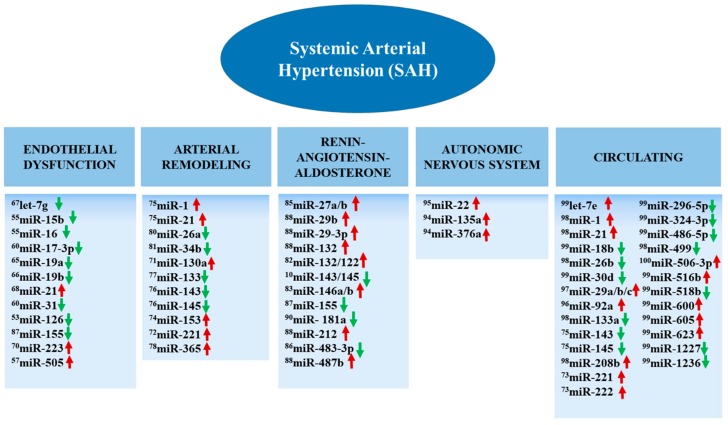
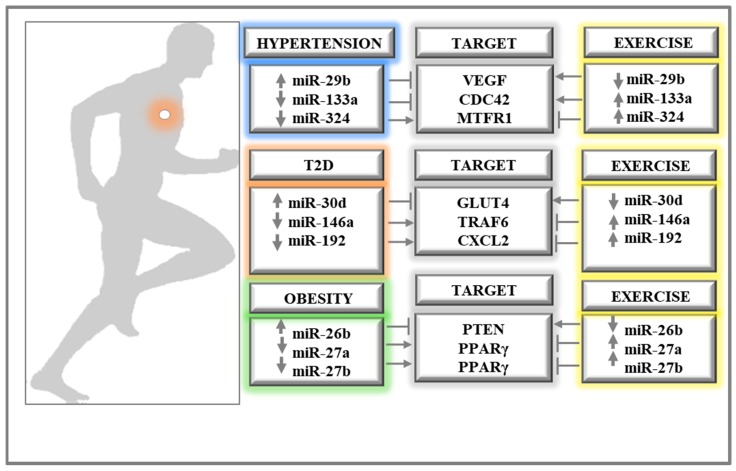
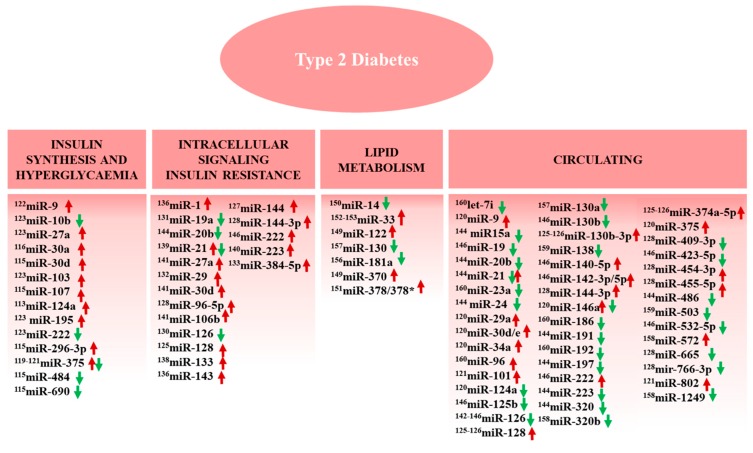
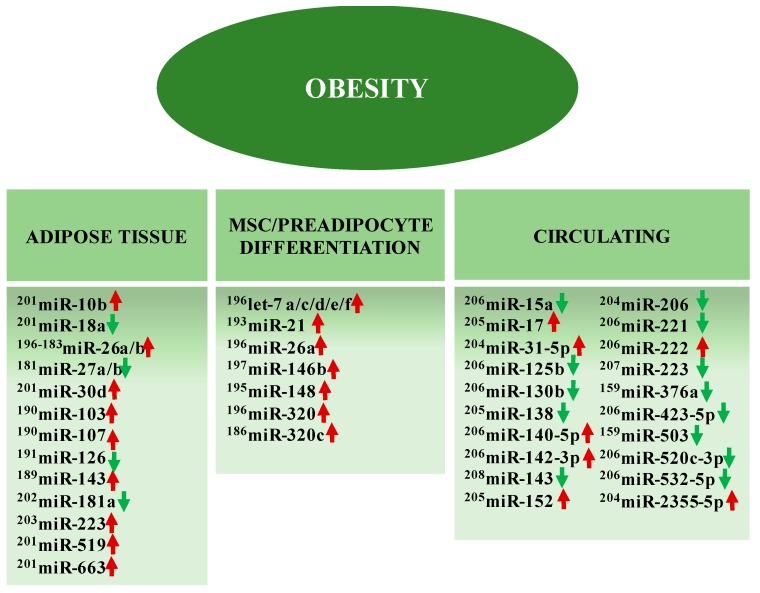
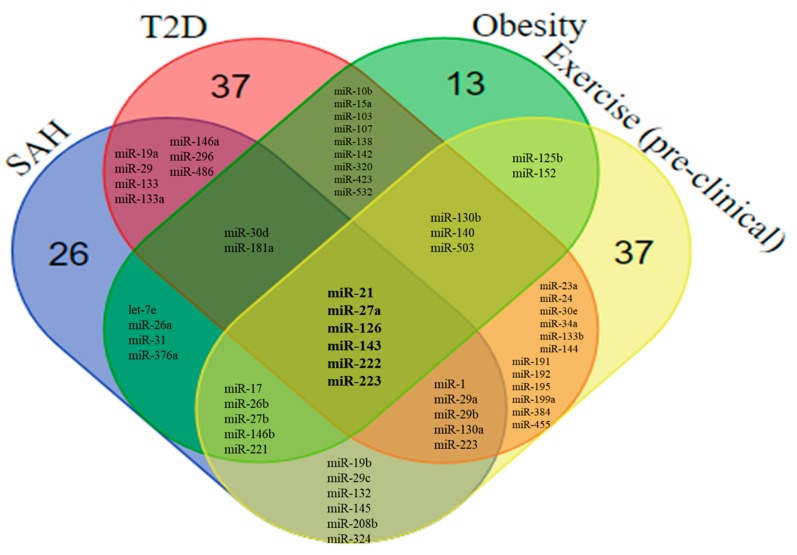
MicroRNAs are small non-coding RNAs that regulate gene expression post-transcriptionally. They are involved in the regulation of physiological processes, such as adaptation to physical exercise, and also in disease settings, such as systemic arterial hypertension (SAH), type 2 diabetes mellitus (T2D), and obesity. In SAH, microRNAs play a significant role in the regulation of key signaling pathways that lead to the hyperactivation of the renin-angiotensin-aldosterone system, endothelial dysfunction, inflammation, proliferation, and phenotypic change in smooth muscle cells, and the hyperactivation of the sympathetic nervous system. MicroRNAs are also involved in the regulation of insulin signaling and blood glucose levels in T2D, and participate in lipid metabolism, adipogenesis, and adipocyte differentiation in obesity, with specific microRNA signatures involved in the pathogenesis of each disease. Many studies report the benefits promoted by exercise training in cardiovascular diseases by reducing blood pressure, glucose levels, and improving insulin signaling and lipid metabolism. The molecular mechanisms involved, however, remain poorly understood, especially regarding the participation of microRNAs in these processes. This review aimed to highlight microRNAs already known to be associated with SAH, T2D, and obesity, as well as their possible regulation by exercise training.
微小 RNA 是一种小型非编码 RNA,可在后转录水平调节基因表达。它们参与生理过程的调节,如适应体育锻炼,也参与疾病状态的调节,如系统性动脉高血压(SAH)、2 型糖尿病(T2D)和肥胖症。在 SAH 中,微小 RNA 在调节关键信号通路中发挥重要作用,这些通路导致肾素-血管紧张素-醛固酮系统的过度激活、内皮功能障碍、炎症、增殖和血管平滑肌细胞的表型改变,以及交感神经系统的过度激活。微小 RNA 还参与 T2D 中胰岛素信号和血糖水平的调节,并参与脂质代谢、脂肪生成和脂肪细胞分化,特定的微小 RNA 特征参与每种疾病的发病机制。许多研究报告了运动训练在心血管疾病中的益处,可降低血压、血糖水平,并改善胰岛素信号和脂质代谢。然而,涉及的分子机制仍知之甚少,特别是微小 RNA 在这些过程中的参与情况。本综述旨在强调已经与 SAH、T2D 和肥胖症相关的微小 RNA,以及它们可能通过运动训练进行调节。