Sayers Niamh, Hanyaloglu Aylin C
Department Surgery and Cancer, Institute of Reproductive and Developmental Biology, Imperial College London, London, United Kingdom.
Front Endocrinol (Lausanne). 2018 Nov 2;9:653. doi: 10.3389/fendo.2018.00653. eCollection 2018.
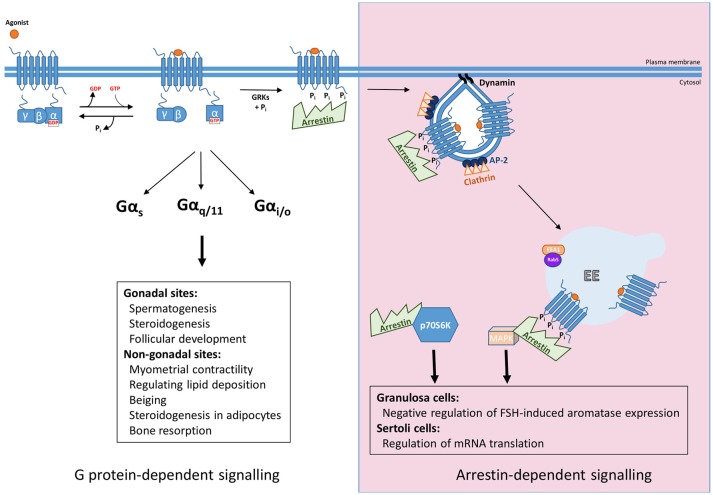
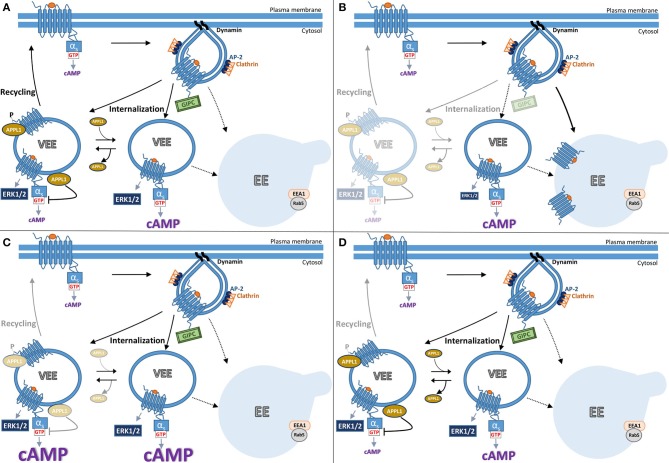
Models of G protein-coupled receptor (GPCR) signaling have dramatically altered over the past two decades. Indeed, GPCRs such as the follicle-stimulating hormone receptor (FSHR) have contributed to these new emerging models. We now understand that receptor signaling is highly organized at a spatial level, whereby signaling not only occurs from the plasma membrane but distinct intracellular compartments. Recent studies in the role of membrane trafficking and spatial organization of GPCR signaling in regulating gonadotropin hormone receptor activity has identified novel intracellular compartments, which are tightly linked with receptor signaling and reciprocally regulated by the cellular trafficking machinery. Understanding the impact of these cell biological mechanisms to physiology and pathophysiology is emerging for certain GPCRs. However, for FSHR, the potential impact in both health and disease and the therapeutic possibilities of these newly identified systems is currently unknown, but offers the potential to reassess prior strategies, or unveil novel opportunities, in targeting this receptor.
在过去二十年中,G蛋白偶联受体(GPCR)信号传导模型发生了巨大变化。事实上,诸如促卵泡激素受体(FSHR)等GPCR对这些新出现的模型起到了推动作用。我们现在明白,受体信号传导在空间层面上高度有序,信号不仅发生在质膜,还发生在不同的细胞内区室。最近关于膜转运和GPCR信号传导的空间组织在调节促性腺激素受体活性方面作用的研究,已经确定了新的细胞内区室,这些区室与受体信号传导紧密相连,并受到细胞转运机制的相互调节。对于某些GPCR来说,了解这些细胞生物学机制对生理和病理生理的影响正在逐渐显现。然而,对于FSHR而言,这些新发现的系统在健康和疾病方面的潜在影响以及治疗可能性目前尚不清楚,但有可能重新评估之前针对该受体的策略,或揭示新的机会。