Research Unit of General Practice, Department of Public Health, University of Southern Denmark, Odense, 5000, Denmark.
Social Research Methodology Group, Faculty of Social Sciences, KU Leuven, Parkstraat 45, 3000, Leuven, Belgium.
BMC Public Health. 2018 Nov 20;18(1):1277. doi: 10.1186/s12889-018-6156-4.
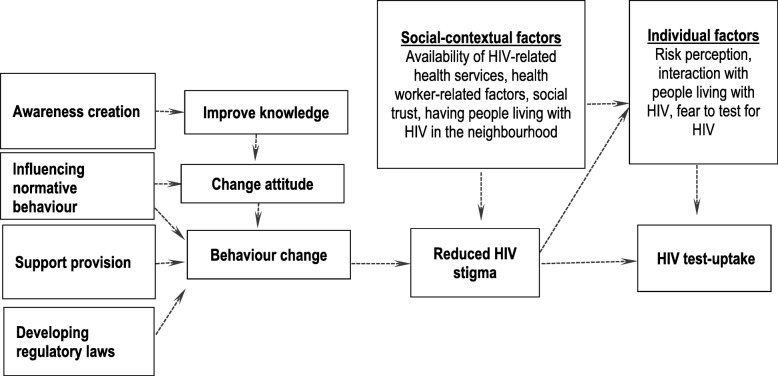
This realist review was conducted to understand how stigma is reduced in relation to HIV test uptake in low- and middle-income countries (LMICs).
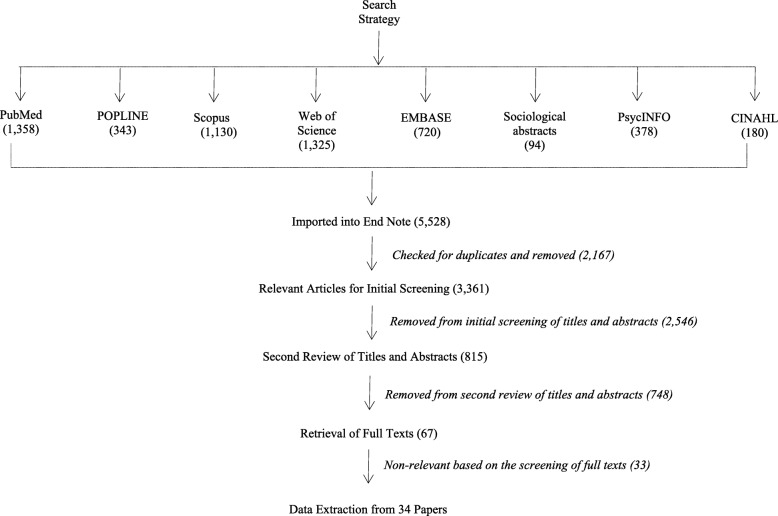
A systematic search of eight databases resulted in 34 articles considered for synthesis. Data synthesis was guided by a preliminary programme theory and included coding the meaning units to develop themes or intervention pathways that corresponded to context-mechanism-outcome configurations.
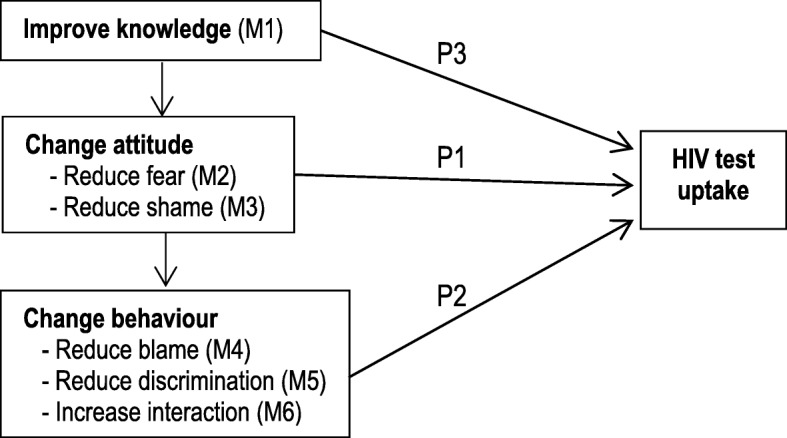
We found that the interventions produced an effect through two pathways: (a) knowledge leads to changes in stigmatizing attitudes and increases in HIV test uptake and (b) knowledge and attitudes lead to changes in stigmatizing behaviours and lead to HIV test uptake. We also found one competing pathway that illustrated the direct impact of knowledge on HIV test uptake without changing stigmatizing attitudes and behaviour. The identified pathways were found to be influenced by some structural factors (e.g., anti-homosexuality laws, country-specific HIV testing programmes and policies), community factors (e.g., traditional beliefs and practices, sexual taboos and prevalence of intimate partner violence) and target-population characteristics (e.g., age, income and urban-rural residence).
The pathways and underlying mechanisms support the adaptation of intervention strategies in terms of social context and the target population in LMICs.
本现实主义综述旨在理解在中低收入国家(LMICs)中,HIV 检测率的提高与哪些因素有关。
通过对八个数据库的系统搜索,共检索到 34 篇文章,进行综合分析。数据综合由初步的项目理论指导,包括对意义单位进行编码,以形成主题或干预途径,这些主题或干预途径与背景-机制-结果配置相对应。
我们发现,这些干预措施通过以下两种途径产生效果:(a)知识导致歧视态度的改变和 HIV 检测率的提高;(b)知识和态度导致歧视行为的改变,从而导致 HIV 检测率的提高。我们还发现了一条竞争途径,表明知识直接影响 HIV 检测率,而不会改变歧视态度和行为。所确定的途径受到一些结构因素(如反同性恋法律、国家特定的 HIV 检测方案和政策)、社区因素(如传统信仰和习俗、性禁忌和亲密伴侣暴力的流行)和目标人群特征(如年龄、收入和城乡居住)的影响。
这些途径和潜在机制支持在社会背景和 LMICs 的目标人群方面对干预策略进行调整。