Department of Basic Veterinary Medicine, College of Animal Science and Veterinary Medicine, Jilin University, Changchun, China.
Department of Food Quality and Safety, College of Food Science and Engineering, Jilin University, Changchun, China.
Front Immunol. 2018 Nov 5;9:2527. doi: 10.3389/fimmu.2018.02527. eCollection 2018.
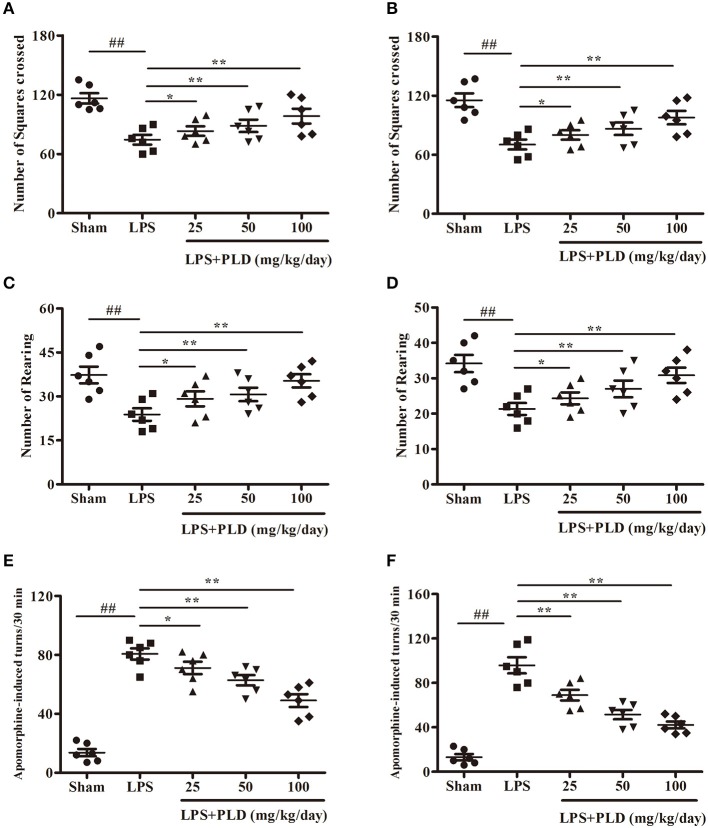
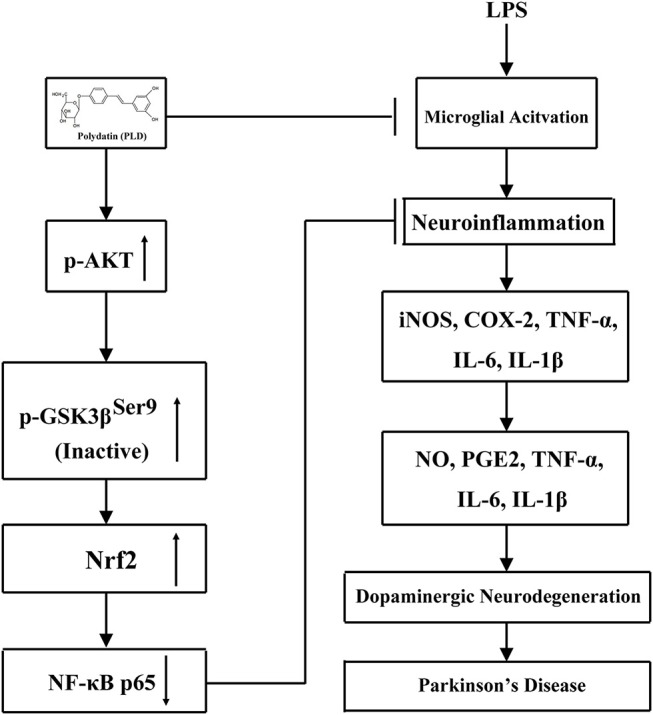
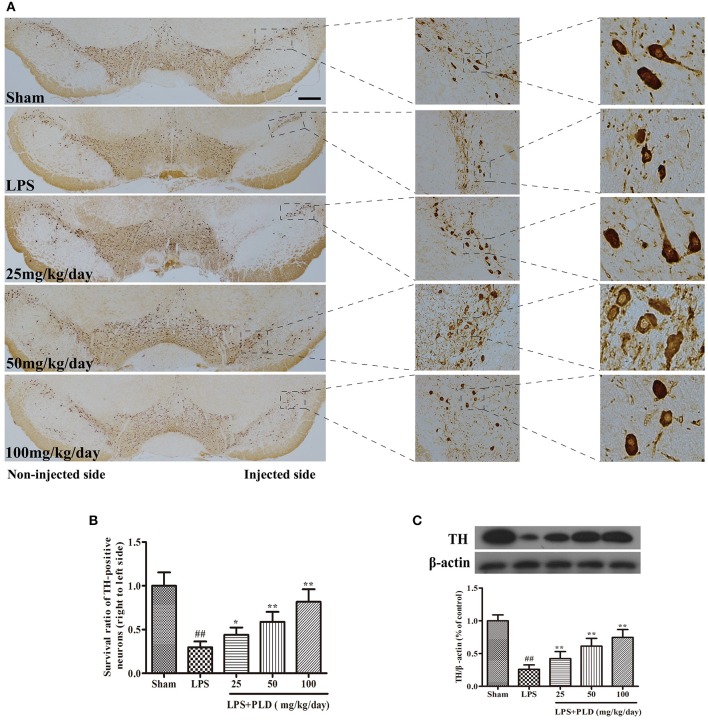
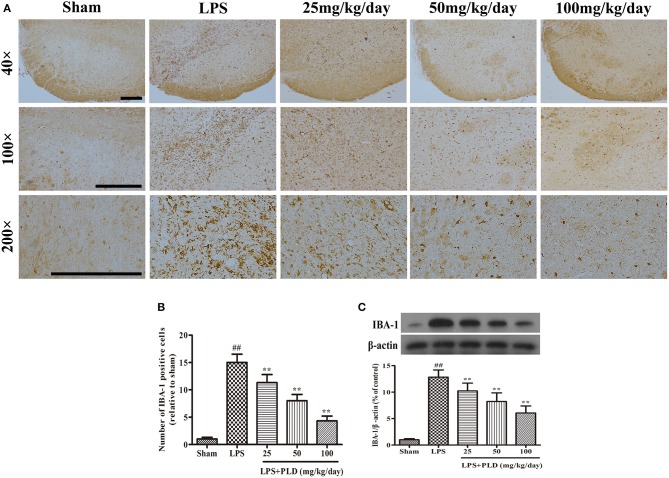
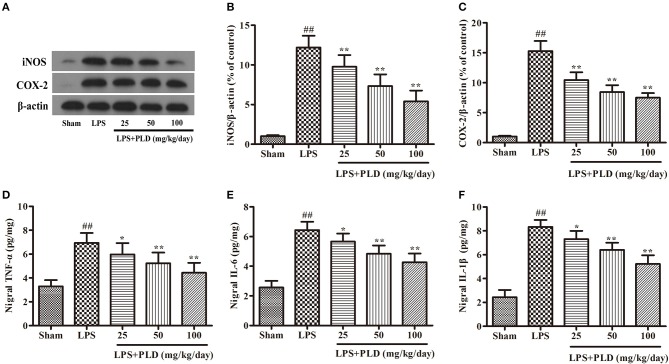
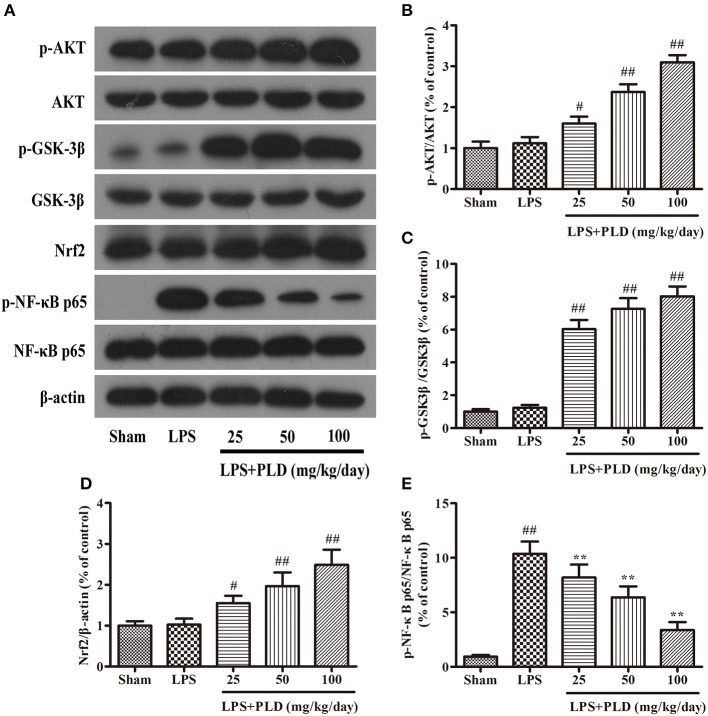
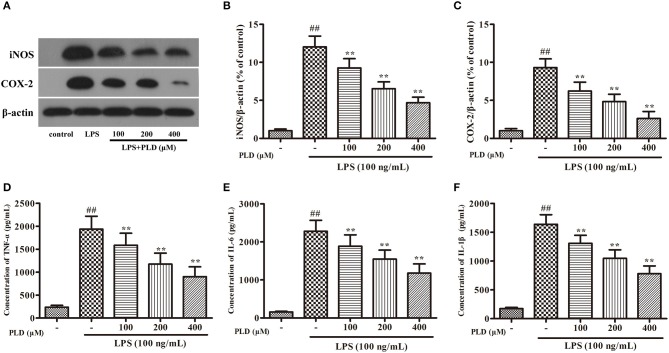
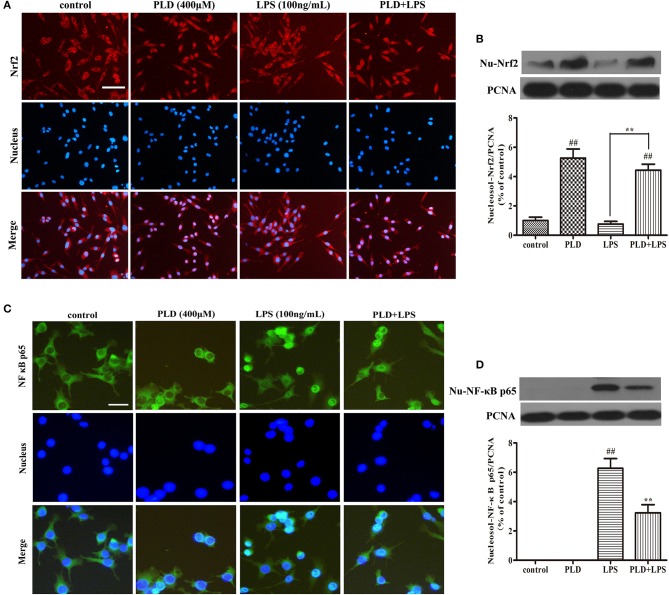
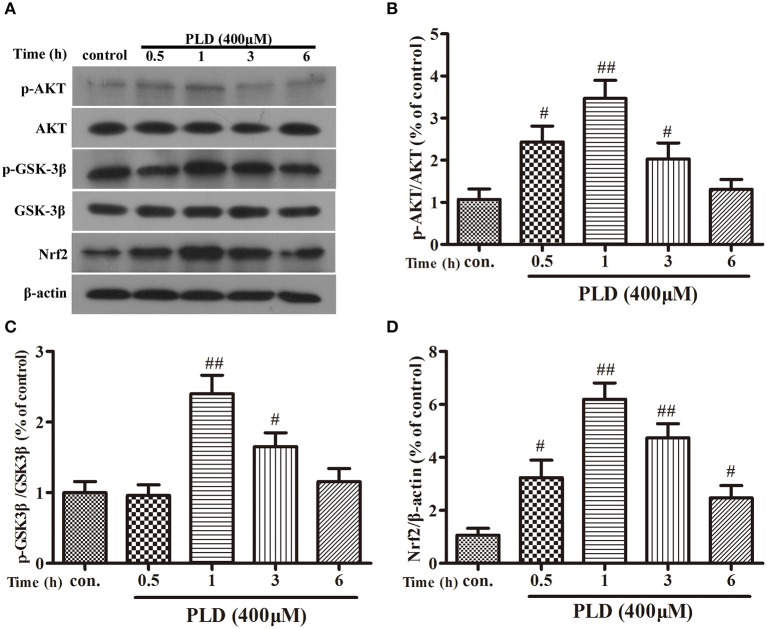
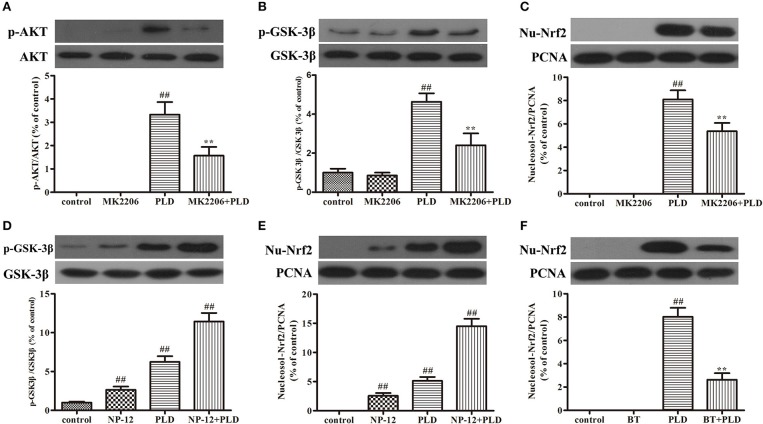
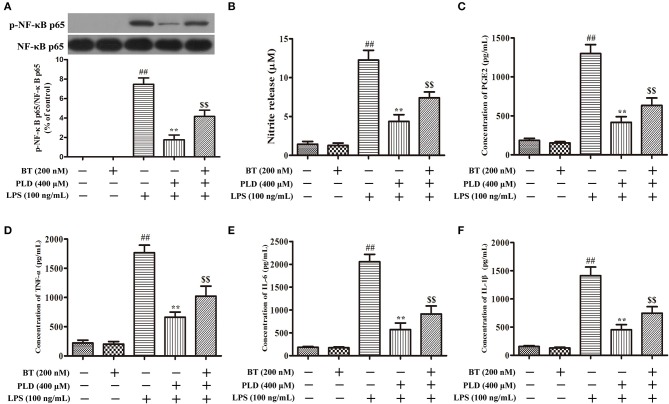
Parkinson's disease (PD) is a common neurodegenerative disease characterized by selective loss of dopaminergic neurons in the substantia nigra (SN). Neuroinflammation induced by over-activation of microglia leads to the death of dopaminergic neurons in the pathogenesis of PD. Therefore, downregulation of microglial activation may aid in the treatment of PD. Polydatin (PLD) has been reported to pass through the blood-brain barrier and protect against motor degeneration in the SN. However, the molecular mechanisms underlying the effects of PLD in the treatment of PD remain unclear. The present study aimed to determine whether PLD protects against dopaminergic neurodegeneration by inhibiting the activation of microglia in a rat model of lipopolysaccharide (LPS)-induced PD. Our findings indicated that PLD treatment protected dopaminergic neurons and ameliorated motor dysfunction by inhibiting microglial activation and the release of pro-inflammatory mediators. Furthermore, PLD treatment significantly increased levels of p-AKT, p-GSK-3β, and Nrf2, and suppressed the activation of NF-κB in the SN of rats with LPS-induced PD. To further explore the neuroprotective mechanism of PLD, we investigated the effect of PLD on activated microglial BV-2 cells. Our findings indicated that PLD inhibited the production of pro-inflammatory mediators and the activation of NF-κB pathways in LPS-induced BV-2 cells. Moreover, our results indicated that PLD enhanced levels of p-AKT, p-GSK-3β, and Nrf2 in BV-2 cells. After BV-2 cells were pretreated with MK2206 (an inhibitor of AKT), NP-12 (an inhibitor of GSK-3β), or Brusatol (BT; an inhibitor of Nrf2), treatment with PLD suppressed the activation of NF-κB signaling pathways and the release of pro-inflammatory mediators in activated BV-2 cells via activation of the AKT/GSK3β-Nrf2 signaling axis. Taken together, our results are the first to demonstrate that PLD prevents dopaminergic neurodegeneration due to microglial activation via regulation of the AKT/GSK3β-Nrf2/NF-κB signaling axis.
帕金森病(PD)是一种常见的神经退行性疾病,其特征是黑质(SN)中多巴胺能神经元的选择性丧失。小胶质细胞过度激活引起的神经炎症导致 PD 发病机制中多巴胺能神经元的死亡。因此,下调小胶质细胞的激活可能有助于 PD 的治疗。白藜芦醇(PLD)已被报道可穿过血脑屏障并防止 SN 中的运动变性。然而,PLD 治疗 PD 的作用的分子机制尚不清楚。本研究旨在确定 PLD 是否通过抑制脂多糖(LPS)诱导的 PD 大鼠模型中小胶质细胞的激活来保护多巴胺能神经元。我们的研究结果表明,PLD 治疗通过抑制小胶质细胞的激活和促炎介质的释放来保护多巴胺能神经元并改善运动功能障碍。此外,PLD 治疗显著增加 LPS 诱导的 PD 大鼠 SN 中 p-AKT、p-GSK-3β 和 Nrf2 的水平,并抑制 NF-κB 的激活。为了进一步探讨 PLD 的神经保护机制,我们研究了 PLD 对激活的小胶质细胞 BV-2 细胞的影响。我们的研究结果表明,PLD 抑制 LPS 诱导的 BV-2 细胞中促炎介质的产生和 NF-κB 途径的激活。此外,我们的结果表明,PLD 增强了 LPS 诱导的 BV-2 细胞中 p-AKT、p-GSK-3β 和 Nrf2 的水平。在 BV-2 细胞用 MK2206(AKT 抑制剂)、NP-12(GSK-3β 抑制剂)或 Brusatol(BT;Nrf2 抑制剂)预处理后,PLD 处理通过激活 AKT/GSK3β-Nrf2/NF-κB 信号通路抑制激活的 BV-2 细胞中 NF-κB 信号通路的激活和促炎介质的释放。总之,我们的研究结果首次表明,PLD 通过调节 AKT/GSK3β-Nrf2/NF-κB 信号通路,防止由于小胶质细胞激活引起的多巴胺能神经元变性。