Department of Pathology, Seoul National University Bundang Hospital, Seoul National University College of Medicine, 300 Gumi-dong, Bundang-gu, Seongnam, 463-707, South Korea.
Department of Internal Medicine, Seoul National University Bundang Hospital, Seoul National University College of Medicine, Seongnam, South Korea.
J Transl Med. 2018 Nov 20;16(1):320. doi: 10.1186/s12967-018-1689-y.
Antitumor immune response of programmed cell death ligand (PD-L1) has shown clinical value not only in Hodgkin lymphoma and EBV-associated lymphomas but also in EBV-negative diffuse large B cell lymphoma (DLBCL) of non-germinal center B cell-like (non-GCB) subtype. Signal transducer and activator of transcription 3 (STAT3) is known to induce PD-L1 in immune cells and its activated form, phosphorylated STAT3 (pSTAT3), is also frequently expressed in non-GCB DLBCL. Herein, we investigated associations between PD-L1 expression/gene alteration, pSTAT3 expression and clinicopathologic variables in EBV-negative DLBCL.
In 107 cases of DLBCLs with non-GCB subtype (67%; 72/107), GCB subtype (25%; 27/107) and unclassifiable cases (8%; 8/107), we performed PD-L1 and pSTAT3 immunohistochemistry and fluorescence in situ hybridization for PD-L1 gene translocation and copy number gain/amplification.
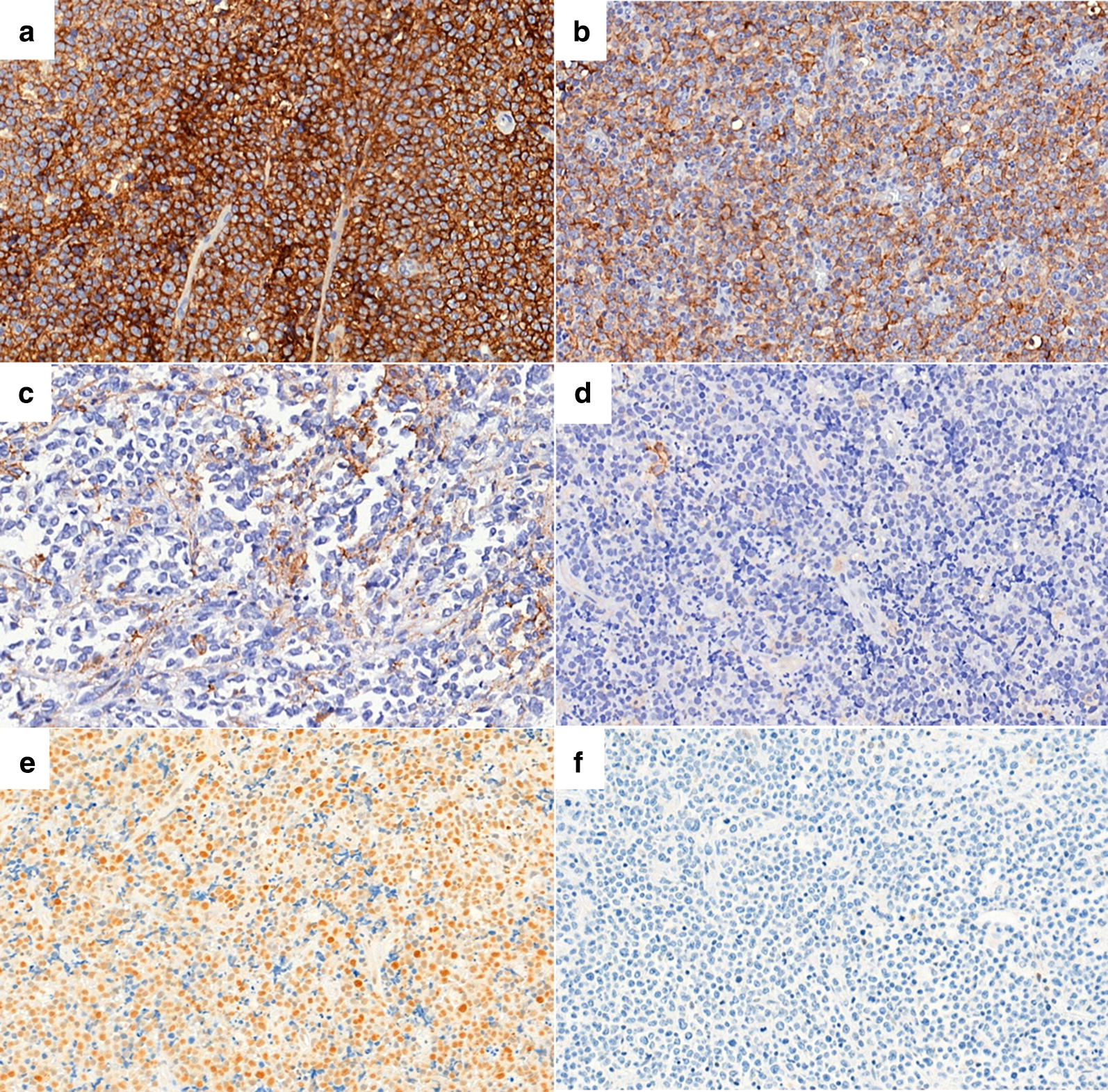
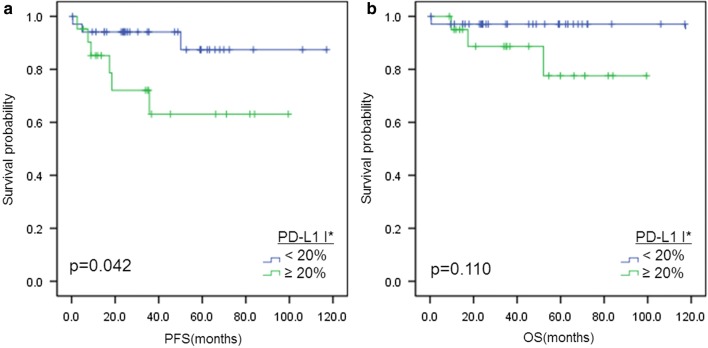
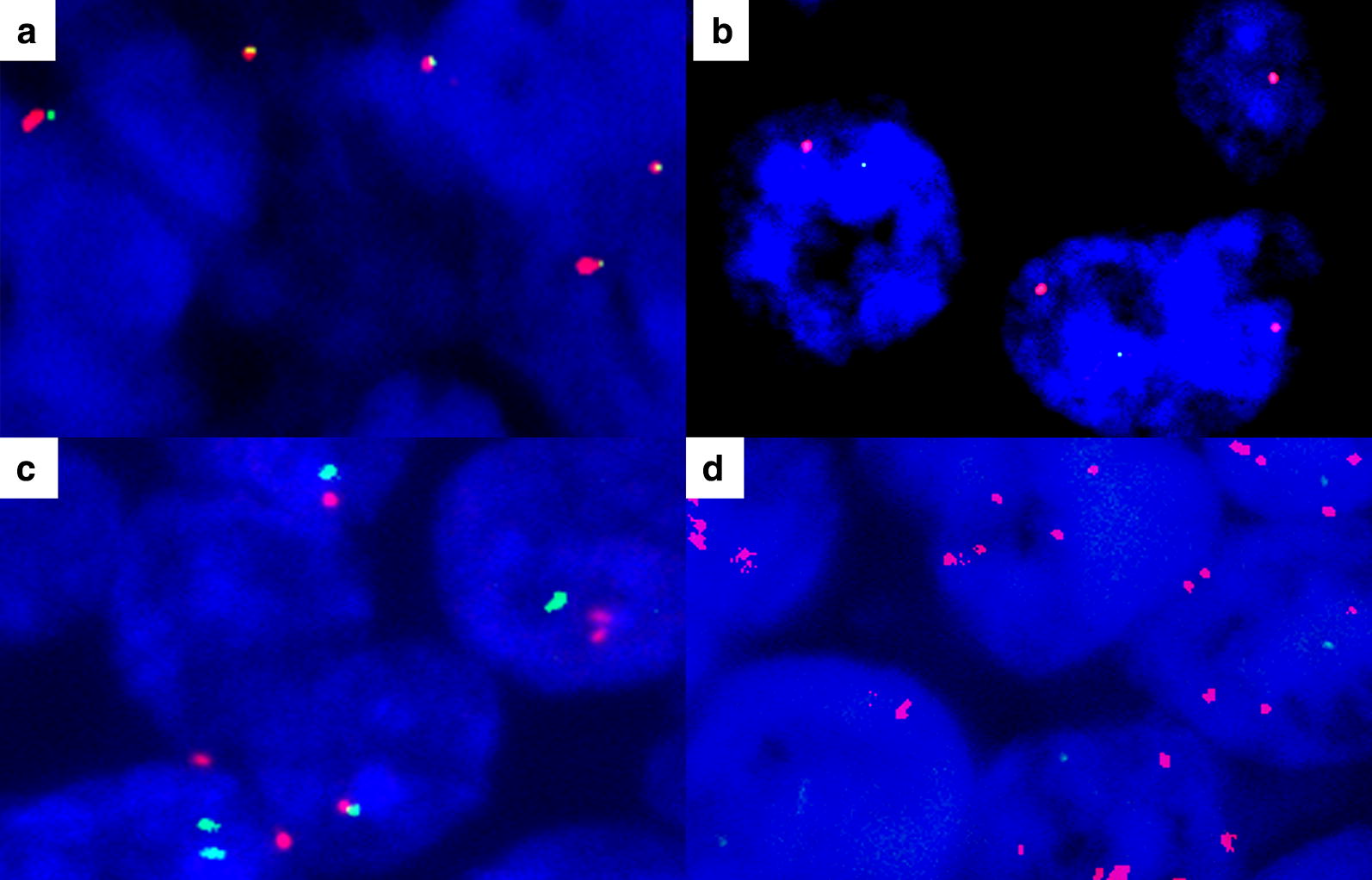
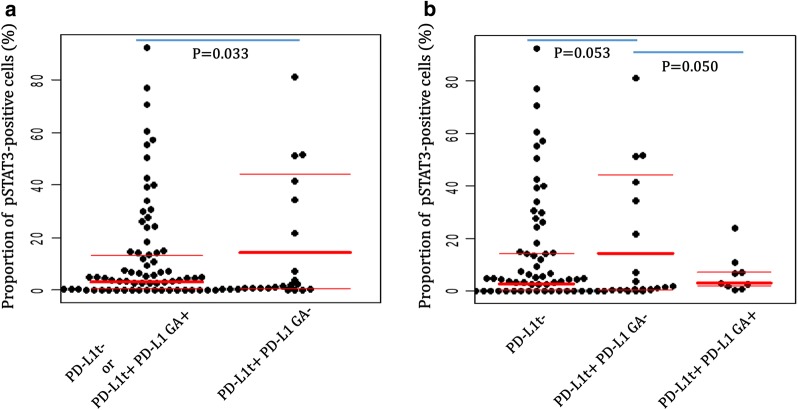
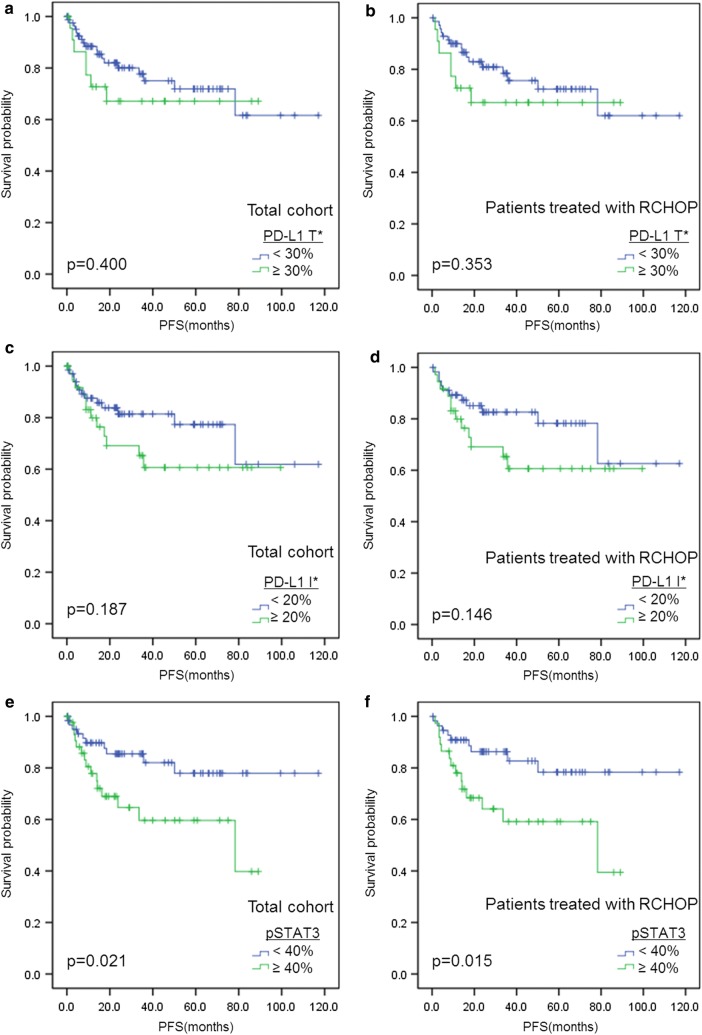
PD-L1 was expressed in tumor cells (PD-L1t) in 21% (23/107; 30% cutoff), immune cells (PD-L1i) in 36% (38/107; 20% cutoff), and pSTAT3 in tumor nuclei in 41% (44/107; 40% cutoff). PD-L1 gene alteration was observed in 10% (10/102) including translocation in 6% (6/102) and copy number gain/amplification in 4% (4/102). Non-GCB subtype was associated with PD-L1t and pSTAT3 (p = 0.006 and p = 0.042), and tended to have PD-L1 gene alteration (p = 0.058). Tumoral PD-L1 expression without gene alteration (PD-L1t+ GA-) correlated with pSTAT3-positive tumor cell proportions (%) (p = 0.033). In survival analysis, pSTAT3 expression independently predicted shorter PFS in total cohort (p = 0.017) and R-CHOP-treated group (p = 0.007), and in pSTAT3-negative R-CHOP-treated subset, PD-L1 expression in immune cells (PD-L1i) correlated with shorter PFS (p = 0.042).
Gene alteration and protein expression of PD-L1 and pSTAT3 expression were closely related in DLBCL and constituted features of non-GCB subtype. In addition to known clinical significance of pSTAT3, immune cell expression of PD-L1 (PD-L1i) had also clinical value in pSTAT3-dependent manner. These findings may provide an insight into immunotherapeutic strategy and risk stratification in DLBCL patients.
程序性细胞死亡配体 1(PD-L1)的抗肿瘤免疫反应不仅在霍奇金淋巴瘤和 EBV 相关淋巴瘤中具有临床价值,而且在 EBV 阴性非生发中心 B 细胞样(non-GCB)弥漫性大 B 细胞淋巴瘤(DLBCL)中也具有临床价值。信号转导和转录激活因子 3(STAT3)已知可诱导免疫细胞中的 PD-L1,其激活形式磷酸化 STAT3(pSTAT3)也常表达于非 GCB DLBCL 中。在此,我们研究了 EBV 阴性 DLBCL 中 PD-L1 表达/基因改变、pSTAT3 表达与临床病理变量之间的关系。
在 107 例非 GCB 亚型(67%;72/107)、GCB 亚型(25%;27/107)和未分类病例(8%;8/107)的 DLBCL 中,我们进行了 PD-L1 和 pSTAT3 免疫组化及 PD-L1 基因易位和拷贝数获得/扩增的荧光原位杂交。
肿瘤细胞(PD-L1t)中 PD-L1 表达 21%(23/107;30% 截点),免疫细胞(PD-L1i)中 PD-L1 表达 36%(38/107;20% 截点),肿瘤细胞核中 pSTAT3 表达 41%(44/107;40% 截点)。在 10%(10/102)的病例中观察到 PD-L1 基因改变,包括 6%(6/102)的易位和 4%(4/102)的拷贝数获得/扩增。非 GCB 亚型与 PD-L1t 和 pSTAT3 相关(p=0.006 和 p=0.042),且倾向于有 PD-L1 基因改变(p=0.058)。无基因改变的肿瘤 PD-L1 表达(PD-L1t+GA-)与 pSTAT3 阳性肿瘤细胞比例(%)相关(p=0.033)。在生存分析中,pSTAT3 表达独立预测总队列(p=0.017)和 R-CHOP 治疗组(p=0.007)的 PFS 较短,在 pSTAT3 阴性的 R-CHOP 治疗亚组中,免疫细胞 PD-L1 表达(PD-L1i)与 PFS 较短相关(p=0.042)。
DLBCL 中 PD-L1 和 pSTAT3 的基因改变和蛋白表达密切相关,构成了非 GCB 亚型的特征。除了已知的 pSTAT3 临床意义外,pSTAT3 依赖性的免疫细胞 PD-L1(PD-L1i)表达也具有临床价值。这些发现可能为 DLBCL 患者的免疫治疗策略和风险分层提供新的见解。