Clinical Dermatology Department, S. Gallicano Dermatological Institute, IRCCS, Rome, Italy.
Dipartimento di Fisiopatologia Medico-Chirurgica e Dei Trapianti, Unità Operativa di Dermatologia, IRCCS, Fondazione Cà Granda, Ospedale Maggiore Policlinico, Università degli Studi di Milano, Milano, Italy.
J Eur Acad Dermatol Venereol. 2019 Apr;33(4):718-724. doi: 10.1111/jdv.15362. Epub 2018 Dec 28.
The current evidences attest UVA1 phototherapy as effective in the treatment of severe atopic dermatitis (AD). Furthermore, in this indication, 'medium dose' is as effective as 'high dose' regimen. To date, a randomized comparison study evaluating the effectiveness as well as safety of different UVA1 protocols in different skin types in the treatment of adult patients with severe AD is still lacking.
The aim of the present study was to compare the safety and the efficacy of medium and high dose UVA1 either in fair or in dark skin types.
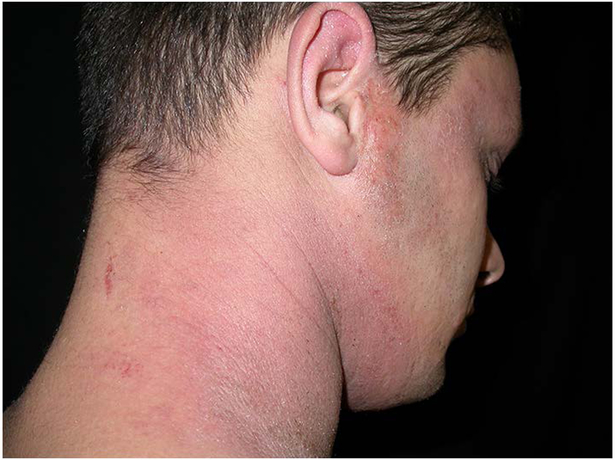
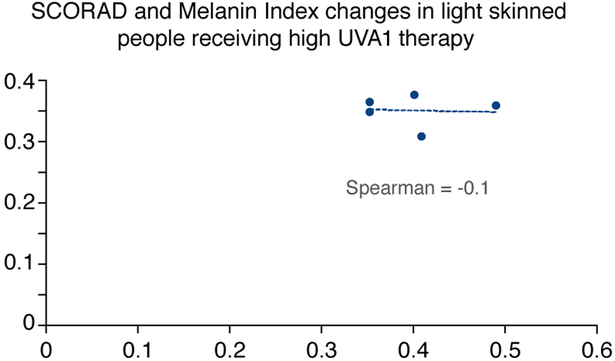
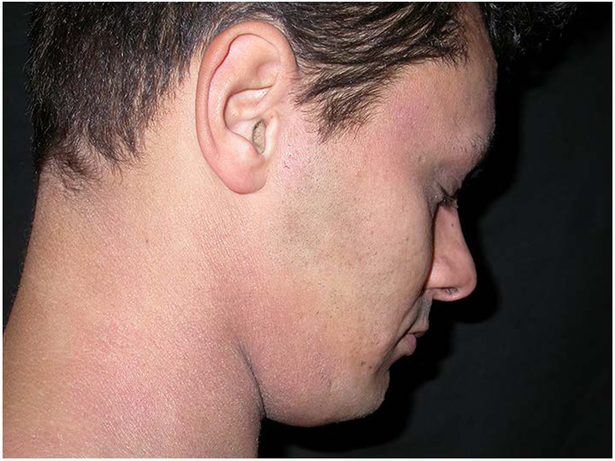
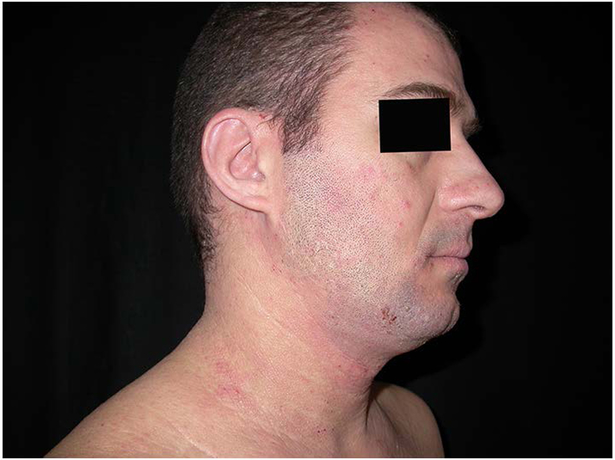
Twenty-seven adult patients with severe AD were consecutively included in a randomized, controlled, open, two arms trial Severity of AD was determined by means of SCORAD index and clinical improvement was also monitored. A total of 13 out of 27 patients were treated with high dose (130 J/cm ) UVA1 protocol while 14 out of 27 patients received medium dose (60 J/cm ) UVA1 protocol. Phototherapy was performed five times weekly up to 3 weeks. Before and after UVA1 treatment each patient was evaluated for skin pigmentation through Melanin Index (MI) quantitative evaluation.
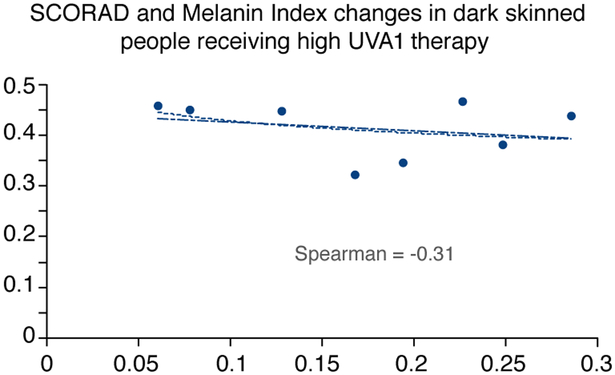
Skin status improved in all patients resulting in a reduction of SCORAD index in all groups. Our results demonstrated that among patients with darker skin types and higher MI, high dose UVA1 was significantly more effective than medium dose (P < 0.0001) while within the groups with skin type II, no significant differences between high and medium dose protocols were observed.
Our study, confirms previous observations that UVA1 phototherapy should be considered among the first approaches in the treatment of patients with severe generalized AD and also demonstrates that in darker skin types, high dose UVA1 phototherapy is more effective than medium dose in the treatment of adult patients with severe AD.
目前的证据表明 UVA1 光疗在治疗严重特应性皮炎(AD)方面有效。此外,在这种适应症中,“中剂量”与“高剂量”方案同样有效。迄今为止,仍缺乏一项评估不同 UVA1 方案在不同皮肤类型中治疗成人严重 AD 的有效性和安全性的随机对照研究。
本研究旨在比较中剂量和高剂量 UVA1 在中肤色和深肤色人群中的安全性和疗效。
27 例成人严重 AD 患者连续纳入一项随机、对照、开放、双臂试验。采用 SCORAD 指数评估 AD 严重程度,并监测临床改善情况。27 例患者中,13 例接受高剂量(130 J/cm)UVA1 方案治疗,14 例接受中剂量(60 J/cm)UVA1 方案治疗。每周 5 次进行光疗,持续 3 周。在 UVA1 治疗前后,通过黑素指数(MI)定量评估对每位患者的皮肤色素沉着进行评估。
所有患者的皮肤状况均得到改善,导致所有组的 SCORAD 指数均降低。我们的结果表明,在肤色较深和 MI 较高的患者中,高剂量 UVA1 比中剂量 UVA1 更有效(P < 0.0001),而在 II 型皮肤组中,高剂量和中剂量方案之间无显著差异。
我们的研究证实了先前的观察结果,即 UVA1 光疗应被视为治疗严重泛发性 AD 患者的首选方法之一,并且还表明,在肤色较深的人群中,高剂量 UVA1 光疗在治疗成人严重 AD 方面比中剂量更有效。