Computer Science and Information Engineering, National Cheng Kung University, Tainan, Taiwan.
Computer Science and Information Engineering, National Chiao Tung University, Hsinchu, Taiwan.
PLoS One. 2018 Nov 26;13(11):e0207579. doi: 10.1371/journal.pone.0207579. eCollection 2018.
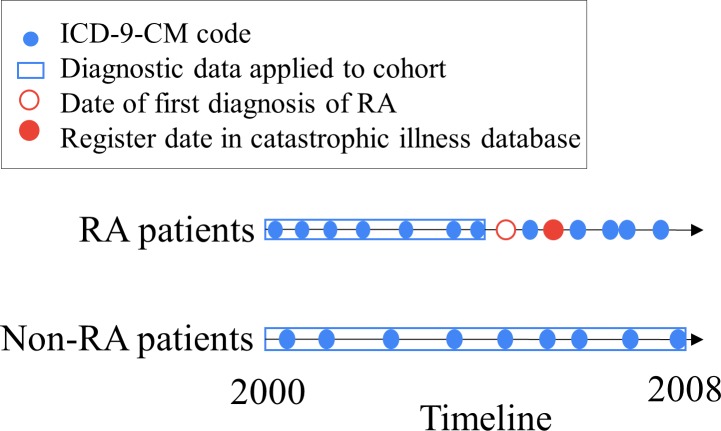
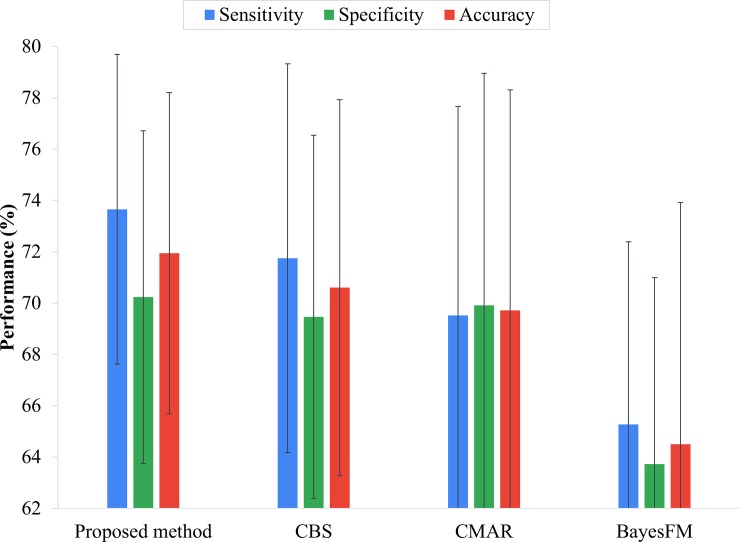
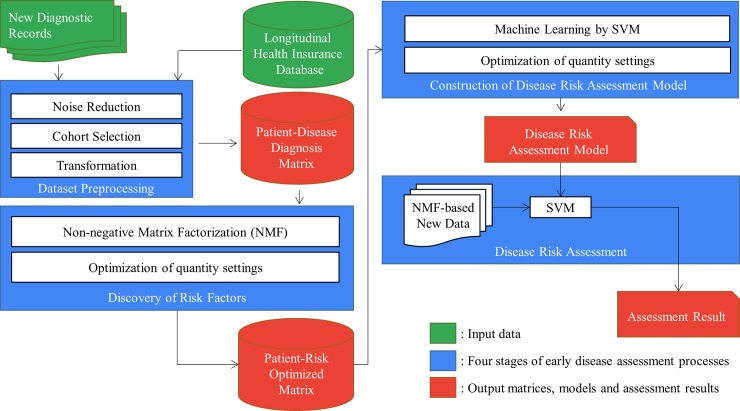
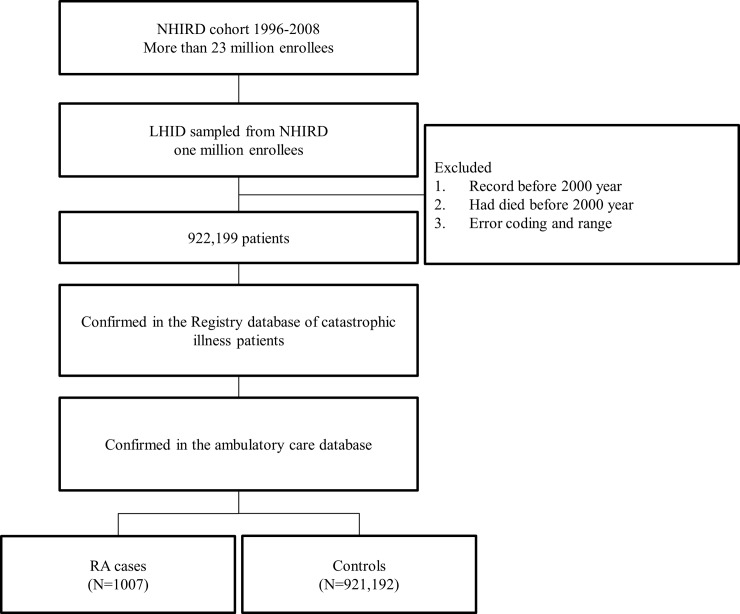
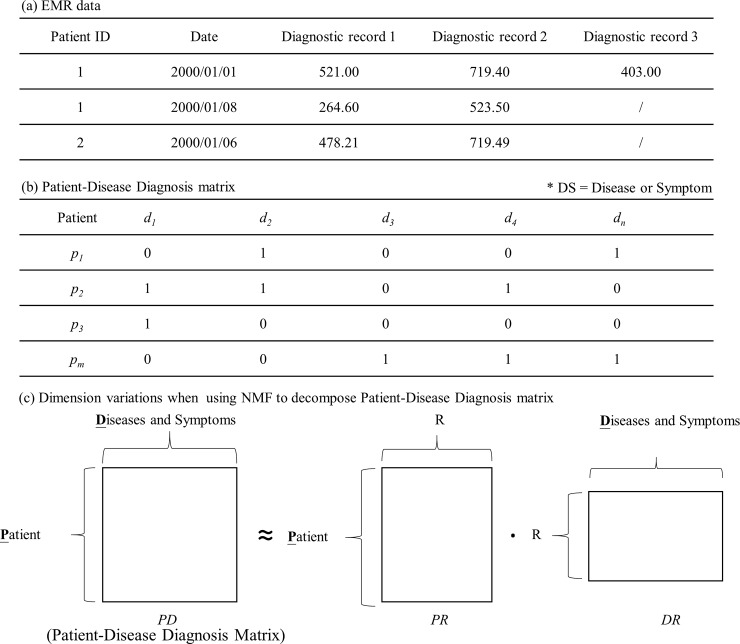
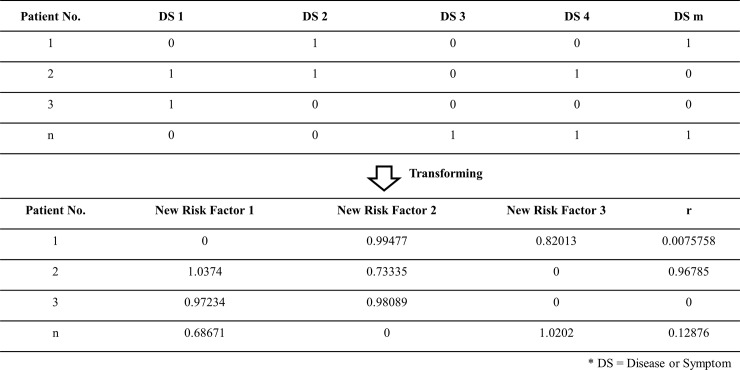
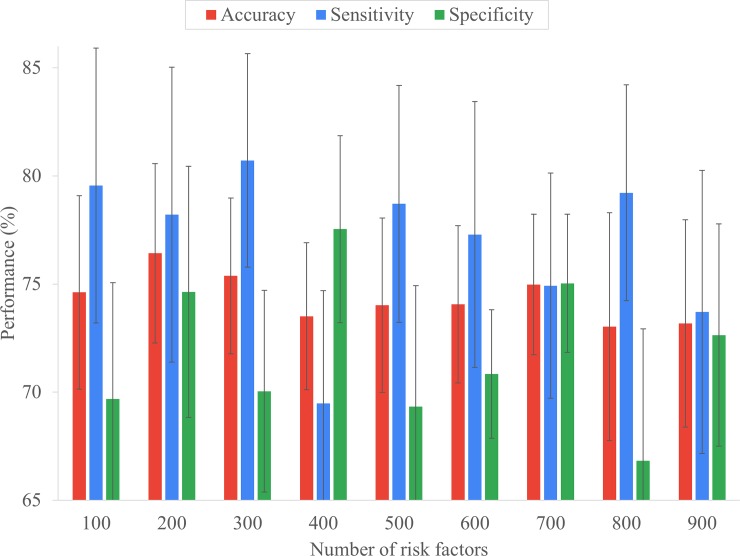
Recently, a number of analytical approaches for probing medical databases have been developed to assist in disease risk assessment and to determine the association of a clinical condition with others, so that better and intelligent healthcare can be provided. The early assessment of disease risk is an emerging topic in medical informatics. If diseases are detected at an early stage, prognosis can be improved and medical resources can be used more efficiently. For example, if rheumatoid arthritis (RA) is detected at an early stage, appropriate medications can be used to prevent bone deterioration. In early disease risk assessment, finding important risk factors from large-scale medical databases and performing individual disease risk assessment have been challenging tasks. A number of recent studies have considered risk factor analysis approaches, such as association rule mining, sequential rule mining, regression, and expert advice. In this study, to improve disease risk assessment, machine learning and matrix factorization techniques were integrated to discover important and implicit risk factors. A novel framework is proposed that can effectively assess early disease risks, and RA is used as a case study. This framework comprises three main stages: data preprocessing, risk factor optimization, and early disease risk assessment. This is the first study integrating matrix factorization and machine learning for disease risk assessment that is applied to a nation-wide and longitudinal medical diagnostic database. In the experimental evaluations, a cohort established from a large-scale medical database was used that included 1007 RA-diagnosed patients and 921,192 control patients examined over a nine-year follow-up period (2000-2008). The evaluation results demonstrate that the proposed approach is more efficient and stable for disease risk assessment than state-of-the-art methods.
近年来,已经开发出许多用于探测医学数据库的分析方法,以协助疾病风险评估和确定临床状况与其他状况的关联,从而提供更好和智能的医疗保健。疾病风险的早期评估是医学信息学中的一个新兴主题。如果在早期发现疾病,可以改善预后并更有效地利用医疗资源。例如,如果早期发现类风湿关节炎 (RA),可以使用适当的药物来预防骨骼恶化。在早期疾病风险评估中,从大规模医学数据库中找到重要的风险因素并进行个体疾病风险评估一直是具有挑战性的任务。最近的许多研究都考虑了风险因素分析方法,如关联规则挖掘、序列规则挖掘、回归和专家建议。在这项研究中,为了提高疾病风险评估的准确性,将机器学习和矩阵分解技术集成到发现重要的隐含风险因素中。提出了一种新颖的框架,可以有效地评估早期疾病风险,并以 RA 为例进行研究。该框架包括三个主要阶段:数据预处理、风险因素优化和早期疾病风险评估。这是首次将矩阵分解和机器学习集成到应用于全国性和纵向医学诊断数据库的疾病风险评估中。在实验评估中,使用了从大型医学数据库中建立的队列,该队列包括 1007 名 RA 确诊患者和 921,192 名对照患者,随访时间为九年(2000-2008 年)。评估结果表明,与最新方法相比,所提出的方法在疾病风险评估方面更高效和稳定。