Garcia-Mazcorro Jose F, Lage Nara N, Mertens-Talcott Susanne, Talcott Stephen, Chew Boon, Dowd Scot E, Kawas Jorge R, Noratto Giuliana D
Faculty of Veterinary Medicine, Universidad Autónoma de Nuevo León, General Escobedo, Mexico.
Research and Development, MNA de Mexico, San Nicolas de los Garza, Mexico.
PeerJ. 2018 Jan 3;6:e4195. doi: 10.7717/peerj.4195. eCollection 2018.
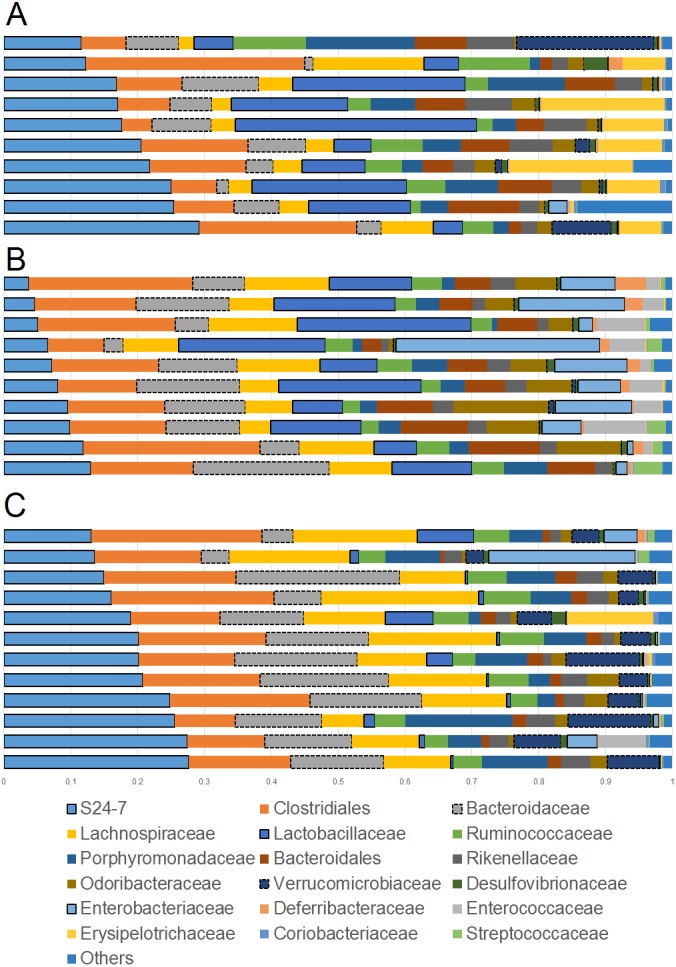
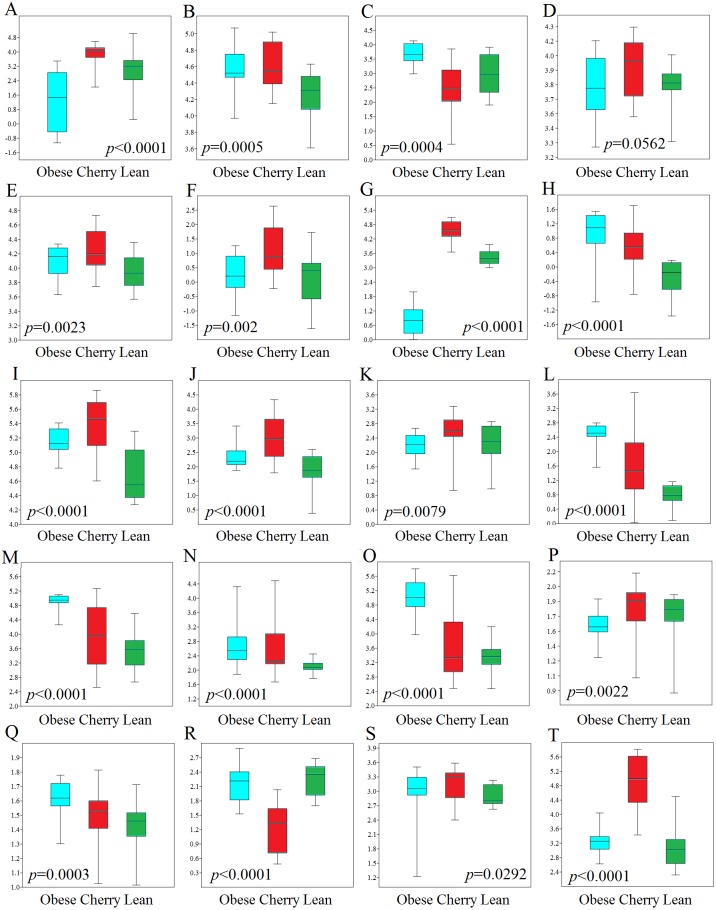
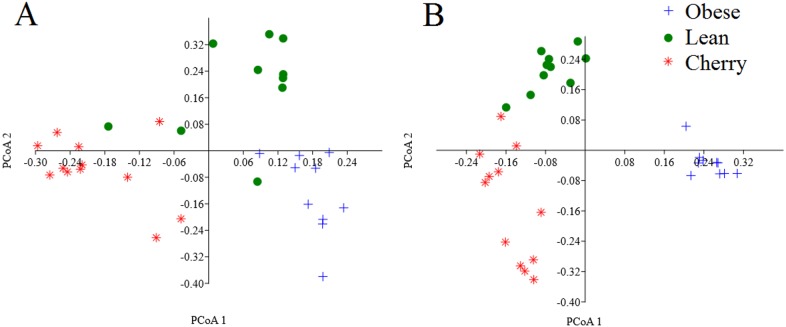
Cherries are fruits containing fiber and bioactive compounds (e.g., polyphenolics) with the potential of helping patients with diabetes and weight disorders, a phenomenon likely related to changes in the complex host-microbiota milieu. The objective of this study was to investigate the effect of cherry supplementation on the gut bacterial composition, concentrations of caecal short-chain fatty acids (SCFAs) and biomarkers of gut health using an model of obesity. Obese diabetic (db/db) mice received a supplemented diet with 10% cherry powder (supplemented mice, = 12) for 12 weeks; obese ( = 10) and lean ( = 10) mice served as controls and received a standard diet without cherry. High-throughput sequencing of the 16S rRNA gene and quantitative real-time PCR (qPCR) were used to analyze the gut microbiota; SCFAs and biomarkers of gut health were also measured using standard techniques. According to 16S sequencing, supplemented mice harbored a distinct colonic microbiota characterized by a higher abundance of mucin-degraders (i.e., ) and fiber-degraders (the S24-7 family) as well as lower abundances of and Enterobacteriaceae. Overall this particular cherry-associated colonic microbiota did not resemble the microbiota in obese or lean controls based on the analysis of weighted and unweighted UniFrac distance metrics. qPCR confirmed some of the results observed in sequencing, thus supporting the notion that cherry supplementation can change the colonic microbiota. Moreover, the SCFAs detected in supplemented mice (caproate, methyl butyrate, propionate, acetate and valerate) exceeded those concentrations detected in obese and lean controls except for butyrate. Despite the changes in microbial composition and SCFAs, most of the assessed biomarkers of inflammation, oxidative stress, and intestinal health in colon tissues and mucosal cells were similar in all obese mice with and without supplementation. This paper shows that dietary supplementation with cherry powder for 12 weeks affects the microbiota and the concentrations of SCFAs in the lower intestinal tract of obese db/db diabetic mice. These effects occurred in absence of differences in most biomarkers of inflammation and other parameters of gut health. Our study prompts more research into the potential clinical implications of cherry consumption as a dietary supplement in diabetic and obese human patients.
樱桃是富含纤维和生物活性化合物(如多酚类)的水果,有可能帮助糖尿病和体重失调患者,这一现象可能与复杂的宿主 - 微生物群环境变化有关。本研究的目的是使用肥胖模型,研究补充樱桃对肠道细菌组成、盲肠短链脂肪酸(SCFA)浓度和肠道健康生物标志物的影响。肥胖糖尿病(db/db)小鼠接受含10%樱桃粉的补充饮食12周(补充组小鼠,n = 12);肥胖(n = 10)和瘦(n = 10)小鼠作为对照组,接受不含樱桃的标准饮食。使用16S rRNA基因的高通量测序和定量实时PCR(qPCR)分析肠道微生物群;还使用标准技术测量SCFAs和肠道健康生物标志物。根据16S测序,补充组小鼠具有独特的结肠微生物群,其特征是粘蛋白降解菌(即 )和纤维降解菌(S24 - 7家族)丰度较高,而 和肠杆菌科丰度较低。基于加权和非加权UniFrac距离度量分析,总体而言,这种与樱桃相关的特定结肠微生物群与肥胖或瘦对照组中的微生物群不同。qPCR证实了测序中观察到的一些结果,从而支持了补充樱桃可以改变结肠微生物群的观点。此外,补充组小鼠中检测到的SCFAs(己酸、甲基丁酸、丙酸、乙酸和戊酸)除丁酸盐外,均超过肥胖和瘦对照组中检测到的浓度。尽管微生物组成和SCFAs发生了变化,但在所有补充和未补充樱桃的肥胖小鼠中,结肠组织和粘膜细胞中评估的大多数炎症、氧化应激和肠道健康生物标志物相似。本文表明,给肥胖db/db糖尿病小鼠补充12周樱桃粉会影响其微生物群和下肠道中SCFAs的浓度。这些影响在大多数炎症生物标志物和其他肠道健康参数无差异的情况下出现。我们的研究促使人们对食用樱桃作为糖尿病和肥胖人类患者膳食补充剂的潜在临床意义进行更多研究。