Izi Samira, Youssefi Masoud, Rahmani Farzad, Roshan Nema Mohammadian, Yari Atefeh, Avval Farnaz Zahedi
Department of Clinical Biochemistry, Faculty of Medicine, Mashhad University of Medical Sciences, Mashhad, Iran.
Department of Microbiology and Virology, Faculty of Medicine, Mashhad University of Medical Sciences, Mashhad, Iran.
Iran J Microbiol. 2018 Aug;10(4):266-274.
Factors contributing to development of gastric cancer are still under investigation. The JC Virus (JCV), as an oncogenic virus, has been indicated to play a possible role in gastric carcinogenesis. Theoretically, tumor antigen (T-Ag), the viral transforming protein, is capable of binding and inactivating tumor suppressor proteins p53 and pRb, there by promoting cancer development although such a role in gastric cancer is still controversial and additional data is needed to reach a definite conclusion. The prevalence of the virus varies in different geographic regions, therefore, we aimed to investigate JCV presence in cancerous gastric tissues of Iranian patients.
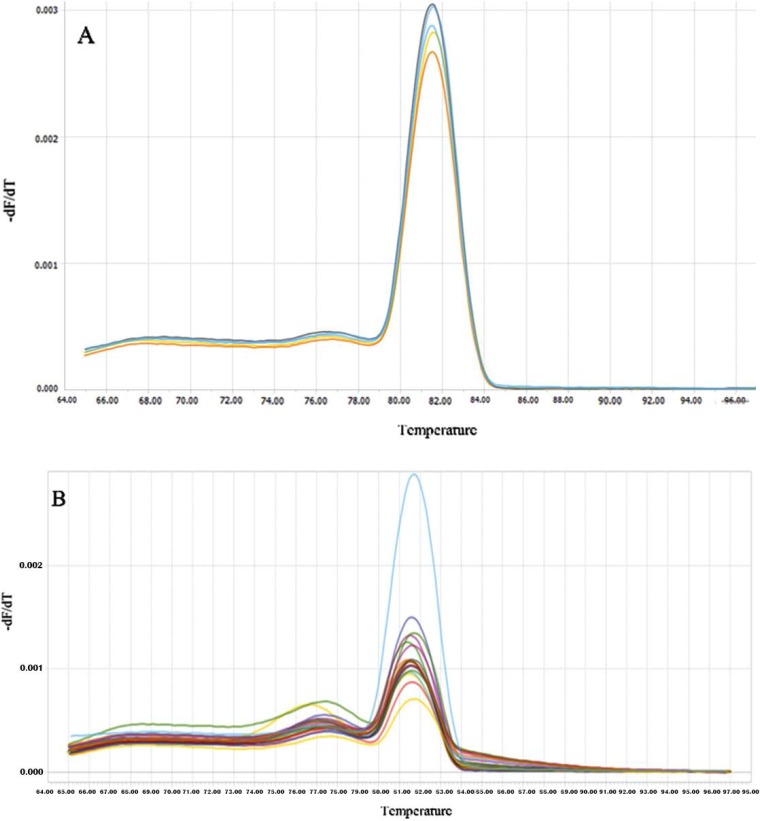
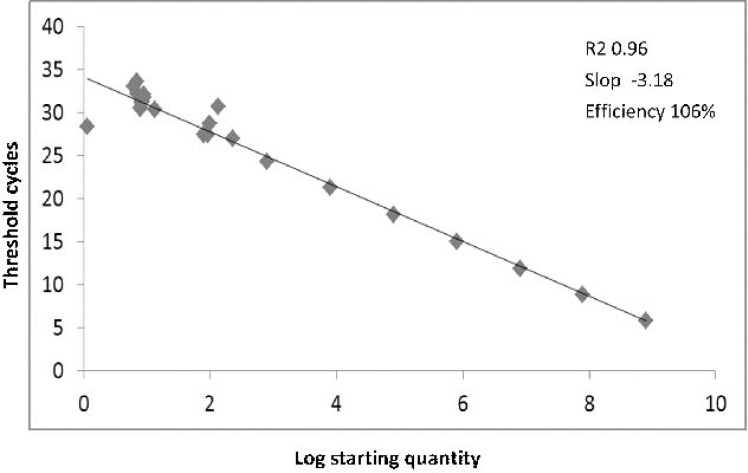
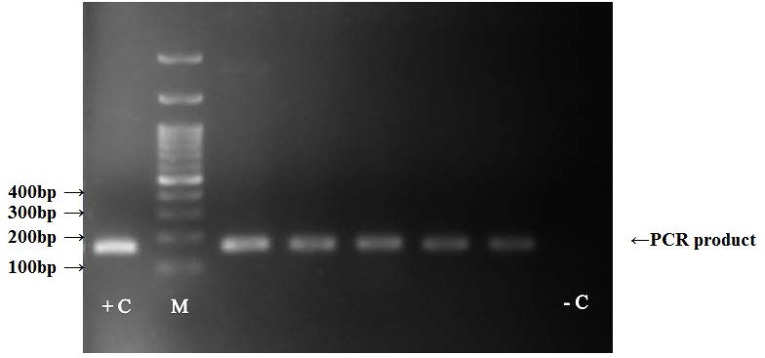
Thirty-one paired samples were included in this study (total of 62 samples). T-Ag sequences were investigated using real-time PCR in formalin fixed paraffin embedded (FFPE) tissue samples from the tumor site and relevant adjacent non-cancerous tissues (ANCT). In positive samples, JCV copy number (viral load) was also measured using real-time PCR. To evaluate T-Ag protein expression, immunohistochemistry examination was performed using an anti-T-Ag specific antibody.
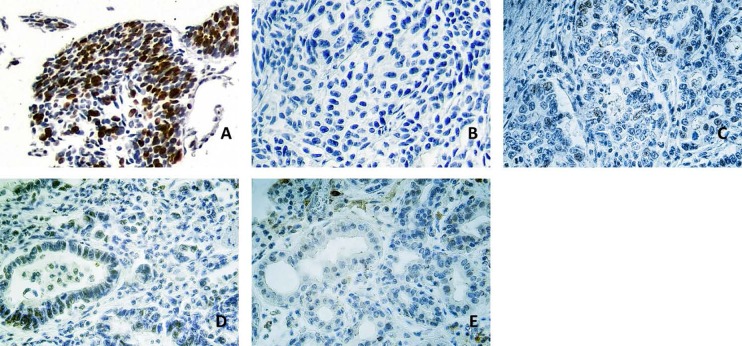
JCV sequences were detected in 17 out of 31 gastric cancer tissue samples (54.84%) and in 10 out of 31 of the non-cancerous adjacent gastric mucosa (32.25%) (Odds ratio of 2.4). Viral load in tumoral and adjacent tissue samples was not statistically different (p=0.88). Immunohistochemical study confirmed presence of JC T-Ag in the nuclear compartment.
We showed the presence of the JC virus in gastric carcinoma tissue samples in our geographic region. This finding provides supportive data for a possible contribution of JCV in gastric cell transformation to malignancy. However, we highly recommend additional investigations to further explore JC virus and gastric cancer in order to reach a conclusion.
胃癌发生的相关因素仍在研究中。JC病毒(JCV)作为一种致癌病毒,已被指出可能在胃癌发生过程中发挥作用。理论上,肿瘤抗原(T-Ag),即病毒转化蛋白,能够结合并使肿瘤抑制蛋白p53和pRb失活,从而促进癌症发展,尽管其在胃癌中的这种作用仍存在争议,还需要更多数据才能得出明确结论。该病毒的流行率在不同地理区域有所不同,因此,我们旨在调查伊朗患者癌性胃组织中JCV的存在情况。
本研究纳入了31对样本(共62个样本)。使用实时PCR在来自肿瘤部位及相关邻近非癌组织(ANCT)的福尔马林固定石蜡包埋(FFPE)组织样本中检测T-Ag序列。在阳性样本中,还使用实时PCR测量JCV拷贝数(病毒载量)。为评估T-Ag蛋白表达,使用抗T-Ag特异性抗体进行免疫组化检查。
在31个胃癌组织样本中的17个(54.84%)以及31个邻近非癌胃黏膜样本中的10个(32.25%)检测到JCV序列(优势比为2.4)。肿瘤组织和邻近组织样本中的病毒载量无统计学差异(p = 0.88)。免疫组化研究证实JC T-Ag存在于细胞核内。
我们发现在我们所在地理区域的胃癌组织样本中存在JC病毒。这一发现为JCV在胃细胞转化为恶性肿瘤过程中可能发挥的作用提供了支持性数据。然而,我们强烈建议进行更多研究以进一步探索JC病毒与胃癌的关系,从而得出结论。