Department of Agrobiotechnology (IFA-Tulln), Institute of Biotechnology in Plant Production, University of Natural Resources and Life Sciences, Vienna (BOKU), Konrad-Lorenz-Str. 20, 3430, Tulln, Austria.
Department of Agricultural and Food Sciences, University of Bologna, 40127, Bologna, Italy.
Theor Appl Genet. 2019 Apr;132(4):969-988. doi: 10.1007/s00122-018-3253-9. Epub 2018 Dec 1.
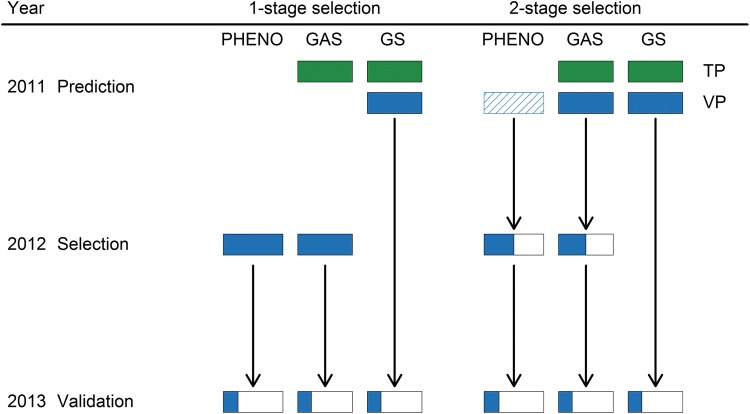
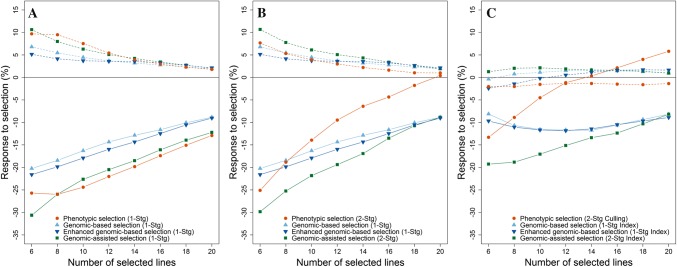
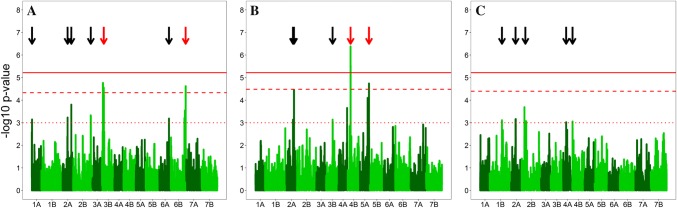
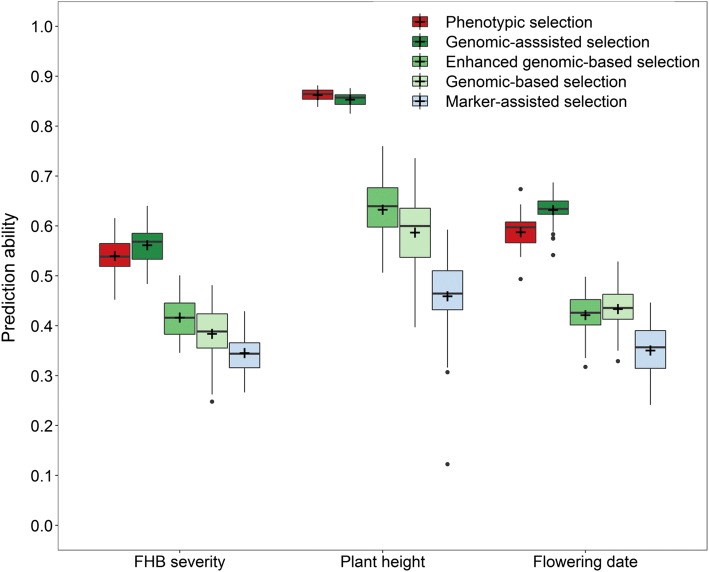
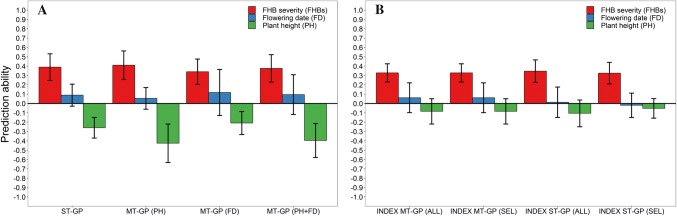
Genomic selection had a higher selection response for FHB resistance than phenotypic selection, while association mapping identified major QTL on chromosome 3B unaffected by plant height and flowering date. Fusarium head blight (FHB) is one of the most destructive diseases of durum wheat. Hence, minimizing losses in yield, quality and avoiding contamination with mycotoxins are of pivotal importance, as durum wheat is mostly used for human consumption. While growing resistant varieties is the most promising approach for controlling this fungal disease, FHB resistance breeding in durum wheat is hampered by the limited variation in the elite gene pool and difficulties in efficiently combining the numerous small-effect resistance quantitative trait loci (QTL) in the same line. We evaluated an international collection of 228 genotyped durum wheat cultivars for FHB resistance over 3 years to investigate the genetic architecture and potential of genomic-assisted breeding for FHB resistance in durum wheat. Plant height was strongly positively correlated with FHB resistance and led to co-localization of plant height and resistance QTL. Nevertheless, a major QTL on chromosome 3B independent of plant height was identified in the same chromosomal interval as reported for the prominent hexaploid resistance QTL Fhb1, though haplotype analysis highlighted the distinctiveness of both QTL. Comparison between phenotypic and genomic selection for FHB resistance revealed a superior prediction ability of the former. However, simulated selection experiments resulted in higher selection responses when using genomic breeding values for early generation selection. An earlier identification of the most promising lines and crossing parents was feasible with a genomic selection index, which suggested a much faster short-term population improvement than previously possible in durum wheat, complementing long-term strategies with exotic resistance donors.
基因组选择在抗赤霉病方面的选择响应高于表型选择,而关联作图则在不受株高和开花日期影响的 3B 染色体上鉴定出主要的 QTL。赤霉病(FHB)是硬质小麦最具破坏性的疾病之一。因此,最大限度地减少产量、质量损失,避免真菌毒素污染至关重要,因为硬质小麦主要用于人类食用。虽然培育抗性品种是控制这种真菌病最有前途的方法,但由于优良基因库中的变异有限,以及在同一品系中有效地结合众多小效应抗性数量性状基因座(QTL)的困难,硬质小麦的赤霉病抗性育种受到阻碍。我们在三年内评估了 228 个基因型硬质小麦品种对 FHB 抗性的国际集合,以研究 FHB 抗性在硬质小麦中的基因组辅助育种的遗传结构和潜力。株高与 FHB 抗性呈强烈正相关,并导致株高和抗性 QTL 的共定位。尽管如此,在与报道的六倍体主要抗性 QTL Fhb1 相同的染色体间隔内,鉴定出了一个独立于株高的 3B 染色体上的主要 QTL,尽管单倍型分析突出了两个 QTL 的独特性。FHB 抗性的表型和基因组选择之间的比较表明前者具有更好的预测能力。然而,使用基因组育种值进行早期世代选择的模拟选择实验导致更高的选择响应。利用基因组选择指数可以更早地识别最有前途的品系和杂交亲本,这表明与以前相比,硬质小麦的短期群体改良速度更快,为长期的外源抗性供体策略提供了补充。