Witowski Janusz, Kamhieh-Milz Julian, Kawka Edyta, Catar Rusan, Jörres Achim
Department of Pathophysiology, Poznan University of Medical Sciences, Poznań, Poland.
Department of Nephrology, Medical Intensive Care, Charité - Universitätsmedizin Berlin, Berlin, Germany.
Front Physiol. 2018 Nov 26;9:1694. doi: 10.3389/fphys.2018.01694. eCollection 2018.
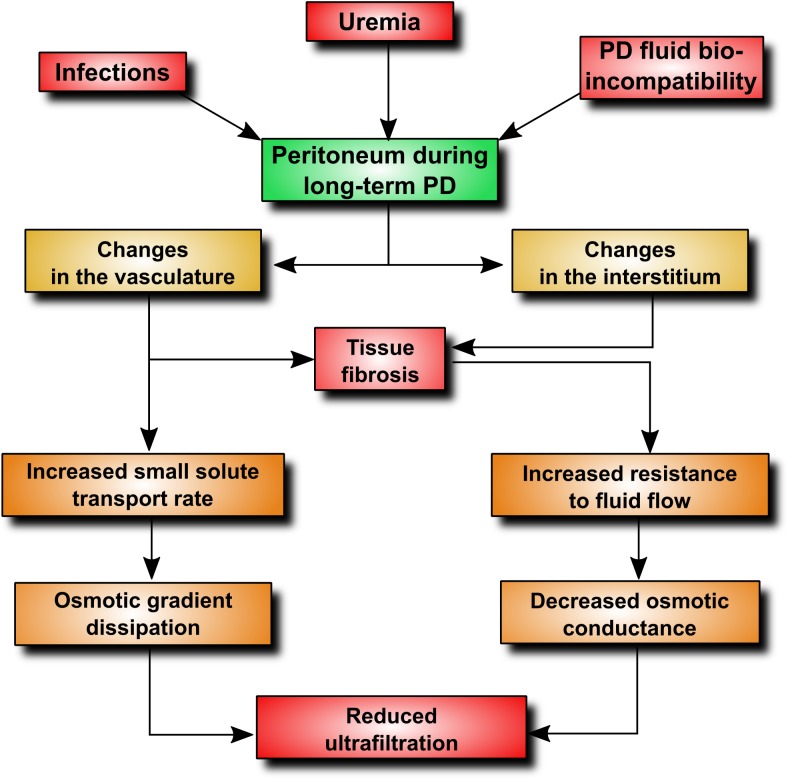
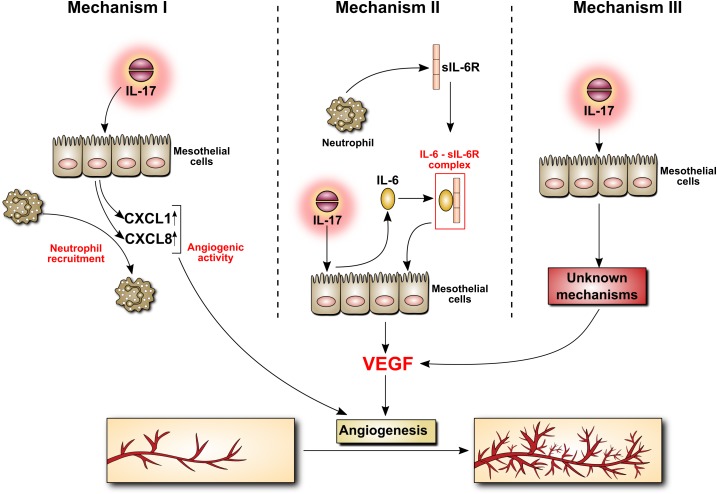
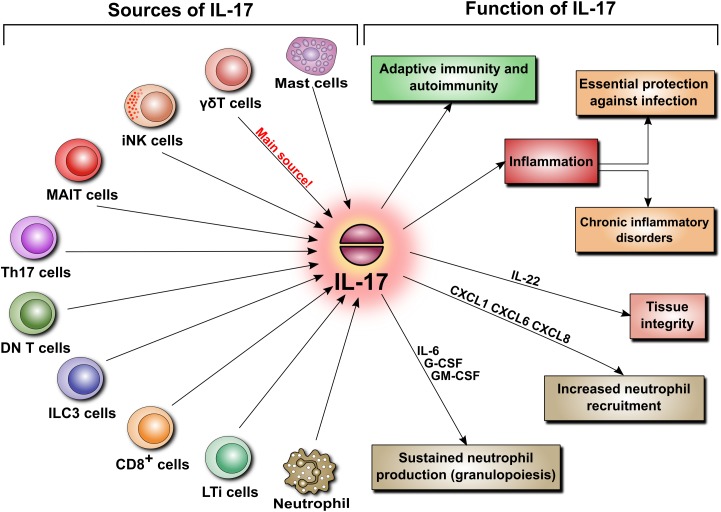
Long-term peritoneal dialysis (PD) is associated with peritoneal membrane remodeling. This includes changes in peritoneal vasculature, which may ultimately lead to inadequate solute and water removal and treatment failure. The potential cause of such alterations is chronic inflammation induced by repeated episodes of infectious peritonitis and/or exposure to bioincompatible PD fluids. While these factors may jeopardize the peritoneal membrane integrity, it is not clear why adverse peritoneal remodeling develops only in some PD patients. Increasing evidence points to the differences that occur between patients in response to the same invading microorganism and/or the differences in the course of inflammatory reaction triggered by different species. Such differences may be related to the involvement of different inflammatory mediators. Here, we discuss the potential role of IL-17 in these processes with emphasis on its impact on peritoneal mesothelial cells and peritoneal vascularity.
长期腹膜透析(PD)与腹膜重塑有关。这包括腹膜血管系统的变化,最终可能导致溶质和水分清除不足以及治疗失败。这种改变的潜在原因是反复发生的感染性腹膜炎和/或接触生物不相容的腹膜透析液所引发的慢性炎症。虽然这些因素可能损害腹膜的完整性,但尚不清楚为什么只有部分腹膜透析患者会发生不良的腹膜重塑。越来越多的证据表明,患者对同一入侵微生物的反应存在差异,和/或不同菌种引发的炎症反应过程存在差异。这些差异可能与不同炎症介质的参与有关。在此,我们讨论白细胞介素-17在这些过程中的潜在作用,重点是其对腹膜间皮细胞和腹膜血管的影响。