• 文献检索
  • 文档翻译
  • 深度研究
  • 学术资讯
  • Suppr Zotero 插件Zotero 插件
  • 邀请有礼
  • 套餐&价格
  • 历史记录
应用&插件
Suppr Zotero 插件Zotero 插件浏览器插件Mac 客户端Windows 客户端微信小程序
定价
高级版会员购买积分包购买API积分包
服务
文献检索文档翻译深度研究API 文档MCP 服务
关于我们
关于 Suppr公司介绍联系我们用户协议隐私条款
关注我们

Suppr 超能文献

核心技术专利:CN118964589B侵权必究
粤ICP备2023148730 号-1Suppr @ 2026

文献检索

告别复杂PubMed语法,用中文像聊天一样搜索,搜遍4000万医学文献。AI智能推荐,让科研检索更轻松。

立即免费搜索

文件翻译

保留排版,准确专业,支持PDF/Word/PPT等文件格式,支持 12+语言互译。

免费翻译文档

深度研究

AI帮你快速写综述,25分钟生成高质量综述,智能提取关键信息,辅助科研写作。

立即免费体验

基于桡动脉脉搏波的高血压机器学习分类器研究

A Study of Machine-Learning Classifiers for Hypertension Based on Radial Pulse Wave.

机构信息

Department of Basic Medical College, Shanghai University of Traditional Chinese Medicine, 1200 Cailun Road, Pudong New Area, Shanghai 201203, China.

Shanghai Collaborative Innovation Center of Health Service in Traditional Chinese Medicine, Shanghai University of Traditional Chinese Medicine, 1200 Cailun Road, Shanghai 201203, China.

出版信息

Biomed Res Int. 2018 Nov 11;2018:2964816. doi: 10.1155/2018/2964816. eCollection 2018.

DOI:10.1155/2018/2964816
PMID:30534557
原文链接:https://pmc.ncbi.nlm.nih.gov/articles/PMC6252205/
Abstract

OBJECTIVE

In this study, machine learning was utilized to classify and predict pulse wave of hypertensive group and healthy group and assess the risk of hypertension by observing the dynamic change of the pulse wave and provide an objective reference for clinical application of pulse diagnosis in traditional Chinese medicine (TCM).

METHOD

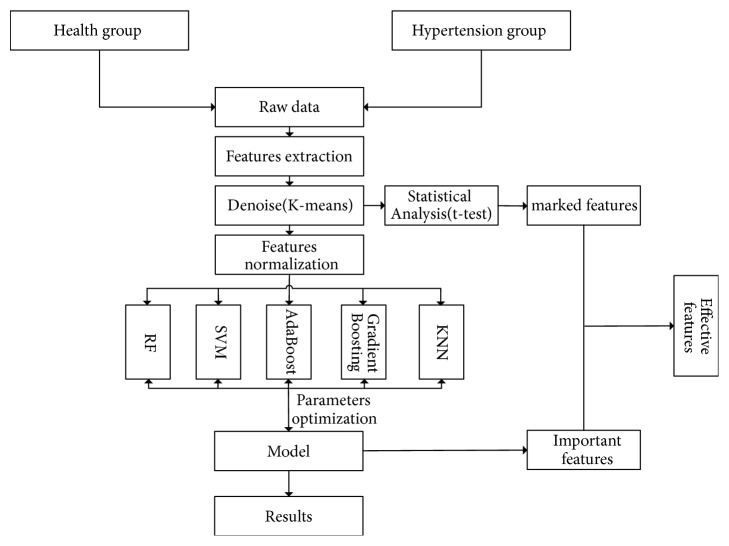
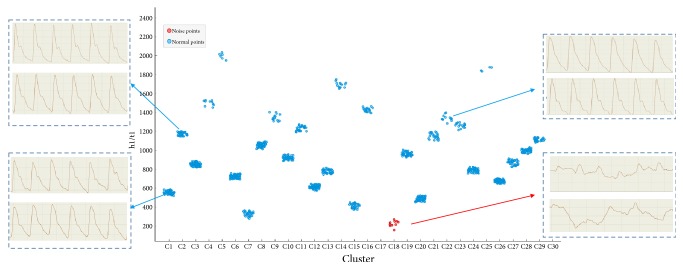
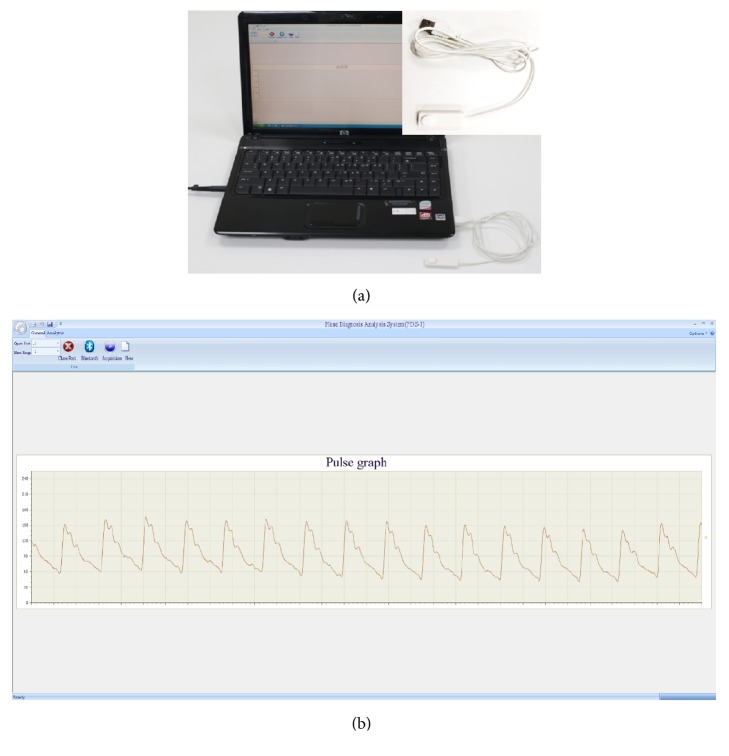
The basic information from 450 hypertensive cases and 479 healthy cases was collected by self-developed H20 questionnaires and pulse wave information was acquired by self-developed pulse diagnostic instrument (PDA-1). H20 questionnaires and pulse wave information were used as input variables to obtain different machine learning classification models of hypertension. This method was aimed at analyzing the influence of pulse wave on the accuracy and stability of machine learning model, as well as the feature contribution of hypertension model after removing noise by K-means.

RESULT

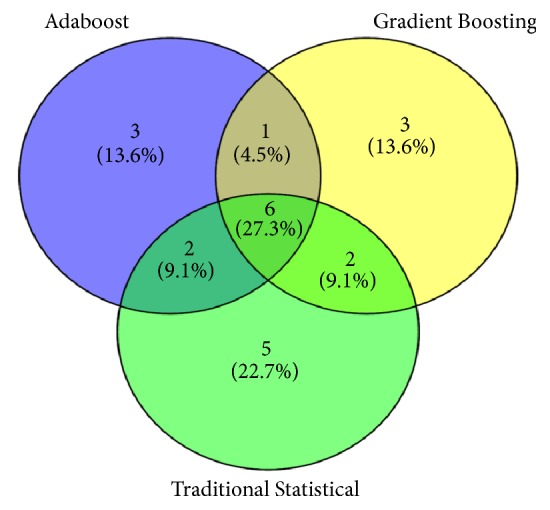
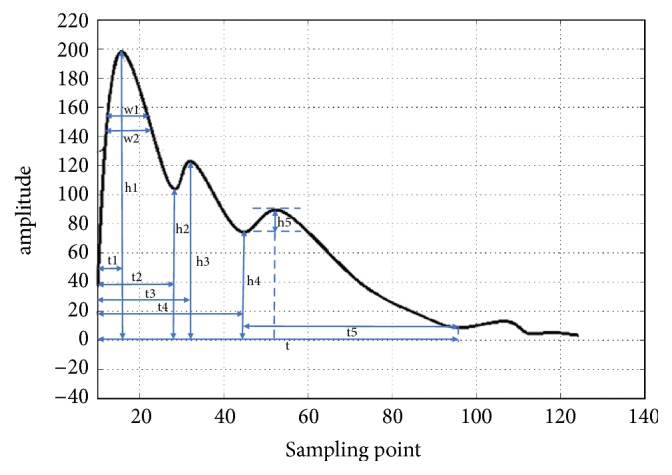
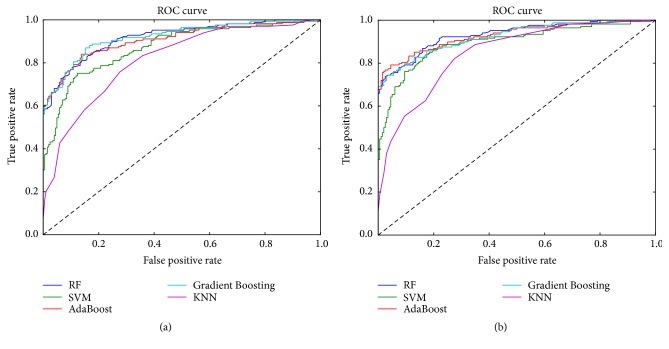
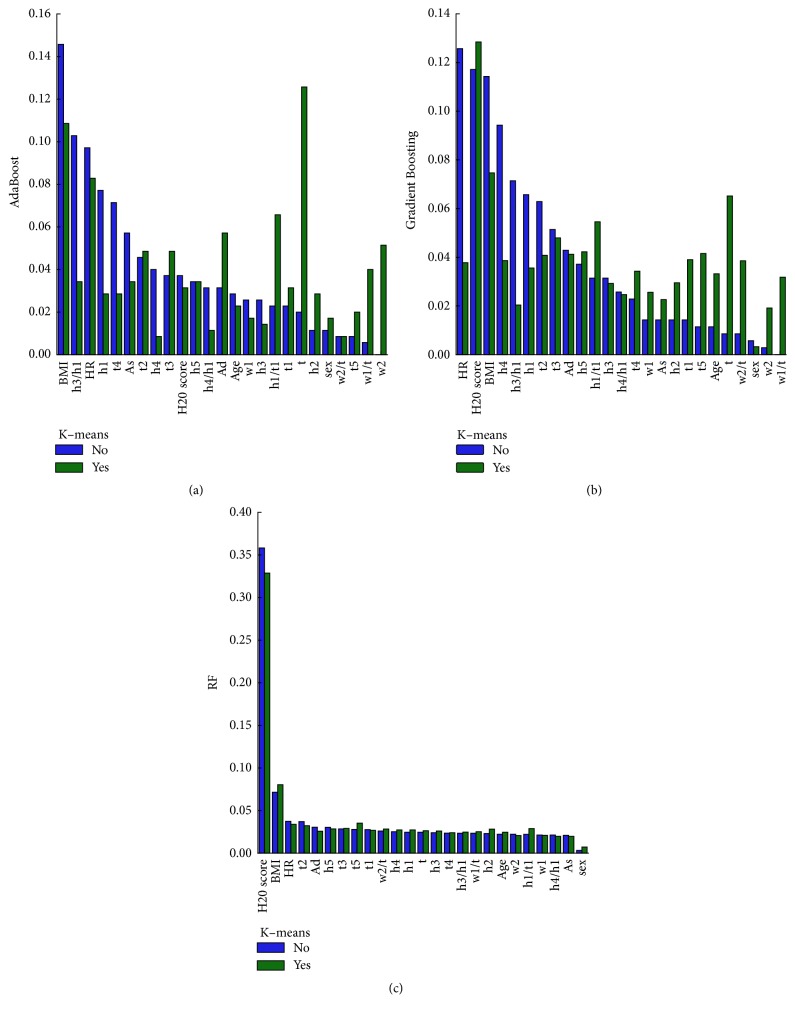
Compared with the classification results before removing noise, the accuracy and the area under the curve (AUC) had been improved. The accuracy rates of AdaBoost, Gradient Boosting, and Random Forest (RF) were 86.41%, 86.41%, and 85.33%, respectively. AUC were 0.86, 0.86, and 0.85, respectively. The maximum accuracy of SVM increased from 79.57% to 83.15%, and the AUC stability increased from 0.79 to 0.83. In addition, the features of importance on traditional statistics and machine learning were consistent. After removing noise, the features with large changes were h1/t1, w1/t, t, w2, h2, t1, and t5 in AdaBoost and Gradient Boosting (top10). The common variables for machine learning and traditional statistics were h1/t1, h5, t, Ad, BMI, and t2.

CONCLUSION

Pulse wave-based diagnostic method of hypertension has significant value in reference. In view of the feasibility of digital-pulse-wave diagnosis and dynamically evaluating hypertension, it provides the research direction and foundation for Chinese medicine in the dynamic evaluation of modern disease diagnosis and curative effect.

摘要

目的

本研究利用机器学习对高血压组和健康组的脉象进行分类和预测,并通过观察脉象的动态变化评估高血压的风险,为中医脉诊的临床应用提供客观参考。

方法

通过自行开发的 H20 问卷收集了 450 例高血压病例和 479 例健康对照的基本信息,通过自行开发的脉象诊断仪(PDA-1)采集了脉象信息。将 H20 问卷和脉象信息作为输入变量,得到不同的高血压机器学习分类模型。该方法旨在分析脉象对机器学习模型准确性和稳定性的影响,以及通过 K-均值去除噪声后高血压模型的特征贡献。

结果

与去除噪声前的分类结果相比,准确性和曲线下面积(AUC)均有所提高。AdaBoost、梯度提升(Gradient Boosting)和随机森林(Random Forest,RF)的准确率分别为 86.41%、86.41%和 85.33%,AUC 分别为 0.86、0.86 和 0.85。SVM 的最大准确率从 79.57%提高到 83.15%,AUC 稳定性从 0.79 提高到 0.83。此外,传统统计学和机器学习的重要特征是一致的。去除噪声后,AdaBoost 和 Gradient Boosting 中变化较大的特征是 h1/t1、w1/t、t、w2、h2、t1 和 t5(前 10 位)。传统统计学和机器学习的共同变量是 h1/t1、h5、t、Ad、BMI 和 t2。

结论

基于脉象的高血压诊断方法具有重要的参考价值。鉴于数字脉象诊断的可行性和对高血压的动态评估,为中医在现代疾病诊断和疗效的动态评估中提供了研究方向和基础。
https://cdn.ncbi.nlm.nih.gov/pmc/blobs/1410/6252205/4a54cc3d8c19/BMRI2018-2964816.007.jpg
https://cdn.ncbi.nlm.nih.gov/pmc/blobs/1410/6252205/e5a6b18caa2b/BMRI2018-2964816.001.jpg
https://cdn.ncbi.nlm.nih.gov/pmc/blobs/1410/6252205/89ebb91ef24f/BMRI2018-2964816.002.jpg
https://cdn.ncbi.nlm.nih.gov/pmc/blobs/1410/6252205/c251a024f3ca/BMRI2018-2964816.003.jpg
https://cdn.ncbi.nlm.nih.gov/pmc/blobs/1410/6252205/93886c60e170/BMRI2018-2964816.004.jpg
https://cdn.ncbi.nlm.nih.gov/pmc/blobs/1410/6252205/a508d90650e7/BMRI2018-2964816.005.jpg
https://cdn.ncbi.nlm.nih.gov/pmc/blobs/1410/6252205/dbe6aeb1f31b/BMRI2018-2964816.006.jpg
https://cdn.ncbi.nlm.nih.gov/pmc/blobs/1410/6252205/4a54cc3d8c19/BMRI2018-2964816.007.jpg
https://cdn.ncbi.nlm.nih.gov/pmc/blobs/1410/6252205/e5a6b18caa2b/BMRI2018-2964816.001.jpg
https://cdn.ncbi.nlm.nih.gov/pmc/blobs/1410/6252205/89ebb91ef24f/BMRI2018-2964816.002.jpg
https://cdn.ncbi.nlm.nih.gov/pmc/blobs/1410/6252205/c251a024f3ca/BMRI2018-2964816.003.jpg
https://cdn.ncbi.nlm.nih.gov/pmc/blobs/1410/6252205/93886c60e170/BMRI2018-2964816.004.jpg
https://cdn.ncbi.nlm.nih.gov/pmc/blobs/1410/6252205/a508d90650e7/BMRI2018-2964816.005.jpg
https://cdn.ncbi.nlm.nih.gov/pmc/blobs/1410/6252205/dbe6aeb1f31b/BMRI2018-2964816.006.jpg
https://cdn.ncbi.nlm.nih.gov/pmc/blobs/1410/6252205/4a54cc3d8c19/BMRI2018-2964816.007.jpg

相似文献

1
A Study of Machine-Learning Classifiers for Hypertension Based on Radial Pulse Wave.基于桡动脉脉搏波的高血压机器学习分类器研究
Biomed Res Int. 2018 Nov 11;2018:2964816. doi: 10.1155/2018/2964816. eCollection 2018.
2
Machine learning classification of polycystic ovary syndrome based on radial pulse wave analysis.基于桡动脉脉搏波分析的多囊卵巢综合征的机器学习分类。
BMC Complement Med Ther. 2023 Nov 13;23(1):409. doi: 10.1186/s12906-023-04249-5.
3
Classification of coronary artery disease using radial artery pulse wave analysis via machine learning.基于机器学习的桡动脉脉搏波分析对冠状动脉疾病的分类。
BMC Med Inform Decis Mak. 2024 Sep 16;24(1):256. doi: 10.1186/s12911-024-02666-1.
4
A Noninvasive, Economical, and Instant-Result Method to Diagnose and Monitor Type 2 Diabetes Using Pulse Wave: Case-Control Study.一种使用脉搏波诊断和监测 2 型糖尿病的无创、经济、即时结果方法:病例对照研究。
JMIR Mhealth Uhealth. 2019 Apr 23;7(4):e11959. doi: 10.2196/11959.
5
Ultrafast pulse wave velocity and ensemble learning to predict atherosclerosis risk.超快脉搏波速度与集成学习预测动脉粥样硬化风险。
Int J Cardiovasc Imaging. 2022 Sep;38(9):1885-1893. doi: 10.1007/s10554-022-02574-3. Epub 2022 Feb 27.
6
Prediction of hypertension risk based on multiple feature fusion.基于多特征融合的高血压风险预测。
J Biomed Inform. 2024 Sep;157:104701. doi: 10.1016/j.jbi.2024.104701. Epub 2024 Jul 22.
7
Relationship between Renying pulse augmentation index and Cunkou pulse condition in different blood pressure groups.人迎脉增强指数与不同血压组寸口脉象的关系。
J Tradit Chin Med. 2014 Jun;34(3):279-85. doi: 10.1016/s0254-6272(14)60091-1.
8
Identifying Coronary Artery Lesions by Feature Analysis of Radial Pulse Wave: A Case-Control Study.基于桡动脉脉搏波特征分析识别冠状动脉病变:一项病例对照研究。
Biomed Res Int. 2021 Dec 30;2021:5047501. doi: 10.1155/2021/5047501. eCollection 2021.
9
Pulse wave signal-driven machine learning for identifying left ventricular enlargement in heart failure patients.基于脉搏波信号的机器学习方法在心力衰竭患者左心室肥大识别中的应用。
Biomed Eng Online. 2024 Jun 22;23(1):60. doi: 10.1186/s12938-024-01257-5.
10
Comparing different algorithms for the course of Alzheimer's disease using machine learning.使用机器学习比较阿尔茨海默病病程的不同算法。
Ann Palliat Med. 2021 Sep;10(9):9715-9724. doi: 10.21037/apm-21-2013.

引用本文的文献

1
Artificial Intelligence in Traditional Chinese Medicine: Multimodal Fusion and Machine Learning for Enhanced Diagnosis and Treatment Efficacy.中医中的人工智能:多模态融合与机器学习以提高诊疗效果
Curr Med Sci. 2025 Aug 7. doi: 10.1007/s11596-025-00103-6.
2
A machine learning approach to predict hypertension using cross-sectional & two years follow up data from a health & demographic cohort of Assam, North East India.一种利用印度东北部阿萨姆邦健康与人口队列的横断面数据及两年随访数据来预测高血压的机器学习方法。
Indian J Med Res. 2025 Apr;161(4):394-405. doi: 10.25259/IJMR_881_2024.
3
Radial arterial waves for chemotherapy- and radiotherapy-related myocardial damage identification in patients with breast cancer.

本文引用的文献

1
Pulse Wave Cycle Features Analysis of Different Blood Pressure Grades in the Elderly.老年人不同血压等级的脉搏波周期特征分析
Evid Based Complement Alternat Med. 2018 May 22;2018:1976041. doi: 10.1155/2018/1976041. eCollection 2018.
2
Hypertension in China: Time to Transition From Knowing the Problem to Implementing the Solution.中国的高血压:是时候从认识问题转向实施解决方案了。
Circulation. 2018 May 29;137(22):2357-2359. doi: 10.1161/CIRCULATIONAHA.118.034028.
3
Using machine learning on cardiorespiratory fitness data for predicting hypertension: The Henry Ford ExercIse Testing (FIT) Project.
用于识别乳腺癌患者化疗和放疗相关心肌损伤的桡动脉波形
Biomedicine (Taipei). 2023 Jun 1;13(2):48-55. doi: 10.37796/2211-8039.1390. eCollection 2023.
4
Machine learning in TCM with natural products and molecules: current status and future perspectives.基于天然产物和分子的中医机器学习:现状与未来展望
Chin Med. 2023 Apr 20;18(1):43. doi: 10.1186/s13020-023-00741-9.
5
Current status and trends of artificial intelligence research on the four traditional Chinese medicine diagnostic methods: a scientometric study.中医四诊人工智能研究的现状与趋势:一项科学计量学研究
Ann Transl Med. 2023 Feb 15;11(3):145. doi: 10.21037/atm-22-6431. Epub 2023 Feb 2.
6
Hypertension: Constraining the Expression of ACE-II by Adopting Optimal Macronutrients Diet Predicted via Support Vector Machine.高血压:通过采用支持向量机预测的最佳宏量营养素饮食来限制 ACE-II 的表达。
Nutrients. 2022 Jul 7;14(14):2794. doi: 10.3390/nu14142794.
7
Perceptions of traditional Chinese medicine doctors about using wearable devices and traditional Chinese medicine diagnostic instruments: A mixed-methodology study.中医医生对使用可穿戴设备和中医诊断仪器的看法:一项混合方法研究。
Digit Health. 2022 May 23;8:20552076221102246. doi: 10.1177/20552076221102246. eCollection 2022 Jan-Dec.
8
A Study of Logistic Regression for Fatigue Classification Based on Data of Tongue and Pulse.基于舌脉数据的疲劳分类逻辑回归研究
Evid Based Complement Alternat Med. 2022 Mar 5;2022:2454678. doi: 10.1155/2022/2454678. eCollection 2022.
9
A New Approach of Fatigue Classification Based on Data of Tongue and Pulse With Machine Learning.一种基于舌象和脉象数据利用机器学习进行疲劳分类的新方法。
Front Physiol. 2022 Feb 7;12:708742. doi: 10.3389/fphys.2021.708742. eCollection 2021.
10
Correlation Analysis of Data of Tongue and Pulse in Patients With Disease Fatigue and Sub-health Fatigue.疾病疲劳与亚健康疲劳患者舌脉数据的相关性分析。
Inquiry. 2022 Jan-Dec;59:469580211060781. doi: 10.1177/00469580211060781.
利用心肺适能数据进行机器学习预测高血压:亨利福特锻炼测试(FIT)项目。
PLoS One. 2018 Apr 18;13(4):e0195344. doi: 10.1371/journal.pone.0195344. eCollection 2018.
4
Accurate Diabetes Risk Stratification Using Machine Learning: Role of Missing Value and Outliers.利用机器学习进行准确的糖尿病风险分层:缺失值和异常值的作用。
J Med Syst. 2018 Apr 10;42(5):92. doi: 10.1007/s10916-018-0940-7.
5
Risk-Predicting Model for Incident of Essential Hypertension Based on Environmental and Genetic Factors with Support Vector Machine.基于支持向量机的环境和遗传因素预测原发性高血压事件的风险预测模型。
Interdiscip Sci. 2018 Mar;10(1):126-130. doi: 10.1007/s12539-017-0271-2. Epub 2018 Jan 29.
6
Machine Learning Algorithms for Risk Prediction of Severe Hand-Foot-Mouth Disease in Children.机器学习算法在儿童重症手足口病风险预测中的应用。
Sci Rep. 2017 Jul 14;7(1):5368. doi: 10.1038/s41598-017-05505-8.
7
Accurate prediction of functional effects for variants by combining gradient tree boosting with optimal neighborhood properties.通过结合梯度树提升与最优邻域属性来准确预测变异的功能效应。
PLoS One. 2017 Jun 14;12(6):e0179314. doi: 10.1371/journal.pone.0179314. eCollection 2017.
8
Diagnostic Method of Diabetes Based on Support Vector Machine and Tongue Images.基于支持向量机和舌象的糖尿病诊断方法
Biomed Res Int. 2017;2017:7961494. doi: 10.1155/2017/7961494. Epub 2017 Jan 4.
9
Comparing machine learning and logistic regression methods for predicting hypertension using a combination of gene expression and next-generation sequencing data.比较使用基因表达和下一代测序数据组合预测高血压的机器学习和逻辑回归方法。
BMC Proc. 2016 Oct 18;10(Suppl 7):141-145. doi: 10.1186/s12919-016-0020-2. eCollection 2016.
10
From epidemiological transition to modern cardiovascular epidemiology: hypertension in the 21st century.从流行病学转变到现代心血管病流行病学:21世纪的高血压
Lancet. 2016 Jul 30;388(10043):530-2. doi: 10.1016/S0140-6736(16)00002-7. Epub 2016 Feb 6.