Research Unit in Epidemiology and Risk Analysis Applied to Veterinary Sciences (UREAR-ULiège), Fundamental and Applied Research for Animals & Health (FARAH) Centre, Faculty of Veterinary Medicine, University of Liege, Liege, Belgium.
Institut National de la Recherche Agronomique du Niger (INRAN), Niamey, Niger.
PLoS One. 2018 Dec 13;13(12):e0208296. doi: 10.1371/journal.pone.0208296. eCollection 2018.
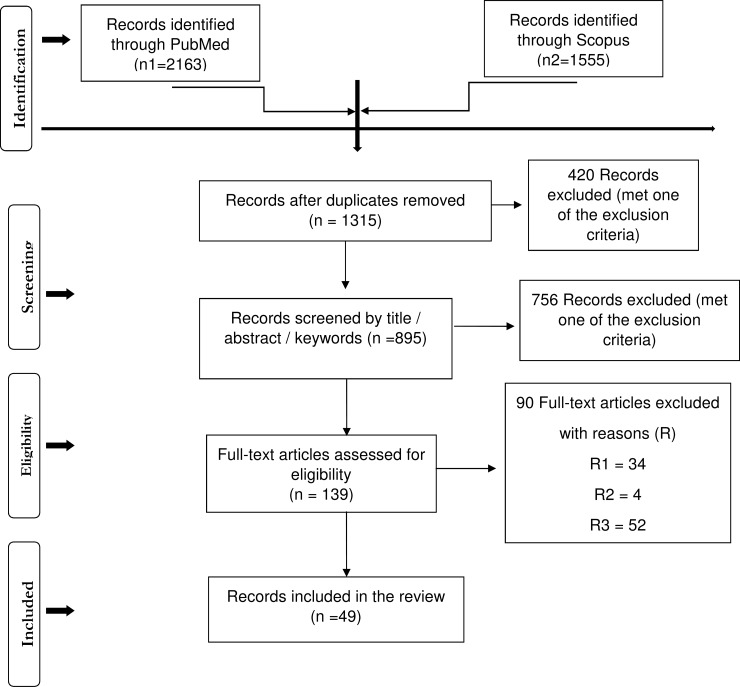
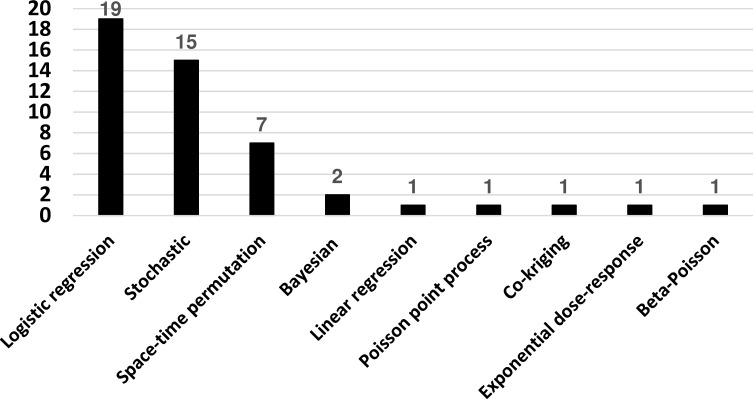
Foot-and-mouth disease (FMD) is a highly infectious transboundary disease that affects domestic and wild cloven-hoofed animal species. The aim of this review was to identify and critically assess some modelling techniques for FMD that are well supported by scientific evidence from the literature with a focus on their use in African countries where the disease remains enzootic. In particular, this study attempted to provide a synopsis of the relative strengths and weaknesses of these models and their relevance to FMD prevention policies. A literature search was conducted to identify quantitative and qualitative risk assessments for FMD, including studies that describe FMD risk factor modelling and spatiotemporal analysis. A description of retrieved papers and a critical assessment of the modelling methods, main findings and their limitations were performed. Different types of models have been used depending on the purpose of the study and the nature of available data. The most frequently identified factors associated with the risk of FMD occurrence were the movement (especially uncontrolled animal movement) and the mixing of animals around water and grazing points. Based on the qualitative and quantitative risk assessment studies, the critical pathway analysis showed that the overall risk of FMDV entering a given country is low. However, in some cases, this risk can be elevated, especially when illegal importation of meat and the movement of terrestrial livestock are involved. Depending on the approach used, these studies highlight shortcomings associated with the application of models and the lack of reliable data from endemic settings. Therefore, the development and application of specific models for use in FMD endemic countries including Africa is encouraged.
口蹄疫(FMD)是一种高度传染性的跨界疾病,影响家养和野生偶蹄动物物种。本综述的目的是确定并批判性评估一些有科学证据支持的 FMD 建模技术,重点是在疾病仍然流行的非洲国家使用这些技术。特别是,本研究试图概述这些模型的相对优势和劣势及其与 FMD 预防政策的相关性。进行了文献检索,以确定 FMD 的定量和定性风险评估,包括描述 FMD 风险因素建模和时空分析的研究。对检索到的论文进行了描述,并对建模方法、主要发现及其局限性进行了批判性评估。不同类型的模型根据研究目的和可用数据的性质而有所不同。与 FMD 发生风险相关的最常被识别的因素是动物的移动(特别是不受控制的动物移动)和在水和放牧点周围的混合。基于定性和定量风险评估研究,关键途径分析表明,FMDV 进入给定国家的总体风险较低。然而,在某些情况下,这种风险可能会增加,特别是涉及非法进口肉类和陆地牲畜的移动时。根据所使用的方法,这些研究强调了与模型应用相关的缺点以及来自流行地区的可靠数据的缺乏。因此,鼓励包括非洲在内的 FMD 流行国家开发和应用特定模型。