Research Center for Medicine and Social Development, Collaborative Innovation Center of Social Risks Governance in Health, School of Public Health and Management, Chongqing Medical University, Chongqing, 400016, China.
The Center of Experimental Teaching Management, Chongqing Medical University, Chongqing, 401331, China.
Respir Res. 2018 Dec 14;19(1):253. doi: 10.1186/s12931-018-0959-9.
Recent studies break with traditional opinion that the lower respiratory tract is sterile, and increasingly focus on the lung microbiome and disease. Smoking, as an important etiology of inflammatory lung disease, was considered as a factor influencing lung microbiome variations in our study, and we aimed to study the effect of smoking on inflammation and microbial diversity and community.
Forty male mice were selected and randomly divided into a smoking and a non-smoking group. Mice in the smoking group were exposed to smoke smog for 2 h/day for 90 days. Blood and lung tissues were obtained after the experiment, and ELISA was used to measure interleukin-6 and C reactive protein concentrations. 16S rRNA gene quantification and sequencing technology were used to compare microbial diversity and community between the two groups. SAS 9.1 and R software were used to analyze the data.
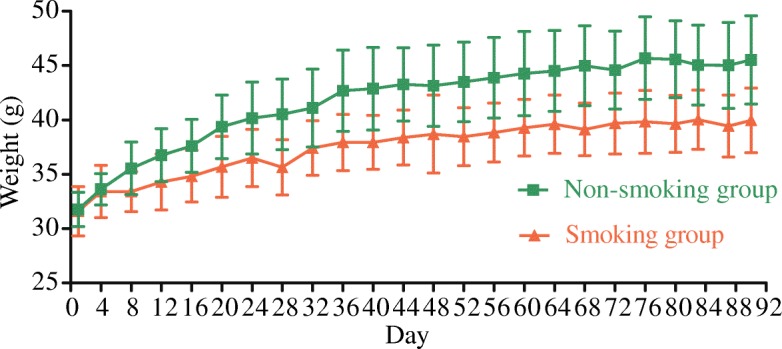
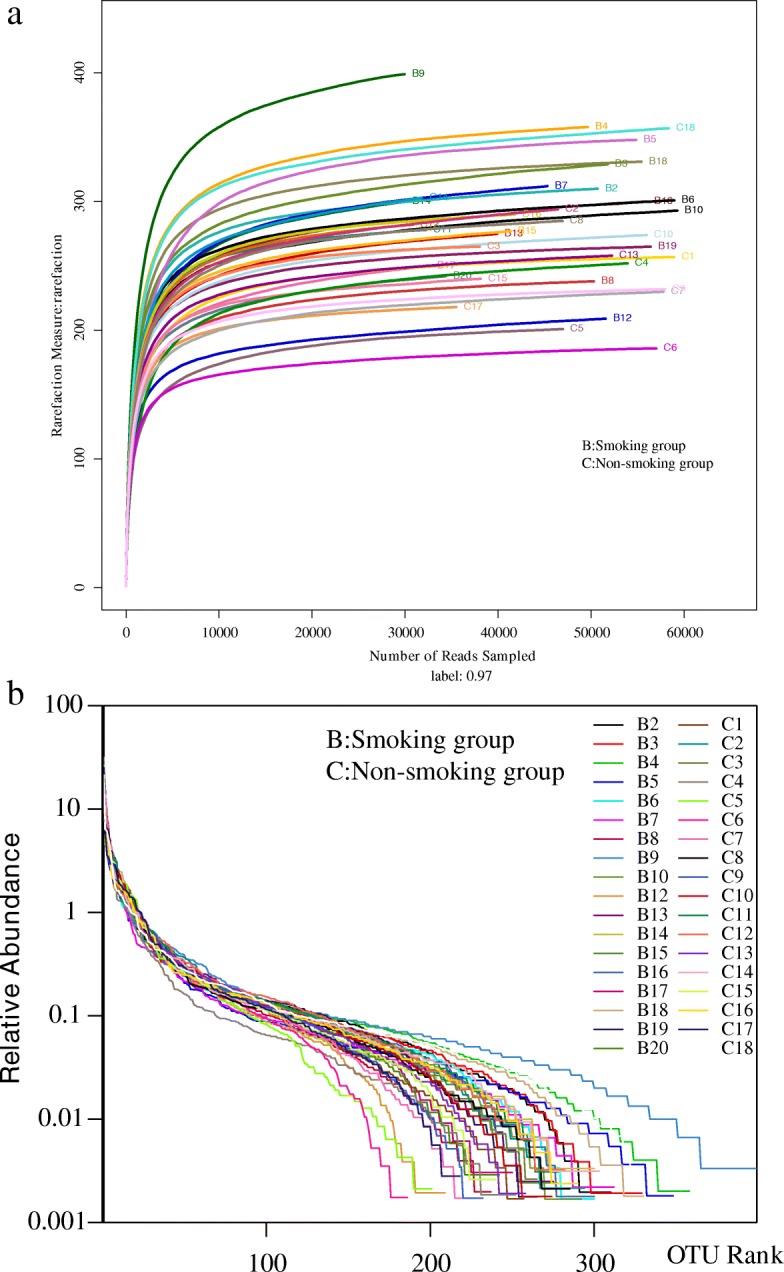
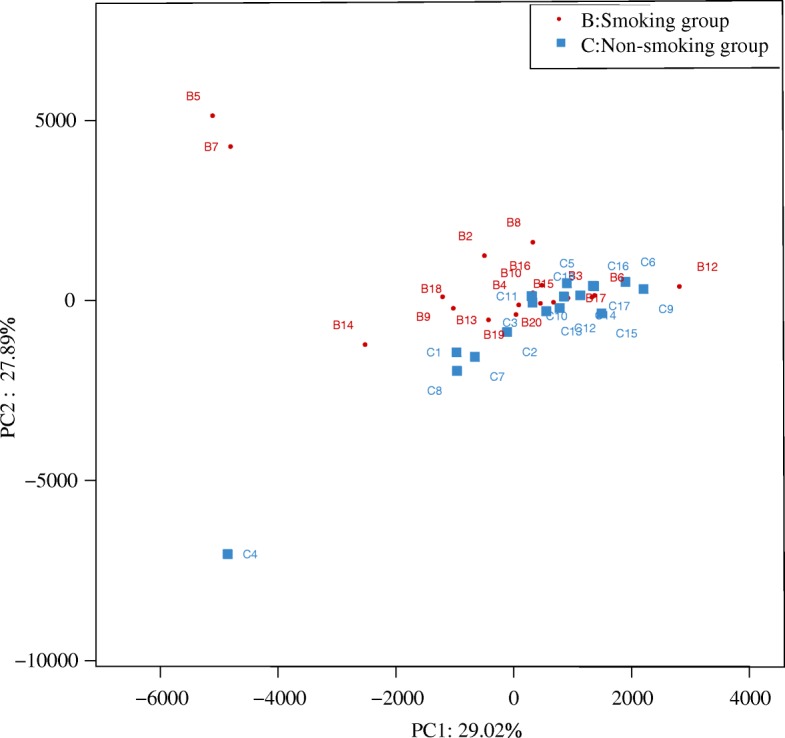
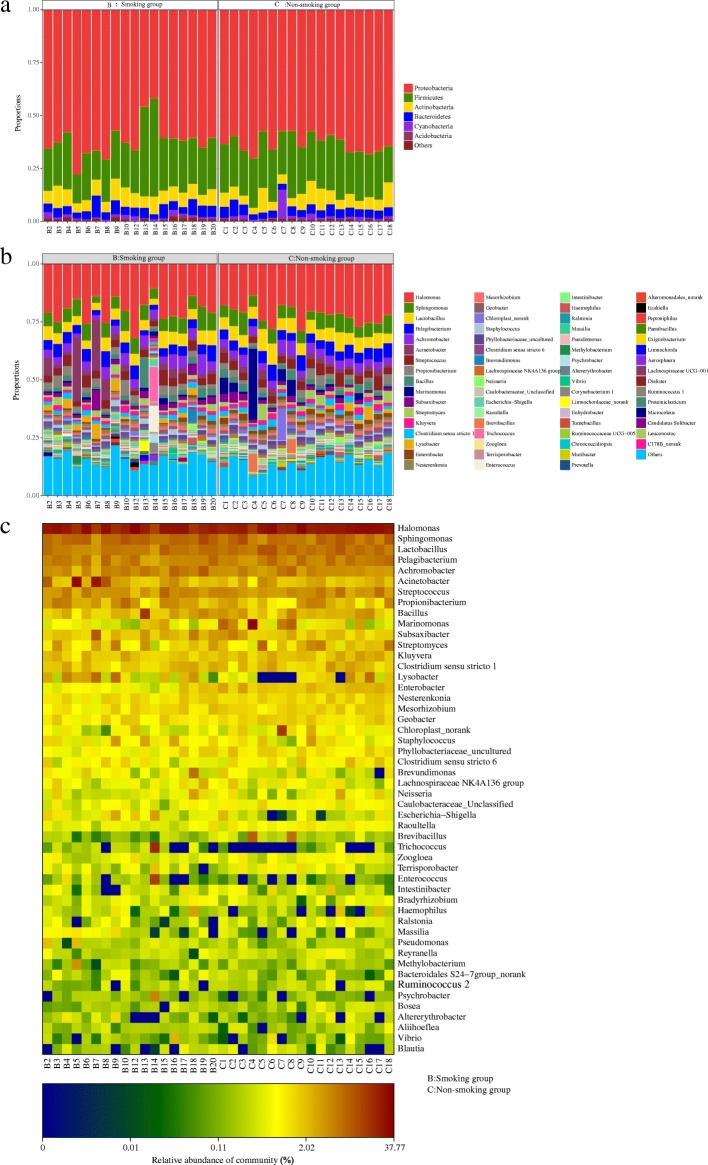
Thirty-six mice survived, and the weight of the smoking group increased more slowly than that of the non-smoking group. Denser inflammation and congestion were observed in the lungs of the smoking mice compared with the non-smoking group Higher microbial diversity was observed in the smoking group, and Enterobacter, Acidimicrobiales_norank, and Caulobacteraceae_Unclassified genus were significantly more abundant in the non-smoking group (P < 0.001).
Smoking altered microbial diversities and communities in the lower respiratory tract of mice. Microbial variation should be considered in future studies focusing on smoking-induced inflammatory disease.
最近的研究打破了传统观点,即下呼吸道是无菌的,并越来越关注肺部微生物组和疾病。吸烟作为炎症性肺部疾病的一个重要病因,被认为是影响肺部微生物组变化的一个因素,我们旨在研究吸烟对炎症和微生物多样性和群落的影响。
选择 40 只雄性小鼠,随机分为吸烟组和非吸烟组。吸烟组的小鼠每天暴露在烟雾中 2 小时,共 90 天。实验结束后,取血和肺组织,用 ELISA 法测定白细胞介素-6 和 C 反应蛋白浓度。采用 16S rRNA 基因定量和测序技术比较两组间微生物多样性和群落。使用 SAS 9.1 和 R 软件进行数据分析。
36 只小鼠存活,吸烟组的体重增长速度慢于非吸烟组。与非吸烟组相比,吸烟组小鼠的肺部炎症和充血更为严重。吸烟组的微生物多样性更高,非吸烟组中肠杆菌属、酸杆菌纲_不可归类、根瘤菌科_未归类属的含量明显更高(P<0.001)。
吸烟改变了小鼠下呼吸道的微生物多样性和群落。在未来关注吸烟引起的炎症性疾病的研究中,应考虑微生物的变化。