School of Mathematics and Statistics F07 , University of Sydney , Sydney , New South Wales 2006 , Australia.
Department of Genome Sciences , University of Washington , Foege Building S220B, 3720 15th Avenue NE , Seattle , Washington 98195-5065 , United States.
J Proteome Res. 2019 Feb 1;18(2):585-593. doi: 10.1021/acs.jproteome.8b00802. Epub 2019 Jan 3.
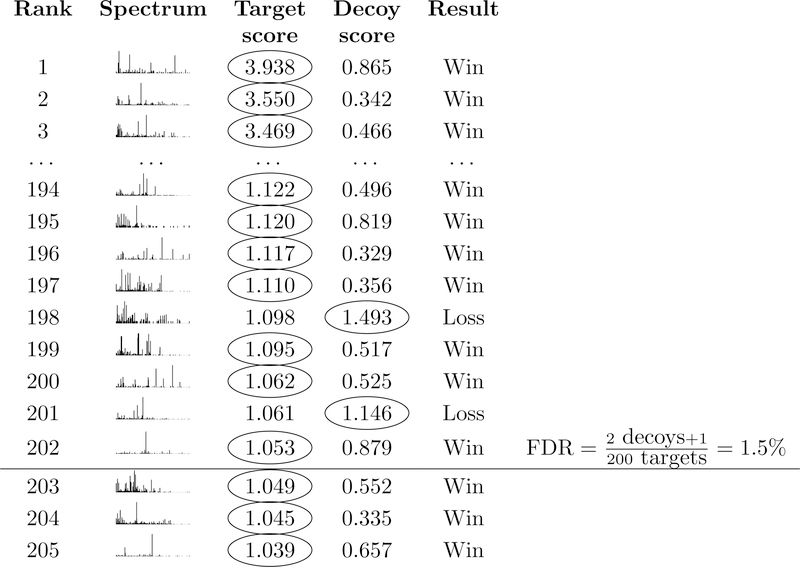
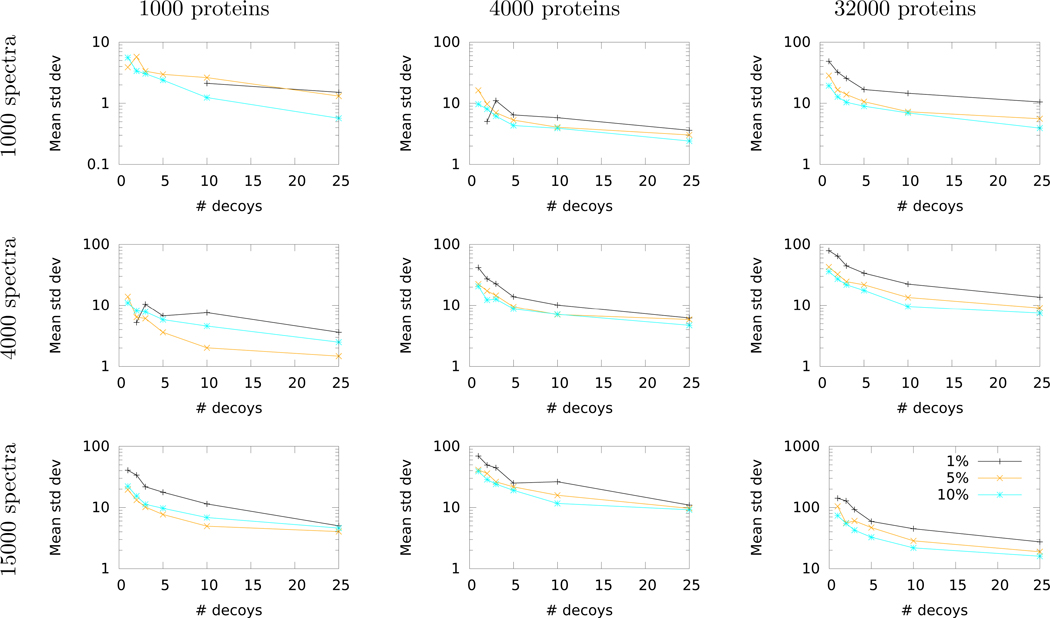
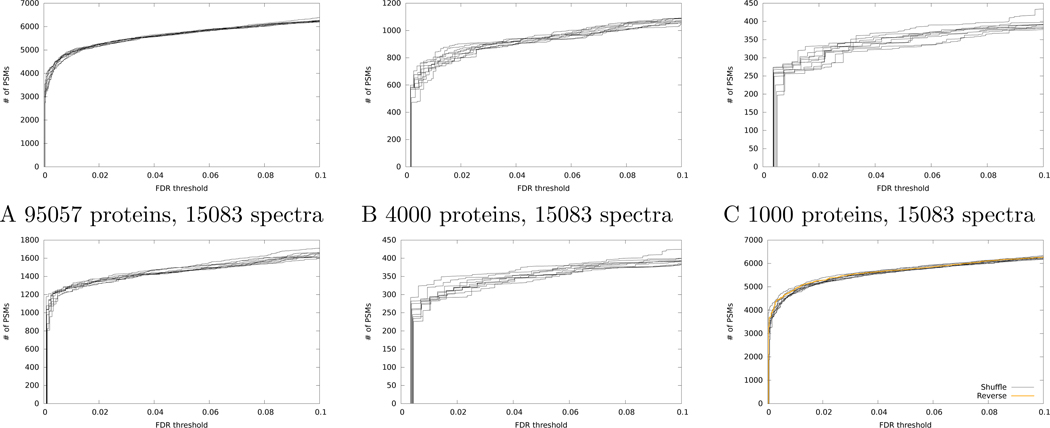
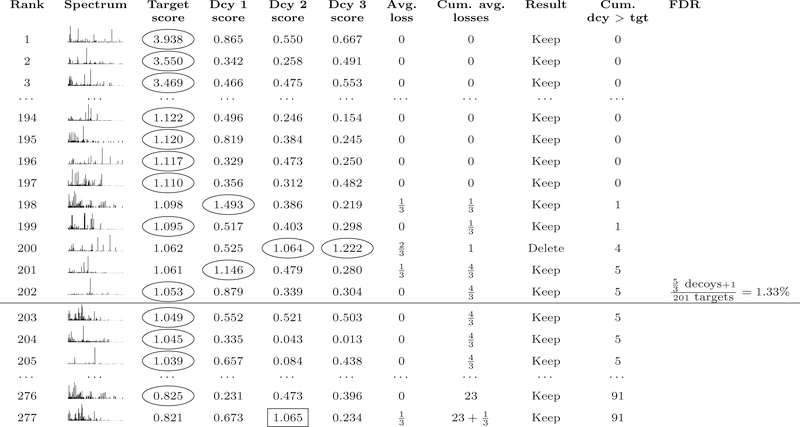
Decoy database search with target-decoy competition (TDC) provides an intuitive, easy-to-implement method for estimating the false discovery rate (FDR) associated with spectrum identifications from shotgun proteomics data. However, the procedure can yield different results for a fixed data set analyzed with different decoy databases, and this decoy-induced variability is particularly problematic for smaller FDR thresholds, data sets, or databases. The average TDC (aTDC) protocol combats this problem by exploiting multiple independently shuffled decoy databases to provide an FDR estimate with reduced variability. We provide a tutorial introduction to aTDC, describe an improved variant of the protocol that offers increased statistical power, and discuss how to deploy aTDC in practice using the Crux software toolkit.
诱饵数据库搜索与目标诱饵竞争 (TDC) 为估计来自鸟枪法蛋白质组学数据的谱鉴定相关的假发现率 (FDR) 提供了一种直观、易于实现的方法。然而,对于使用不同诱饵数据库分析的固定数据集,该过程可能会产生不同的结果,对于较小的 FDR 阈值、数据集或数据库,这种诱饵引起的可变性尤其成问题。平均 TDC(aTDC) 协议通过利用多个独立随机化的诱饵数据库来提供具有降低的可变性的 FDR 估计值来解决此问题。我们提供了 aTDC 的教程介绍,描述了该协议的改进变体,该变体提供了更高的统计能力,并讨论了如何使用 Crux 软件工具包在实践中部署 aTDC。