Department of Plant Physiology and Biochemistry, St. Petersburg State University, 199034 St. Petersburg, Russia.
Department of Biochemistry, St. Petersburg State University, 199904 St. Petersburg, Russia.
Int J Mol Sci. 2018 Dec 17;19(12):4089. doi: 10.3390/ijms19124089.
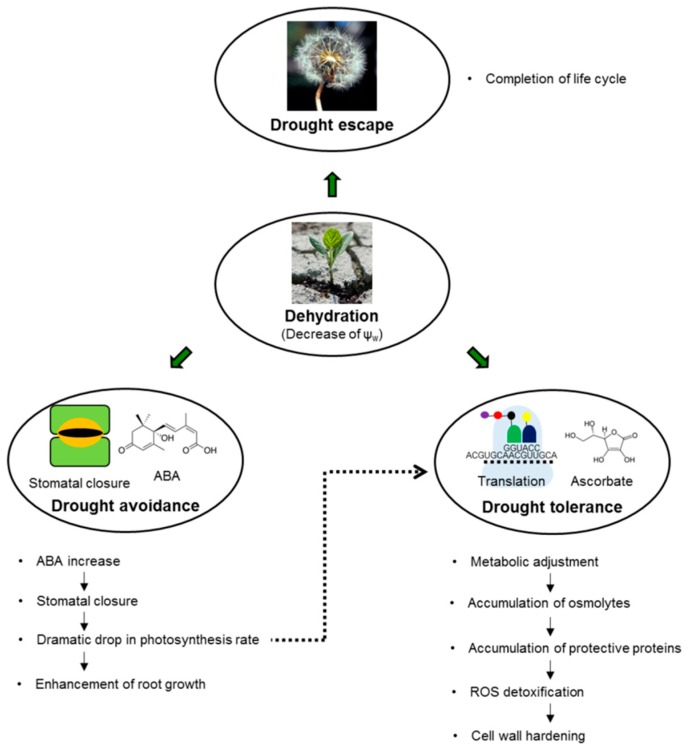
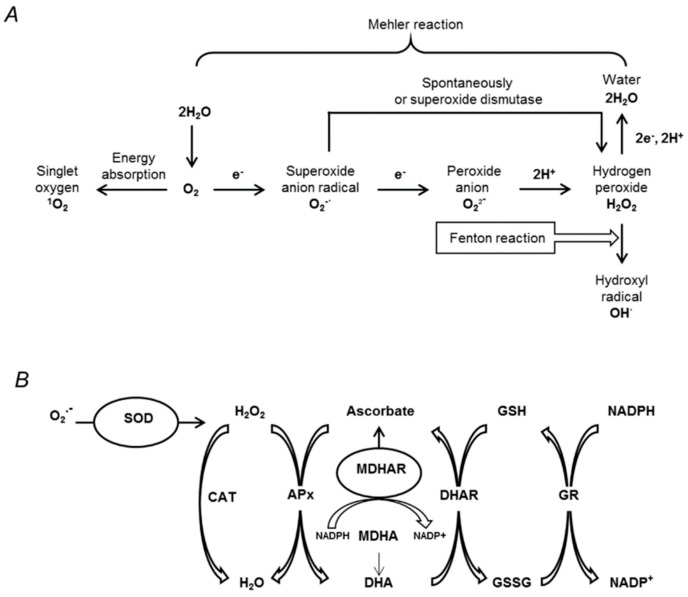
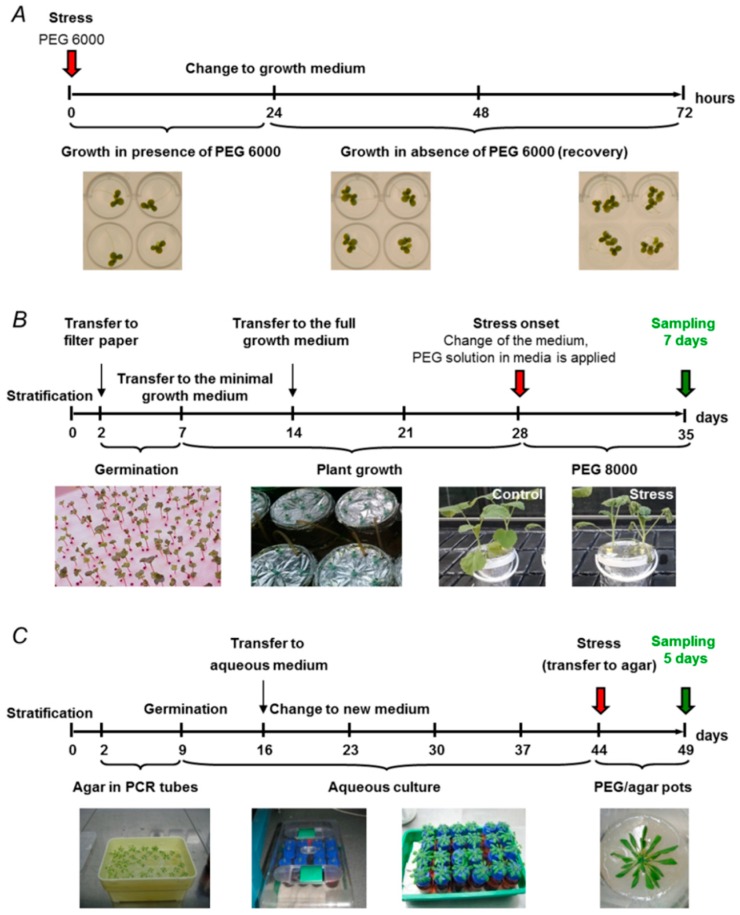
Drought is one of the major stress factors affecting the growth and development of plants. In this context, drought-related losses of crop plant productivity impede sustainable agriculture all over the world. In general, plants respond to water deficits by multiple physiological and metabolic adaptations at the molecular, cellular, and organism levels. To understand the underlying mechanisms of drought tolerance, adequate stress models and arrays of reliable stress markers are required. Therefore, in this review we comprehensively address currently available models of drought stress, based on culturing plants in soil, hydroponically, or in agar culture, and critically discuss advantages and limitations of each design. We also address the methodology of drought stress characterization and discuss it in the context of real experimental approaches. Further, we highlight the trends of methodological developments in drought stress research, i.e., complementing conventional tests with quantification of phytohormones and reactive oxygen species (ROS), measuring antioxidant enzyme activities, and comprehensively profiling transcriptome, proteome, and metabolome.
干旱是影响植物生长和发育的主要胁迫因素之一。在这种情况下,与干旱相关的作物植物生产力损失阻碍了全世界的可持续农业。一般来说,植物通过分子、细胞和个体水平上的多种生理和代谢适应来应对水分亏缺。为了了解耐旱性的潜在机制,需要适当的胁迫模型和可靠的胁迫标记物的阵列。因此,在这篇综述中,我们全面介绍了目前基于在土壤、水培或琼脂培养中培养植物的干旱胁迫模型,并批判性地讨论了每种设计的优点和局限性。我们还介绍了干旱胁迫特征描述的方法,并结合实际实验方法进行了讨论。此外,我们强调了干旱胁迫研究中方法学发展的趋势,即用植物激素和活性氧(ROS)的定量分析来补充常规测试,测量抗氧化酶活性,并全面分析转录组、蛋白质组和代谢组。