Faculty of Chemistry and Chemical Technology, University of Maribor, Smetanova 17, SI-2000 Maribor, Slovenia.
National Institute of Chemistry, Hajdrihova 19, SI-1000 Ljubljana, Slovenia.
Molecules. 2018 Dec 18;23(12):3351. doi: 10.3390/molecules23123351.
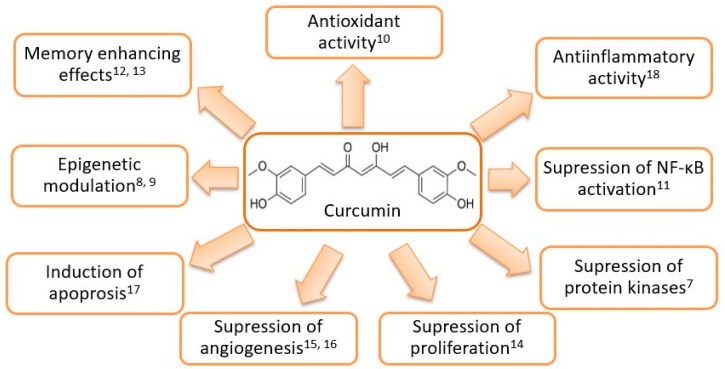
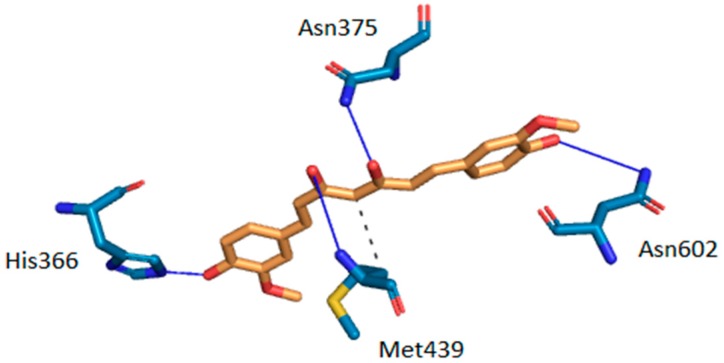
Research efforts are placing an ever increasing emphasis on identifying signal transduction pathways related to the chemopreventive activity of curcumin. Its anticarcinogenic effects are presumably mediated by the regulation of signaling cascades, including nuclear factor κB (NF-κB), activator protein 1 (AP-1), and mitogen-activated protein kinases (MAPK). By modulating signal transduction pathways, curcumin induces apoptosis in malignant cells, thus inhibiting cancer development and progression. Due to the lack of mechanistic insight in the scientific literature, we developed a novel inverse molecular docking protocol based on the CANDOCK algorithm. For the first time, we performed inverse molecular docking of curcumin into a collection of 13,553 available human protein structures from the Protein Data Bank resulting in prioritized target proteins of curcumin. Our predictions were in agreement with the scientific literature and confirmed that curcumin binds to folate receptor β, DNA (cytosine-5)-methyltransferase 3A, metalloproteinase-2, mitogen-activated protein kinase 9, epidermal growth factor receptor and apoptosis-inducing factor 1. We also identified new potential protein targets of curcumin, namely deoxycytidine kinase, NAD-dependent protein deacetylase sirtuin-1 and -2, ecto-5'-nucleotidase, core histone macro-H2A.1, tyrosine-protein phosphatase non-receptor type 11, macrophage colony-stimulating factor 1 receptor, GTPase HRas, aflatoxin B1 aldehyde reductase member 3, aldo-keto reductase family 1 member C3, amiloride-sensitive amine oxidase, death-associated protein kinase 2 and tryptophan-tRNA ligase, that may all play a crucial role in its observed anticancer effects. Moreover, our inverse docking results showed that curcumin potentially binds also to the proteins cAMP-specific 3',5'-cyclic phosphodiesterase 4D and 17-β-hydroxysteroid dehydrogenase type 10, which provides a new explanation for its efficiency in the treatment of Alzheimer's disease. We firmly believe that our computational results will complement and direct future experimental studies on curcumin's anticancer activity as well as on its therapeutic effects against Alzheimer's disease.
研究工作越来越强调鉴定与姜黄素的化学预防活性相关的信号转导途径。其抗癌作用推测是通过调节信号级联来介导的,包括核因子 κB(NF-κB)、激活蛋白 1(AP-1)和丝裂原活化蛋白激酶(MAPK)。通过调节信号转导途径,姜黄素诱导恶性细胞凋亡,从而抑制癌症的发展和进展。由于科学文献中缺乏机制方面的深入了解,我们开发了一种基于 CANDOCK 算法的新型反向分子对接方案。我们首次将姜黄素反向分子对接进入来自蛋白质数据库的 13553 个人类蛋白质结构集合,从而对姜黄素的优先靶标蛋白进行了排序。我们的预测与科学文献一致,并证实姜黄素与叶酸受体 β、DNA(胞嘧啶-5)-甲基转移酶 3A、金属蛋白酶-2、丝裂原活化蛋白激酶 9、表皮生长因子受体和凋亡诱导因子 1 结合。我们还鉴定了姜黄素的新的潜在靶标蛋白,即脱氧胞苷激酶、NAD 依赖性蛋白去乙酰化酶 Sirtuin-1 和 -2、外核苷酸酶、核心组蛋白宏观 H2A.1、酪氨酸蛋白磷酸酶非受体型 11、巨噬细胞集落刺激因子 1 受体、GTP 酶 HRas、黄曲霉毒素 B1 醛还原酶成员 3、醛酮还原酶家族 1 成员 C3、阿米洛利敏感胺氧化酶、死亡相关蛋白激酶 2 和色氨酸-tRNA 连接酶,它们都可能在其观察到的抗癌作用中发挥关键作用。此外,我们的反向对接结果表明,姜黄素还可能与 cAMP 特异性 3',5'-环磷酸二酯酶 4D 和 17-β-羟甾醇脱氢酶 10 等蛋白质结合,这为其在治疗阿尔茨海默病中的有效性提供了新的解释。我们坚信,我们的计算结果将补充和指导未来关于姜黄素抗癌活性以及治疗阿尔茨海默病的实验研究。