Department of Biochemistry and Molecular Biology, University of Nebraska Medical Center, Omaha, NE, USA.
Sanguine Diagnostics and Therapeutics, University of Nebraska Medical Center, Omaha, NE, USA.
J Exp Clin Cancer Res. 2018 Dec 19;37(1):319. doi: 10.1186/s13046-018-0963-4.
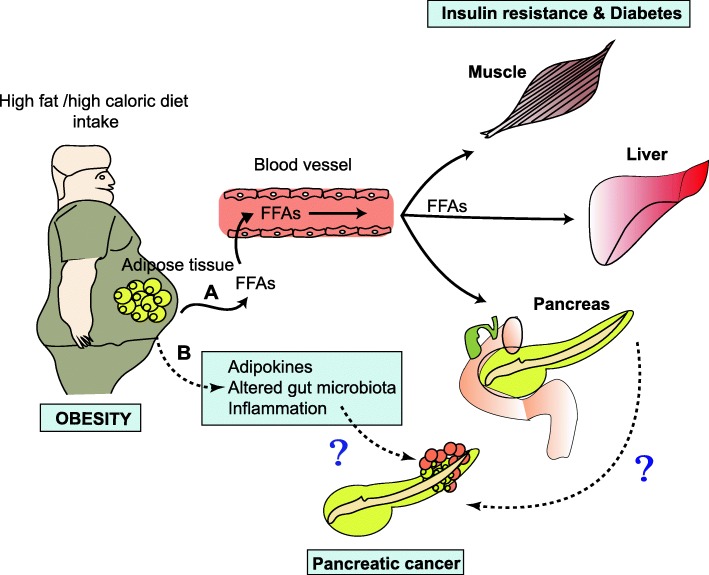
Pancreatic cancer (PC) is among foremost causes of cancer related deaths worldwide due to generic symptoms, lack of effective screening strategies and resistance to chemo- and radiotherapies. The risk factors associated with PC include several metabolic disorders such as obesity, insulin resistance and type 2 diabetes mellitus (T2DM). Studies have shown that obesity and T2DM are associated with PC pathogenesis; however, their role in PC initiation and development remains obscure.
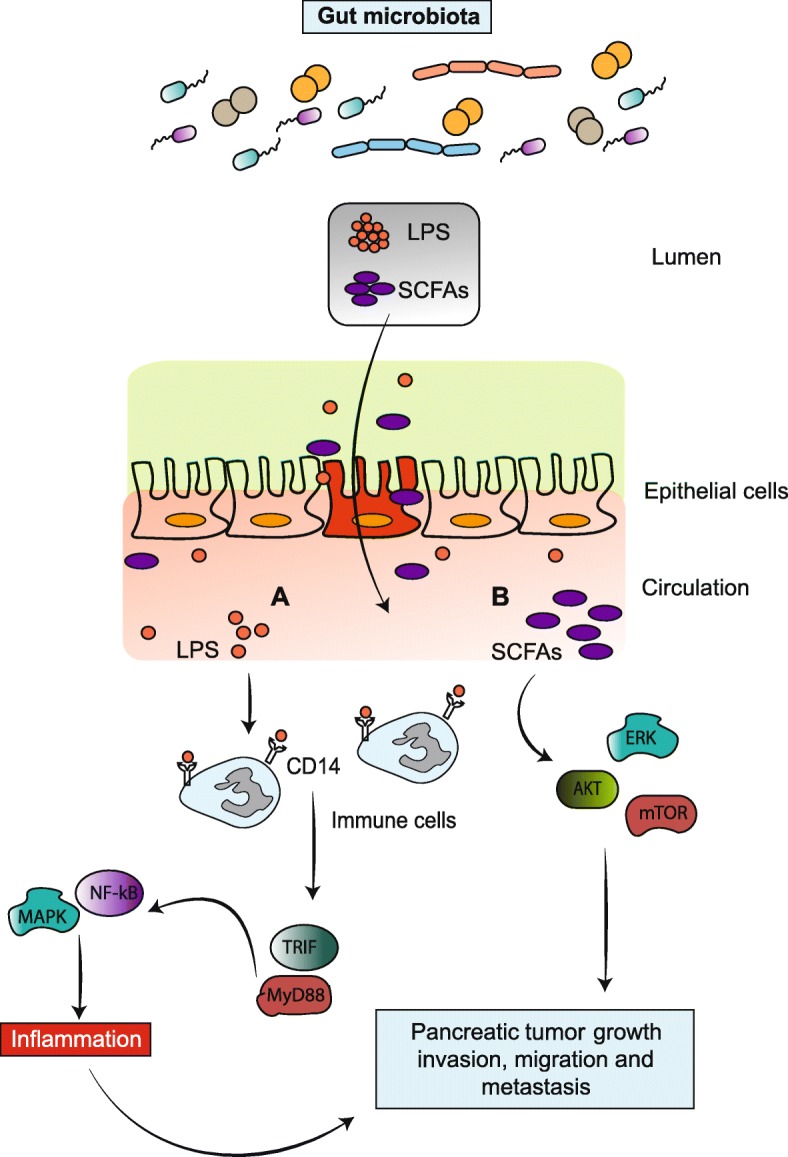
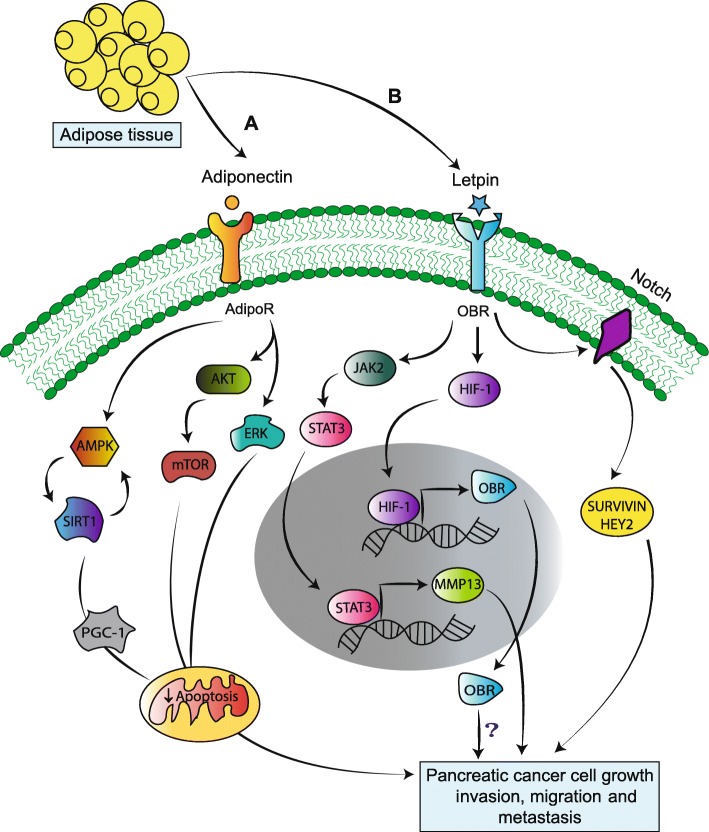
Several biochemical and physiological factors associated with obesity and/or T2DM including adipokines, inflammatory mediators, and altered microbiome are involved in PC progression and metastasis albeit by different molecular mechanisms. Deep understanding of these factors and causal relationship between factors and altered signaling pathways will facilitate deconvolution of disease complexity as well as lead to development of novel therapies. In the present review, we focuses on the interplay between adipocytokines, gut microbiota, adrenomedullin, hyaluronan, vanin and matrix metalloproteinase affected by metabolic alteration and pancreatic tumor progression.
Metabolic diseases, such as obesity and T2DM, contribute PC development through altered metabolic pathways. Delineating key players in oncogenic development in pancreas due to metabolic disorder could be a beneficial strategy to combat cancers associated with metabolic diseases in particular, PC.
胰腺癌(PC)是全球首要的癌症致死原因之一,其病因主要包括普遍存在的非特异性症状、缺乏有效的筛查策略,以及对化疗和放疗的耐药性。与 PC 相关的风险因素包括多种代谢紊乱,如肥胖、胰岛素抵抗和 2 型糖尿病(T2DM)。研究表明,肥胖和 T2DM 与 PC 的发病机制有关;然而,它们在 PC 的起始和发展中的作用仍不清楚。
与肥胖和/或 T2DM 相关的多种生化和生理因素,包括脂肪因子、炎症介质和改变的微生物组,参与了 PC 的进展和转移,尽管其作用机制不同。深入了解这些因素及其与改变的信号通路之间的因果关系,将有助于解析疾病的复杂性,并为开发新的治疗方法提供依据。在本综述中,我们重点讨论了代谢改变和胰腺肿瘤进展中受影响的脂肪细胞因子、肠道微生物群、肾上腺髓质素、透明质酸、Vanin 和基质金属蛋白酶之间的相互作用。
代谢疾病,如肥胖和 T2DM,通过改变代谢途径促进 PC 的发展。阐明代谢紊乱导致胰腺中致癌发展的关键因素,可能是对抗与代谢疾病相关的癌症(特别是 PC)的一种有益策略。