Pascual King John, Vlasova Ekaterina, Lockett Kimberly J, Richardson Judson, Yochelson Michael
MedStar Institute for Innovation, Washington, DC, USA.
MedStar National Rehabilitation Hospital, Washington, DC, USA.
J Patient Exp. 2018 Dec;5(4):244-249. doi: 10.1177/2374373517750416. Epub 2018 Jan 7.
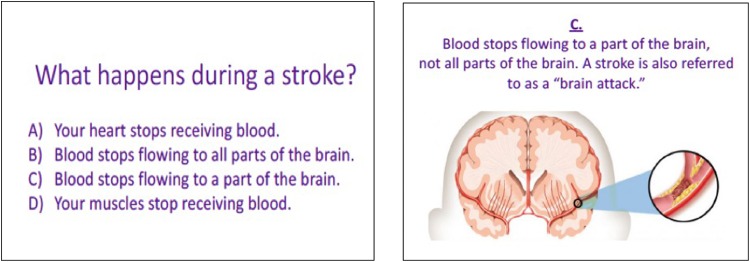
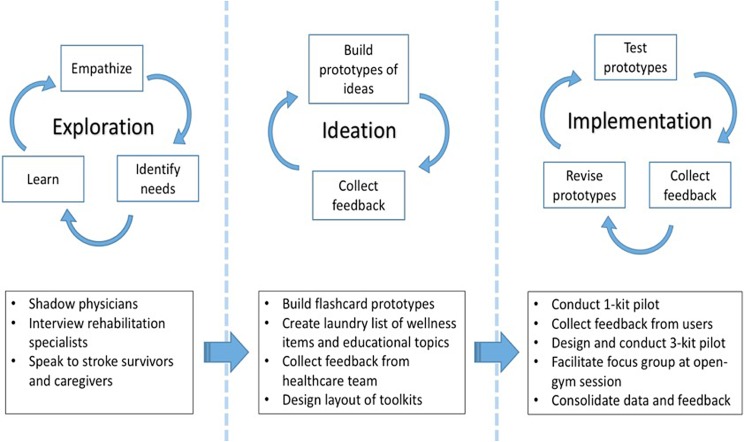
Hallmarks of the difficult period of transition from hospital to home following stroke include stroke survivor and caregiver uncertainty about actionable steps toward recovery and prevention and unfamiliarity with related resources. Current research shows that interdisciplinary interventions focusing on patient experience and patient education enable health-care providers to activate and empower patients, potentially leading to better clinical outcomes. Tool kit approaches have been successfully used to aid patients through ongoing education after hospital discharge and to improve patient experience. In this article, we describe our efforts to iteratively develop and test personalized stroke management tool kits aimed at connecting stroke survivors and their caregivers to empowering resources, while soliciting feedback from patients and family members.
中风后从医院过渡到家庭的困难时期的特点包括中风幸存者和照顾者对恢复和预防的可行步骤不确定,以及对相关资源不熟悉。目前的研究表明,关注患者体验和患者教育的跨学科干预措施能够使医疗保健提供者激励并增强患者的能力,这可能会带来更好的临床结果。工具包方法已成功用于在出院后通过持续教育帮助患者,并改善患者体验。在本文中,我们描述了我们为迭代开发和测试个性化中风管理工具包所做的努力,这些工具包旨在将中风幸存者及其照顾者与赋能资源联系起来,同时征求患者和家庭成员的反馈。