The Jenner Institute, Nuffield Department of Medicine, The Henry Wellcome Building for Molecular Physiology, University of Oxford, Old Road Campus Research Building. Roosevelt Drive, Oxford, OX3 7DQ, UK.
Division of Structural Biology, Wellcome Centre for Human Genetics, University of Oxford, Roosevelt Drive, Oxford, UK.
Virol J. 2018 Dec 27;15(1):193. doi: 10.1186/s12985-018-1104-6.
Zika virus (ZIKV) has become a global threat with immediate need for accurate diagnostics, efficacious vaccines and therapeutics. Several ZIKV envelope (Env)-based vaccines have been developed recently. However, many commercially available ZIKV Env are based on the African lineage and produced in insect cells. Here, we sought to produce Asian-lineage ZIKV Env in mammalian cells for research and clinical applications.
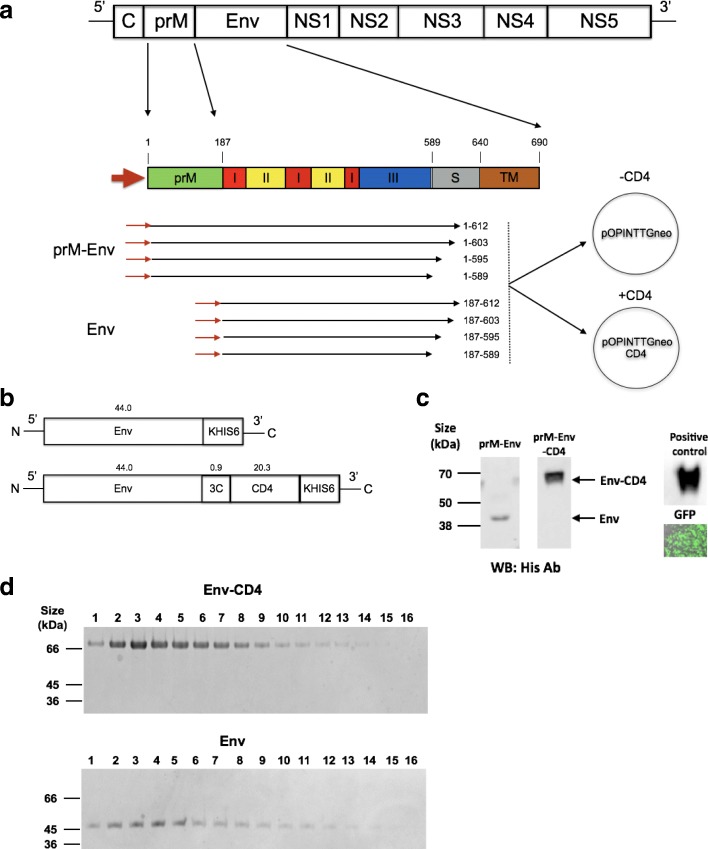
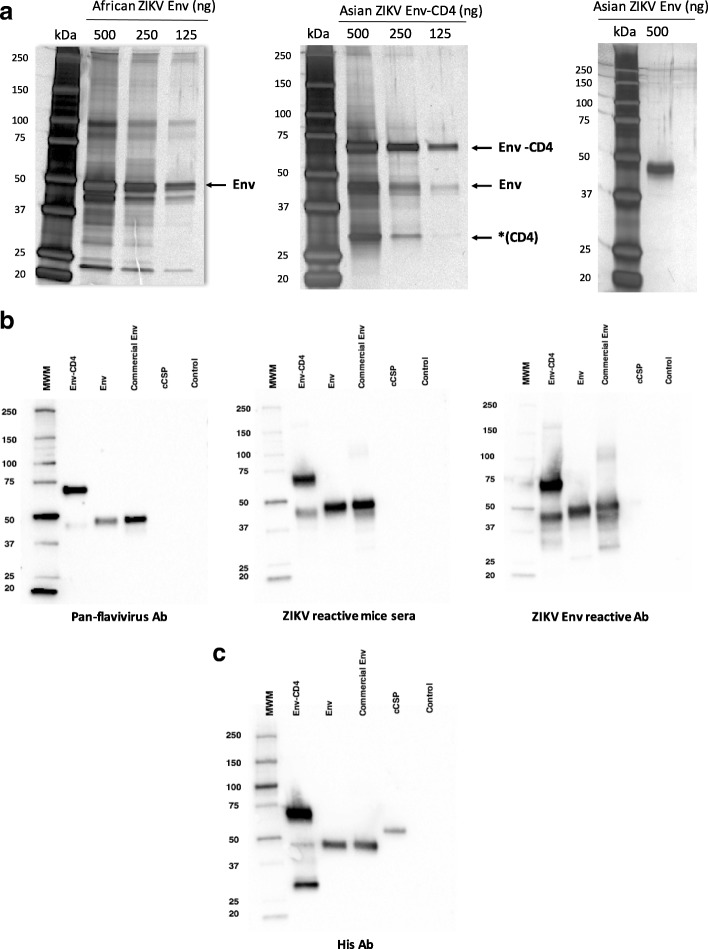
We designed various gene expression constructs to optimize the production of ZIKV using prM-Env and full or C-terminal truncations of Env; with or without a rat CD4 fusion partner to allow large-scale production of soluble protein in mammalian HEK293 cells. Protein expression was verified by mass spectrometry and western-blot with a pan-flavivirus antibody, a ZIKV Env monoclonal antibody and with immune sera from adenoviral (ChAdOx1) ZIKV Env-vaccinated mice. The resulting Env-CD4 was used as a coating reagent for immunoassay (ELISA) using both mouse and human seropositive sera.
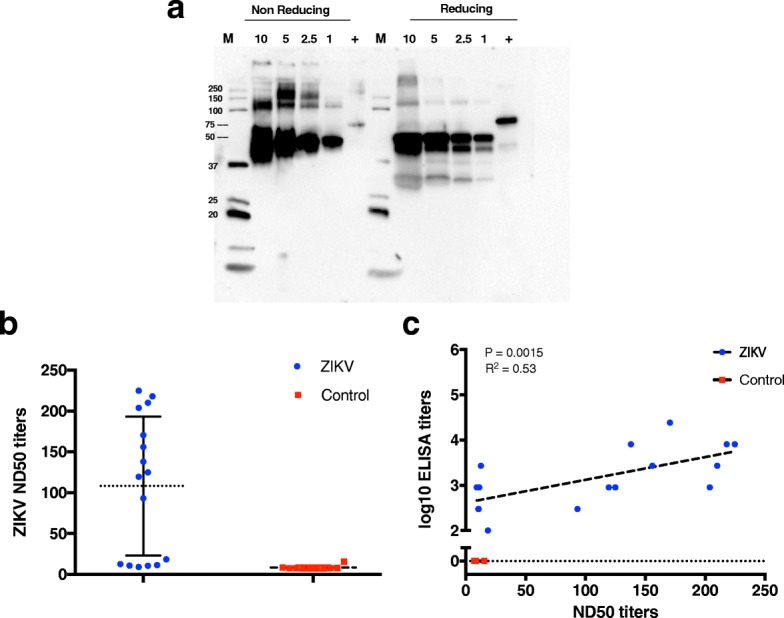
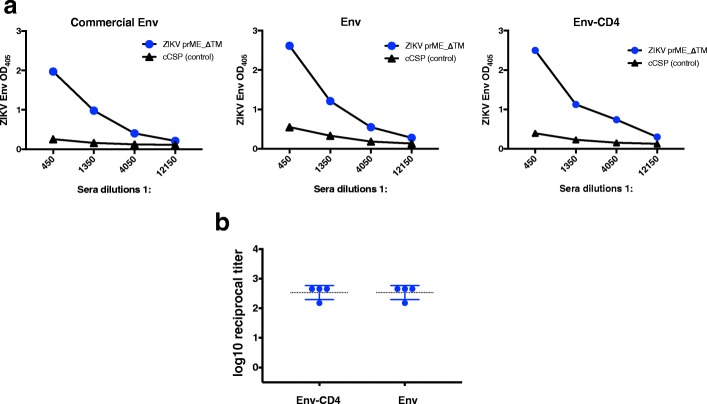
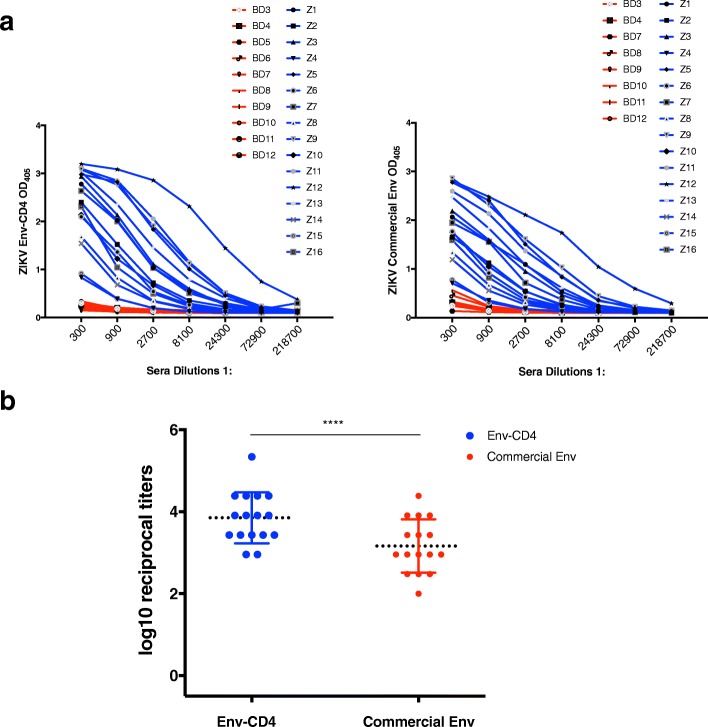
Replacement of the C-terminus transmembrane Env domain by a rat CD4 and addition of prM supported optimal expression and secretion of Env. Binding between the antigens and the antibodies was similar to binding when using commercially available ZIKV Env reagents. Furthermore, antibodies from ZIKV patients bound ZIKV Env-CD4 in ELISA assays, whereas sera from healthy blood donors yielded minimal OD background. The serological outcomes of this assay correlated also with ZIKV neutralisation capacity in vitro.
Results obtained from this study indicate the potential of the Asian-lineage Zika Env-CD4 and Env proteins in ELISA assays to monitor humoral immune responses in upcoming clinical trials as well as a sero-diagnostic tool in ZIKV infection.
寨卡病毒(ZIKV)已成为全球性威胁,迫切需要准确的诊断、有效的疫苗和治疗方法。最近已经开发了几种基于 ZIKV 包膜(Env)的疫苗。然而,许多市售的 ZIKV Env 基于非洲谱系,并且在昆虫细胞中产生。在这里,我们试图在哺乳动物细胞中产生亚洲谱系的 ZIKV Env,用于研究和临床应用。
我们设计了各种基因表达构建体,使用 prM-Env 和 Env 的全长或 C 末端截短,以及或不带有大鼠 CD4 融合伴侣,以允许在哺乳动物 HEK293 细胞中大规模生产可溶性蛋白,来优化 ZIKV 的产生。通过质谱法和泛黄病毒抗体、ZIKV Env 单克隆抗体以及用腺病毒(ChAdOx1)ZIKV Env 疫苗免疫的小鼠免疫血清进行 Western blot 验证蛋白表达。所得的 Env-CD4 用作免疫测定(ELISA)的包被试剂,使用来自小鼠和人类血清阳性的血清。
用大鼠 CD4 替换 Env 跨膜结构域的 C 末端并添加 prM 支持 Env 的最佳表达和分泌。抗原与抗体之间的结合与使用市售的 ZIKV Env 试剂时的结合相似。此外,来自 ZIKV 患者的抗体在 ELISA 测定中与 ZIKV Env-CD4 结合,而来自健康献血者的血清产生最小的 OD 背景。该测定的血清学结果也与体外 ZIKV 中和能力相关。
本研究结果表明,亚洲谱系寨卡病毒 Env-CD4 和 Env 蛋白在 ELISA 测定中具有监测即将到来的临床试验中体液免疫反应的潜力,并且是寨卡病毒感染的血清学诊断工具。