Repetto Ombretta, Mussolin Lara, Elia Caterina, Martina Lia, Bianchi Maurizio, Buffardi Salvatore, Sala Alessandra, Burnelli Roberta, Mascarin Maurizio, De Re Valli
Facility of Bio-Proteomics, Immunopathology and Cancer Biomarkers, Centro di Riferimento Oncologico di Aviano (CRO), IRCCS, 33081 Aviano, Italy.
Clinic of Pediatric Haemato-Oncology, Department of Women's and Children's Health, University of Padua, Padua, Institute of Paediatric Research - Fondazione Città della Speranza, Padua, Italy.
J Cancer. 2018 Nov 24;9(24):4650-4658. doi: 10.7150/jca.27560. eCollection 2018.
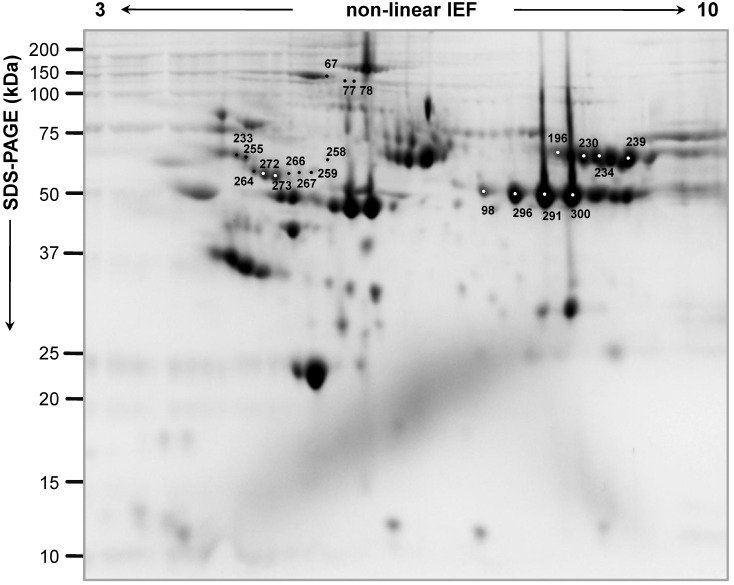
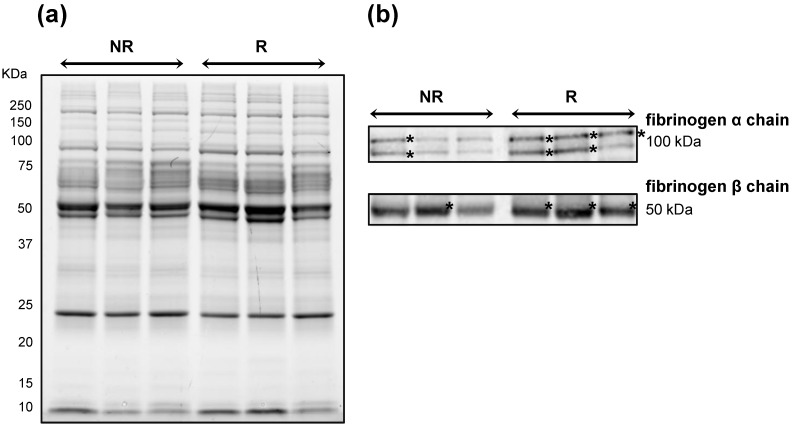
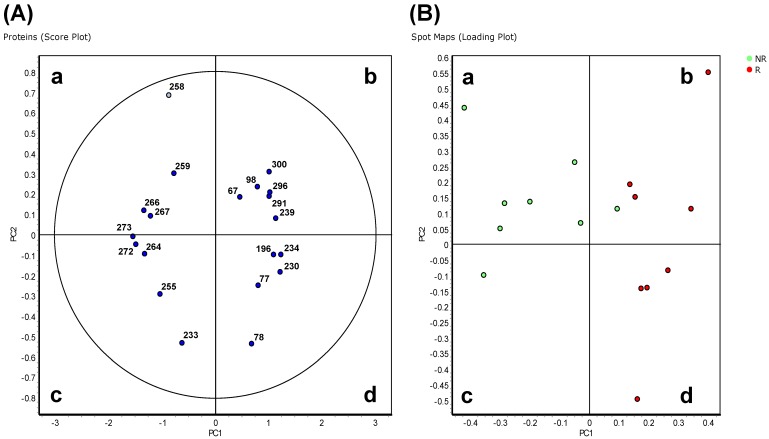
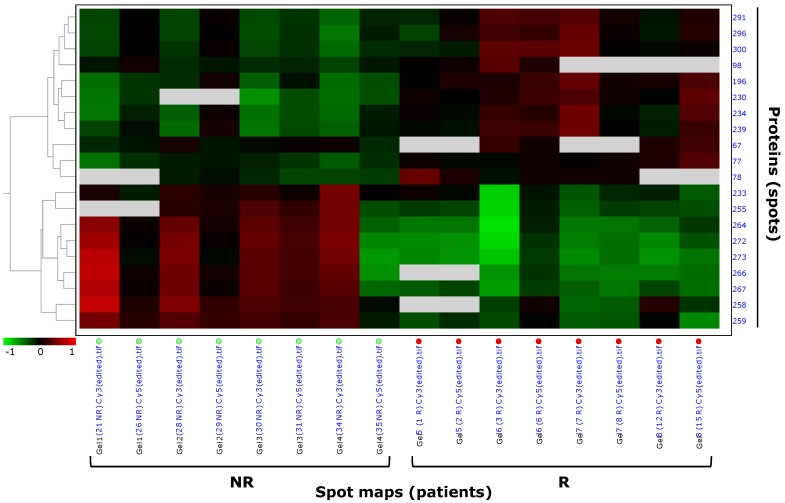
The treatment of paediatric Hodgkin lymphoma (HL) has steadily improved over the years, so that 10- years survival exceed 80%. The purpose of this study was to identify prognostic markers for relapsed HL that might contribute to optimize therapeutic approaches. To this aim we retrospectively analysed differential protein expression profiles obtained from plasma of children/adolescents with HL (age ranging from 10 to 18 years) collected at diagnosis. We examined the protein profiles of 15 HL relapsed (R) patients compared with 14 HL not relapsed (NR) patients treated with the same LH-2004 protocol. Two dimensional difference in gel electrophoresis (2D-DIGE) revealed significant differences (fold change > 1.5; Student's T-test <0.01) between R and NR patients in 10 proteins: α-1-antitrypsin chain a, apolipoprotein A-IV precursor; inter-α-trypsin inhibitor heavy chain; antithrombin-III; vitronectin; fibrinogen α, β and γ chains, complement C3, and ceruloplasmin. An up-regulation of fibrinogen α (spots 78, 196, 230, 234, 239) and β (spots 98, 291, 296, 300) chains together with a lower level of α-1-antitrypsin (spots 255, 264, 266, 272, 273) were found in R patients, and this difference was validated by immunoblotting. The functional role(s) of these proteins in the coagulation and inflammation associated with paediatric/adolescent HL progression and relapse deserves further investigations.
多年来,儿童霍奇金淋巴瘤(HL)的治疗一直在稳步改善,以至于10年生存率超过了80%。本研究的目的是确定复发性HL的预后标志物,这可能有助于优化治疗方法。为此,我们回顾性分析了从诊断时收集的HL儿童/青少年(年龄在10至18岁之间)血浆中获得的差异蛋白质表达谱。我们检查了15例HL复发(R)患者与14例采用相同LH - 2004方案治疗的未复发(NR)HL患者的蛋白质谱。二维差异凝胶电泳(2D - DIGE)显示,R组和NR组患者在10种蛋白质上存在显著差异(倍数变化>1.5;学生t检验<0.01):α - 1抗胰蛋白酶链a、载脂蛋白A - IV前体;α - 胰蛋白酶抑制剂重链;抗凝血酶III;玻连蛋白;纤维蛋白原α、β和γ链、补体C3和铜蓝蛋白。在R组患者中发现纤维蛋白原α(斑点78、196、230、234、239)和β(斑点98、291、296、300)链上调,同时α - 1抗胰蛋白酶水平较低(斑点255、264、266、272、273),并且这种差异通过免疫印迹得到了验证。这些蛋白质在与儿童/青少年HL进展和复发相关的凝血和炎症中的功能作用值得进一步研究。