Sanyu Research Unit, Department of Women's and Children's Health, University of Liverpool, Liverpool, UK.
Sanyu Africa Research Institute (SAfRI), Mbale, Uganda.
BMC Public Health. 2019 Jan 3;19(1):1. doi: 10.1186/s12889-018-6343-3.
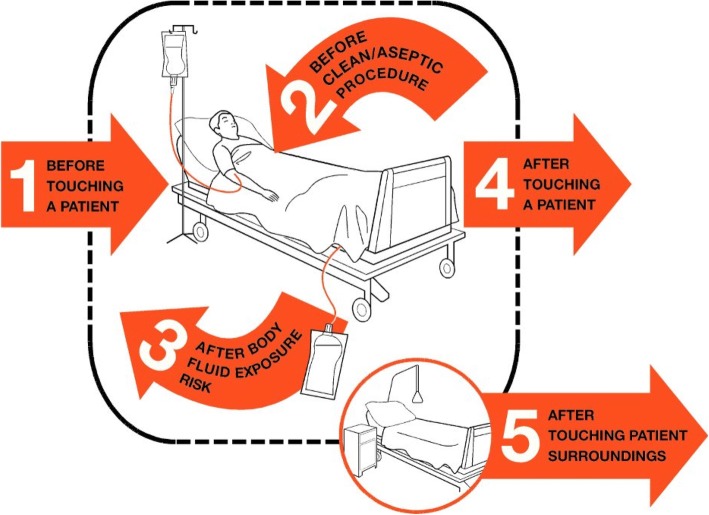
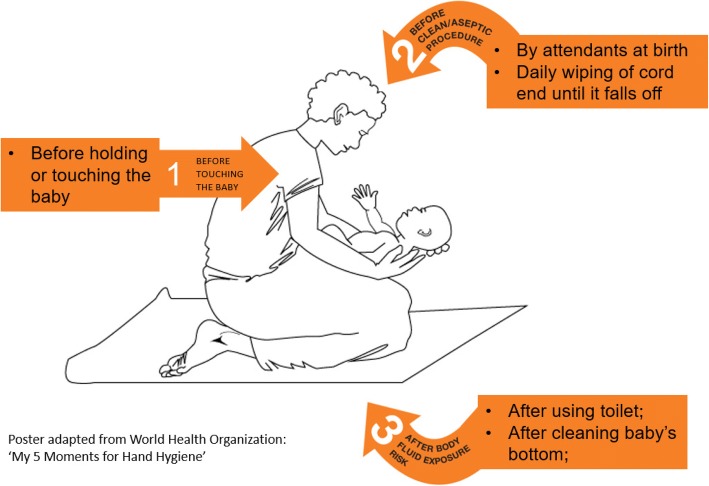
Neonatal sepsis is a major cause of mortality worldwide, with most deaths occurring in low-income countries. The World Health Organisation (WHO) '5 Moments for Hand Hygiene' poster has been used to reduce hospital-acquired infections, but there is no similar tool to prevent community-acquired newborn infections in low-resource settings. This assessment, part of the BabyGel Pilot study, evaluated the acceptability of the 'Newborn Moments for Hand Hygiene in the Home' poster. This was an educational tool which aimed to remind mothers in rural Uganda to clean their hands to prevent neonatal infection.
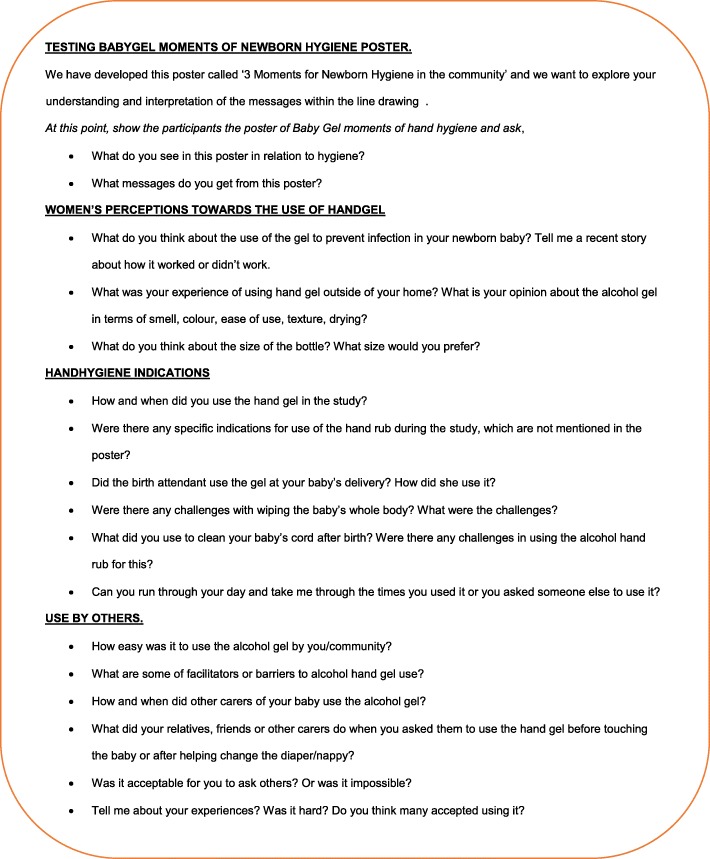
The BabyGel pilot was a cluster randomised trial that assessed the post-partum use of alcohol-based hand rub (ABHR) to prevent neonatal infections in Mbale, Uganda. Fifty-five women in 5 village clusters received the ABHR and used it from birth to 3 months postnatally, with use guided by the new poster. Following the study, 5 focus group discussions (FGDs) were conducted consisting of 6-8 purposively sampled participants from intervention villages. FGDs were audio-recorded, transcribed then translated into English. Transcripts were inductively coded using ATLAS.ti® and qualitatively analysed using thematic content analysis.
Most mothers reported that they understood the message in the poster ("The picture shows me you must use these drugs to keep your baby healthy") and that they could adhere to the moments from the poster. Some participants used the information from the poster to encourage other caregivers to use the ABHR ("after explaining to them, they liked it"). Other potential moments for hand hygiene were introduced by participants, such as after tending to domestic animals and gardening.
The poster was well-received, and participants reported compliance with the moments for hand hygiene (although the full body wipe of the baby has since been removed). The poster will be adapted into a sticker format on the ABHR bottle. More focus could be put into an education tool for other caregivers who wish to hold the baby. Overall, the study demonstrated the acceptability of an adapted version of the WHO Moments for Hand Hygiene poster in the introduction of an intervention in the community.
ISRCTN67852437 , registered 02/03/2015.
Medical Research Council/ Wellcome Trust/ DfID (Global Health Trials Scheme).
新生儿败血症是全球范围内导致死亡的主要原因,其中大部分死亡发生在低收入国家。世界卫生组织(WHO)的“五个手卫生时刻”海报已被用于减少医院获得性感染,但在资源匮乏的环境中,没有类似的工具来预防社区获得性新生儿感染。本评估是 BabyGel 试点研究的一部分,评估了“家庭新生儿手卫生时刻”海报的可接受性。这是一种教育工具,旨在提醒乌干达农村地区的母亲清洁双手以预防新生儿感染。
BabyGel 试点是一项在乌干达姆巴莱评估产后使用酒精基洗手液(ABHR)预防新生儿感染的集群随机试验。55 名妇女被分配到 5 个村庄集群中,从出生到产后 3 个月使用 ABHR,使用时遵循新海报的指导。研究结束后,在干预村庄中进行了 5 次焦点小组讨论(FGD),每组有 6-8 名有目的抽样的参与者。FGD 被录音、转录,然后翻译成英文。使用 ATLAS.ti®对转录本进行归纳编码,并使用主题内容分析进行定性分析。
大多数母亲报告说,她们理解海报中的信息(“图片向我展示,你必须使用这些药物来保持婴儿健康”),并且能够遵守海报中的时刻。一些参与者利用海报上的信息鼓励其他照顾者使用 ABHR(“向他们解释后,他们就喜欢上了”)。参与者还提出了其他潜在的手部卫生时刻,例如在照顾家畜和园艺之后。
海报受到了欢迎,参与者报告说遵守了手部卫生时刻(尽管后来已经不再对婴儿进行全身擦拭)。海报将被改编成 ABHR 瓶上的贴纸形式。可以更多地关注希望抱婴儿的其他照顾者的教育工具。总体而言,该研究证明了在社区中引入干预措施时,可以接受经过改编的世卫组织手部卫生时刻海报。
ISRCTN67852437,注册于 2015 年 3 月 2 日。
医学研究委员会/惠康信托基金/国际发展部(全球卫生试验计划)。