National Reference Laboratory for Infectious Bovine Rhinotracheitis (IBR), Istituto Zooprofilattico Sperimentale Umbria-Marche "Togo Rosati", 06126 Perugia, Italy.
Viruses. 2019 Jan 2;11(1):23. doi: 10.3390/v11010023.
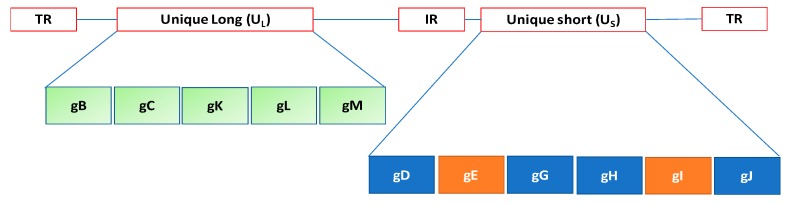
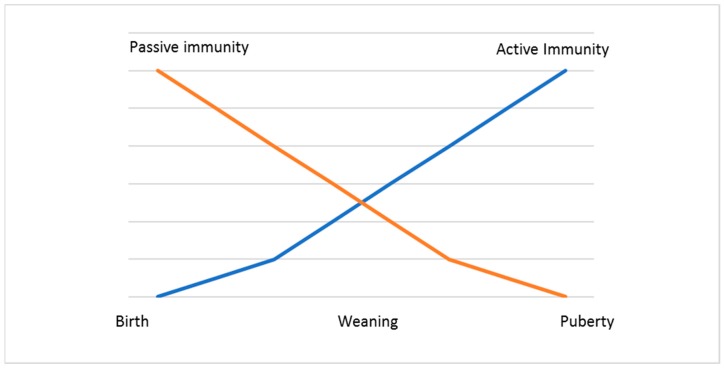
To date, in countries where infectious bovine rhinotracheitis (IBR) is widespread, its control is associated with deleted vaccines. These products lack one or more genes responsible for the synthesis of glycoproteins or enzymes. In Europe, the most widely used vaccine is one in which glycoprotein E (gE-) is deleted, and it is marketed in a killed or modified-live form. Using this type of immunization, it is possible to differentiate vaccinated animals (gE-) from those infected or injected with non-deleted (gE+) products using diagnostic tests specific for gE. The disadvantage of using modified-live gE-products is that they may remain latent in immunized animals and be reactivated or excreted following an immunosuppressive stimulus. For this reason, in the last few years, a new vaccine became commercially available containing a double deletion related to genes coding for gE and the synthesis of the thymidine-kinase (tk) enzyme, the latter being associated with the reduction of the neurotropism, latency, and reactivation of the vaccine virus. Intramuscularly and intranasally administered products induce a humoral immune response; however, the mother-to-calf antibody kinetics after vaccination with vaccines is poorly understood. This review discusses several published articles on this topic.
迄今为止,在广泛流行传染性牛鼻气管炎(IBR)的国家,其防控与缺失疫苗有关。这些产品缺乏一个或多个负责糖蛋白或酶合成的基因。在欧洲,使用最广泛的疫苗是缺失糖蛋白 E(gE-)的疫苗,以灭活或减毒活形式上市。使用这种免疫接种类型,可以使用针对 gE 的诊断测试来区分接种疫苗的动物(gE-)与感染或注射非缺失(gE+)产品的动物。使用减毒活 gE 产品的缺点是,它们可能在免疫动物中潜伏,并在免疫抑制刺激后被重新激活或排泄。出于这个原因,在过去几年中,一种新的含有与糖蛋白 E 和胸苷激酶(tk)酶合成相关的基因双重缺失的疫苗已在商业上获得批准,后者与降低疫苗病毒的神经嗜性、潜伏期和重新激活有关。肌肉内和鼻内给予的疫苗会引起体液免疫反应;然而,接种疫苗后母-犊抗体动力学尚不清楚。本文综述了几篇关于该主题的已发表文章。