• 文献检索
  • 文档翻译
  • 深度研究
  • 学术资讯
  • Suppr Zotero 插件Zotero 插件
  • 邀请有礼
  • 套餐&价格
  • 历史记录
应用&插件
Suppr Zotero 插件Zotero 插件浏览器插件Mac 客户端Windows 客户端微信小程序
定价
高级版会员购买积分包购买API积分包
服务
文献检索文档翻译深度研究API 文档MCP 服务
关于我们
关于 Suppr公司介绍联系我们用户协议隐私条款
关注我们

Suppr 超能文献

核心技术专利:CN118964589B侵权必究
粤ICP备2023148730 号-1Suppr @ 2026

文献检索

告别复杂PubMed语法,用中文像聊天一样搜索,搜遍4000万医学文献。AI智能推荐,让科研检索更轻松。

立即免费搜索

文件翻译

保留排版,准确专业,支持PDF/Word/PPT等文件格式,支持 12+语言互译。

免费翻译文档

深度研究

AI帮你快速写综述,25分钟生成高质量综述,智能提取关键信息,辅助科研写作。

立即免费体验

乳腺癌、前列腺癌和结直肠癌幸存者使用公共可用的体育活动移动应用程序的体验:定性研究。

Breast, Prostate, and Colorectal Cancer Survivors' Experiences of Using Publicly Available Physical Activity Mobile Apps: Qualitative Study.

机构信息

Research Department of Behavioural Science & Health, University College London, London, United Kingdom.

Institute of Health Informatics, University College London, London, United Kingdom.

出版信息

JMIR Mhealth Uhealth. 2019 Jan 4;7(1):e10918. doi: 10.2196/10918.

DOI:10.2196/10918
PMID:30609982
原文链接:https://pmc.ncbi.nlm.nih.gov/articles/PMC6329432/
Abstract

BACKGROUND

Physical activity (PA) can improve a range of outcomes following a cancer diagnosis. These include an improvement in experience of side effects of treatment (eg, fatigue) and management of comorbid conditions. PA might also increase survival and reduce recurrence. Digital interventions have shown potential for PA promotion among cancer survivors, but most in a previous review were Web-based, and few studies used mobile apps. There are many PA apps available for general public use, but it is unclear whether these are suitable as a PA intervention after a cancer diagnosis.

OBJECTIVE

This study sought posttreatment nonmetastatic breast, prostate, and colorectal cancer survivors' opinions of using smartphone apps to promote PA and gathered their views on existing publicly available PA apps to inform a future intervention.

METHODS

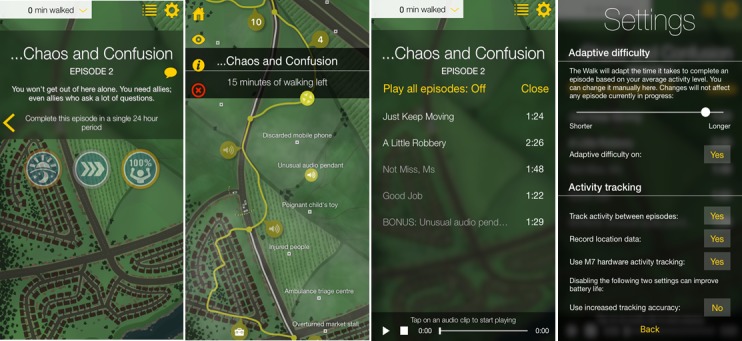
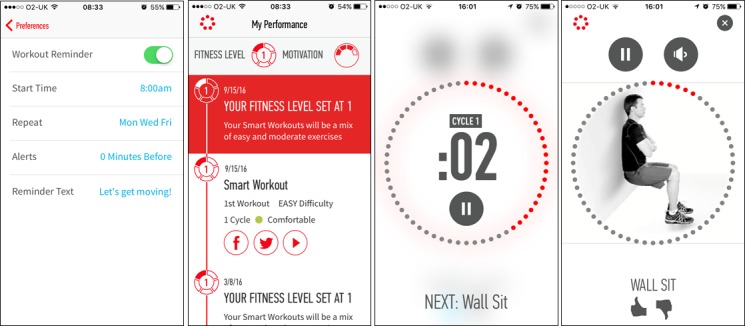
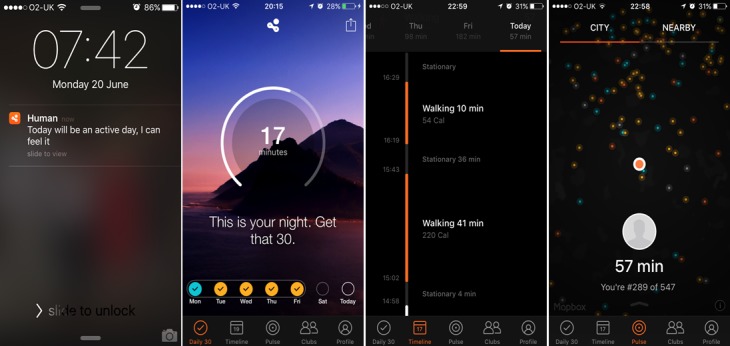
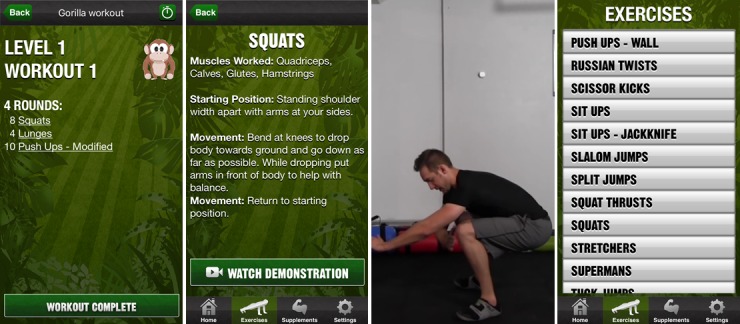
Each participant was randomly assigned to download 2 of 4 apps (Human, The Walk, The Johnson & Johnson Official 7 Minute Workout, and Gorilla Workout). Participants used each app for 1 week consecutively. In-depth semistructured telephone interviews were then conducted to understand participants' experiences of using the apps and how app-based PA interventions could be developed for cancer survivors. The interviews were analyzed using thematic analysis.

RESULTS

Thirty-two participants took part: 50% (16/32) had prostate cancer, 25% (8/32) had breast cancer, and 25% (8/32) had colorectal cancer. Three core themes were identified. The first theme was that multiple factors affect engagement with PA apps and this is highly personalized. Factors affecting engagement included participants' perceptions of (1) the advantages and disadvantages of using apps to support PA, (2) the relevance of the app to the user (eg, in terms of cancer-related factors, their PA goals, the difficulty level of the app, the way in which they interact with their mobile phone, and the extent to which the app fits with their self-identity), (3) the quality of the app (eg, usability, accuracy, quality of production, and scientific evidence-base), and (4) the behavior change techniques used to promote PA. In the second theme, participants recommended that apps that promote walking are most appealing, as walking removes many barriers to PA. Finally, the participants suggested that PA apps should be integrated into cancer care, as they valued guidance and recommendations from health care professionals.

CONCLUSIONS

This sample of breast, prostate, and colorectal cancer survivors was receptive to the use of apps to promote PA. Although no publicly available PA app was deemed wholly suitable, many suggestions for adaptation and intervention development were provided. The results can inform the development of an app-based PA intervention for cancer survivors. They also highlight the wide-ranging and dynamic influences on engagement with digital interventions, which can be applied to other evaluations of mobile health products in other health conditions and other health behaviors.
https://cdn.ncbi.nlm.nih.gov/pmc/blobs/e6bb/6329432/a251500a45eb/mhealth_v7i1e10918_fig4.jpg
https://cdn.ncbi.nlm.nih.gov/pmc/blobs/e6bb/6329432/4c86f1621ba3/mhealth_v7i1e10918_fig1.jpg
https://cdn.ncbi.nlm.nih.gov/pmc/blobs/e6bb/6329432/2c9b6e197c43/mhealth_v7i1e10918_fig2.jpg
https://cdn.ncbi.nlm.nih.gov/pmc/blobs/e6bb/6329432/60422287e70e/mhealth_v7i1e10918_fig3.jpg
https://cdn.ncbi.nlm.nih.gov/pmc/blobs/e6bb/6329432/a251500a45eb/mhealth_v7i1e10918_fig4.jpg
https://cdn.ncbi.nlm.nih.gov/pmc/blobs/e6bb/6329432/4c86f1621ba3/mhealth_v7i1e10918_fig1.jpg
https://cdn.ncbi.nlm.nih.gov/pmc/blobs/e6bb/6329432/2c9b6e197c43/mhealth_v7i1e10918_fig2.jpg
https://cdn.ncbi.nlm.nih.gov/pmc/blobs/e6bb/6329432/60422287e70e/mhealth_v7i1e10918_fig3.jpg
https://cdn.ncbi.nlm.nih.gov/pmc/blobs/e6bb/6329432/a251500a45eb/mhealth_v7i1e10918_fig4.jpg
摘要

背景

身体活动(PA)可以改善癌症诊断后的一系列结果。其中包括改善治疗副作用的体验(例如疲劳)和管理合并症。PA 还可能提高生存率并降低复发率。数字干预措施已显示出在癌症幸存者中促进 PA 的潜力,但之前的大多数综述都是基于网络的,很少有研究使用移动应用程序。有许多适用于普通大众的 PA 应用程序,但尚不清楚这些应用程序是否适合作为癌症诊断后的 PA 干预措施。

目的

本研究旨在了解非转移性乳腺癌、前列腺癌和结直肠癌治疗后幸存者使用智能手机应用程序促进 PA 的意见,并收集他们对现有公开可用的 PA 应用程序的看法,以为未来的干预措施提供信息。

方法

每位参与者被随机分配下载 4 个应用程序中的 2 个(Human、The Walk、The Johnson & Johnson Official 7 Minute Workout 和 Gorilla Workout)。参与者连续使用每个应用程序一周。然后进行深入的半结构化电话访谈,以了解参与者使用应用程序的经验以及如何为癌症幸存者开发基于应用程序的 PA 干预措施。使用主题分析对访谈进行分析。

结果

共有 32 名参与者参加:50%(16/32)患有前列腺癌,25%(8/32)患有乳腺癌,25%(8/32)患有结直肠癌。确定了三个核心主题。第一个主题是,多种因素会影响对 PA 应用程序的参与度,而且这种参与度具有高度个性化。影响参与度的因素包括参与者对(1)使用应用程序支持 PA 的优缺点的看法,(2)应用程序对用户的相关性(例如,就与癌症相关的因素、他们的 PA 目标、应用程序的难度水平、他们与移动电话的交互方式以及应用程序与他们的自我身份的契合程度而言),(3)应用程序的质量(例如,可用性、准确性、制作质量和科学证据基础),以及(4)用于促进 PA 的行为改变技术。在第二个主题中,参与者建议最吸引人的是促进步行的应用程序,因为步行消除了 PA 的许多障碍。最后,参与者建议将 PA 应用程序纳入癌症护理中,因为他们重视来自医疗保健专业人员的指导和建议。

结论

本研究中,乳腺癌、前列腺癌和结直肠癌幸存者愿意使用应用程序来促进 PA。尽管没有完全适合的公共可用 PA 应用程序,但提供了许多适应和干预措施开发的建议。结果可以为癌症幸存者的基于应用程序的 PA 干预措施的开发提供信息。它们还强调了对数字干预措施的广泛和动态影响,这可应用于其他健康状况和其他健康行为的移动健康产品的评估中。

相似文献

1
Breast, Prostate, and Colorectal Cancer Survivors' Experiences of Using Publicly Available Physical Activity Mobile Apps: Qualitative Study.乳腺癌、前列腺癌和结直肠癌幸存者使用公共可用的体育活动移动应用程序的体验:定性研究。
JMIR Mhealth Uhealth. 2019 Jan 4;7(1):e10918. doi: 10.2196/10918.
2
Breast Cancer Survivors' Perspectives on Motivational and Personalization Strategies in Mobile App-Based Physical Activity Coaching Interventions: Qualitative Study.基于移动应用的身体活动教练干预中乳腺癌幸存者对动机和个性化策略的观点:定性研究。
JMIR Mhealth Uhealth. 2020 Sep 21;8(9):e18867. doi: 10.2196/18867.
3
Cancer specialist nurses' perspectives of physical activity promotion and the potential role of physical activity apps in cancer care.癌症专科护士对促进身体活动的看法以及身体活动应用程序在癌症护理中的潜在作用。
J Cancer Surviv. 2019 Oct;13(5):815-828. doi: 10.1007/s11764-019-00801-w. Epub 2019 Sep 2.
4
Assessment of Cancer Survivors' Experiences of Using a Publicly Available Physical Activity Mobile Application.癌症幸存者使用一款公开可用的体育活动移动应用程序的体验评估
JMIR Cancer. 2016 May 31;2(1):e7. doi: 10.2196/cancer.5380.
5
A Personalized Physical Activity Coaching App for Breast Cancer Survivors: Design Process and Early Prototype Testing.针对乳腺癌幸存者的个性化体力活动指导应用程序:设计过程与早期原型测试。
JMIR Mhealth Uhealth. 2020 Jul 15;8(7):e17552. doi: 10.2196/17552.
6
A Mobile System to Improve Quality of Life Via Energy Balance in Breast Cancer Survivors (BENECA mHealth): Prospective Test-Retest Quasiexperimental Feasibility Study.一种通过乳腺癌幸存者的能量平衡来提高生活质量的移动系统(BENECA mHealth):前瞻性测试-再测试准实验可行性研究。
JMIR Mhealth Uhealth. 2019 Jun 25;7(6):e14136. doi: 10.2196/14136.
7
Exploring Users' Experiences of the Uptake and Adoption of Physical Activity Apps: Longitudinal Qualitative Study.探索用户对体育活动应用程序的接受和采用的体验:纵向定性研究。
JMIR Mhealth Uhealth. 2019 Feb 8;7(2):e11636. doi: 10.2196/11636.
8
Usability and Implementation Considerations of Fitbit and App Intervention for Diverse Cancer Survivors: Mixed Methods Study.适用于不同癌症幸存者的Fitbit及应用程序干预的可用性与实施考量:混合方法研究
JMIR Cancer. 2025 Feb 24;11:e60034. doi: 10.2196/60034.
9
A Mobile Health App Informed by the Multi-Process Action Control Framework to Promote Physical Activity Among Inactive Adults: Iterative Usability Study.一款基于多进程行动控制框架的移动健康应用程序,旨在促进不活跃成年人的身体活动:迭代可用性研究。
JMIR Form Res. 2025 Apr 23;9:e59477. doi: 10.2196/59477.
10
An Assessment of Physical Activity Data Collected via a Smartphone App and a Smart Band in Breast Cancer Survivors: Observational Study.通过智能手机应用程序和智能手环收集的乳腺癌幸存者身体活动数据评估:观察性研究。
J Med Internet Res. 2019 Sep 6;21(9):13463. doi: 10.2196/13463.

引用本文的文献

1
The role of digital therapeutics in the management of prostate cancer: A systematic scoping review.数字疗法在前列腺癌管理中的作用:一项系统的范围综述。
Digit Health. 2025 Sep 4;11:20552076251376261. doi: 10.1177/20552076251376261. eCollection 2025 Jan-Dec.
2
Patient-Reported Perception of Exercise and Receptiveness to Mobile Technology in Cancer Survivors Living in Rural and Remote Areas.农村和偏远地区癌症幸存者对运动的患者报告认知及对移动技术的接受度
Curr Oncol. 2025 Jan 27;32(2):67. doi: 10.3390/curroncol32020067.
3
An App-Based Intervention With Behavioral Support to Promote Brisk Walking in People Diagnosed With Breast, Prostate, or Colorectal Cancer (APPROACH): Process Evaluation Study.

本文引用的文献

1
A multi-centre investigation of delivering national guidelines on exercise training for men with advanced prostate cancer undergoing androgen deprivation therapy in the UK NHS.英国国民保健制度中,对接受雄激素剥夺疗法的晚期前列腺癌男性实施国家运动训练指南的多中心调查。
PLoS One. 2018 Jul 5;13(7):e0197606. doi: 10.1371/journal.pone.0197606. eCollection 2018.
2
Effective Exercise Interventions for Patients and Survivors of Cancer Should be Supervised, Targeted, and Prescribed With Referrals From Oncologists and General Physicians.针对癌症患者及幸存者的有效运动干预措施应由肿瘤学家和全科医生转诊,进行监督、靶向治疗并开具处方。
J Clin Oncol. 2018 Mar 20;36(9):927-928. doi: 10.1200/JCO.2017.76.7400. Epub 2018 Jan 26.
3
一项基于应用程序并提供行为支持以促进乳腺癌、前列腺癌或结直肠癌患者快走的干预措施(APPROACH):过程评估研究
JMIR Cancer. 2025 Feb 10;11:e64747. doi: 10.2196/64747.
4
Raising awareness of alcohol as a modifiable risk factor for breast cancer: A randomized controlled trial comparing the efficacy of accessing an interactive website with a non-interactive website.提高对酒精作为乳腺癌可改变风险因素的认识:一项随机对照试验,比较访问交互式网站与非交互式网站的效果。
Breast. 2025 Feb;79:103868. doi: 10.1016/j.breast.2024.103868. Epub 2024 Dec 26.
5
Prototype of an App Designed to Support Self-Management for Health Behaviors and Weight in Women Living With Breast Cancer: Qualitative User Experience Study.一款旨在支持乳腺癌女性健康行为和体重自我管理的应用程序原型:定性用户体验研究
JMIR Cancer. 2024 Dec 20;10:e48170. doi: 10.2196/48170.
6
Comparison of Effects Between Telerehabilitation and In-Person Rehabilitation After Breast Cancer Surgery: A Randomized Controlled Study.乳腺癌手术后远程康复与面对面康复效果比较:一项随机对照研究。
Integr Cancer Ther. 2024 Jan-Dec;23:15347354241256314. doi: 10.1177/15347354241256314.
7
The feasibility and acceptability of an app-based intervention with brief behavioural support (APPROACH) to promote brisk walking in people diagnosed with breast, prostate and colorectal cancer in the UK.基于 APP 的干预措施联合简短行为支持应用于英国确诊乳腺癌、前列腺癌和结直肠癌患者促进快走的可行性和可接受性研究。
Cancer Med. 2024 Mar;13(6):e7124. doi: 10.1002/cam4.7124.
8
Enhancing Behavioural Changes: A Narrative Review on the Effectiveness of a Multifactorial APP-Based Intervention Integrating Physical Activity.增强行为改变:基于 APP 的多因素干预整合身体活动的有效性的叙述性综述。
Int J Environ Res Public Health. 2024 Feb 16;21(2):233. doi: 10.3390/ijerph21020233.
9
Dissemination Strategies for mHealth Apps: Systematic Review.移动医疗应用程序的传播策略:系统评价。
JMIR Mhealth Uhealth. 2024 Jan 5;12:e50293. doi: 10.2196/50293.
10
Feasibility and acceptability of an mHealth, home-based exercise intervention in colorectal cancer survivors: A pilot randomized controlled trial.基于移动医疗的家庭运动干预在结直肠癌幸存者中的可行性和可接受性:一项试点随机对照试验。
PLoS One. 2023 Jun 22;18(6):e0287152. doi: 10.1371/journal.pone.0287152. eCollection 2023.
What Is the "Home" in Home-Based Exercise? The Need to Define Independent Exercise for Survivors of Cancer.
居家锻炼中的“家”是什么?为癌症幸存者定义独立锻炼的必要性。
J Clin Oncol. 2018 Mar 20;36(9):926-927. doi: 10.1200/JCO.2017.76.4365. Epub 2018 Jan 26.
4
Reply to S.C. Adams et al, C. Lopez et al, and R.U. Newton et al.对S.C.亚当斯等人、C.洛佩兹等人以及R.U.牛顿等人的回复
J Clin Oncol. 2018 Mar 20;36(9):928-930. doi: 10.1200/JCO.2017.76.8218. Epub 2018 Jan 26.
5
Exercise Implementation in Oncology: One Size Does Not Fit All.肿瘤学中的运动实施:一刀切并不适用。
J Clin Oncol. 2018 Mar 20;36(9):925-926. doi: 10.1200/JCO.2017.76.2906. Epub 2018 Jan 26.
6
Development and pilot evaluation of a clinic-based mHealth app referral service to support adult cancer survivors increase their participation in physical activity using publicly available mobile apps.基于诊所的移动健康应用程序转诊服务的开发与试点评估,以支持成年癌症幸存者使用公开可用的移动应用程序增加其体育活动参与度。
BMC Health Serv Res. 2018 Jan 16;18(1):27. doi: 10.1186/s12913-017-2818-7.
7
Recruitment, adherence, and retention of endometrial cancer survivors in a behavioural lifestyle programme: the Diet and Exercise in Uterine Cancer Survivors (DEUS) parallel randomised pilot trial.子宫内膜癌幸存者参与行为生活方式项目的招募、依从性和留存率:子宫癌幸存者的饮食与运动(DEUS)平行随机试点试验
BMJ Open. 2017 Oct 8;7(10):e018015. doi: 10.1136/bmjopen-2017-018015.
8
Effective Physical Activity Promotion to Survivors of Cancer Is Likely to Be Home Based and to Require Oncologist Participation.对癌症幸存者进行有效的体育活动促进很可能以家庭为基础且需要肿瘤学家参与。
J Clin Oncol. 2017 Nov 10;35(32):3635-3637. doi: 10.1200/JCO.2017.74.6032. Epub 2017 Sep 15.
9
Digital health behaviour change interventions targeting physical activity and diet in cancer survivors: a systematic review and meta-analysis.针对癌症幸存者身体活动和饮食的数字健康行为改变干预措施:一项系统综述和荟萃分析。
J Cancer Surviv. 2017 Dec;11(6):704-719. doi: 10.1007/s11764-017-0632-1. Epub 2017 Aug 4.
10
Web-based physical activity interventions: a systematic review and meta-analysis of randomized controlled trials.基于网络的身体活动干预:随机对照试验的系统评价和荟萃分析。
Public Health. 2017 Nov;152:36-46. doi: 10.1016/j.puhe.2017.06.005. Epub 2017 Jul 20.