Juha Hernesniemi International Neurosurgery Center, Henan Provincial People's Hospital, School of Medicine, Henan University, Zhengzhou, China.
Institute of Cellular and Molecular Anatomy, Goethe-University Frankfurt, Frankfurt, Germany.
J Pineal Res. 2019 Apr;66(3):e12553. doi: 10.1111/jpi.12553. Epub 2019 Feb 14.
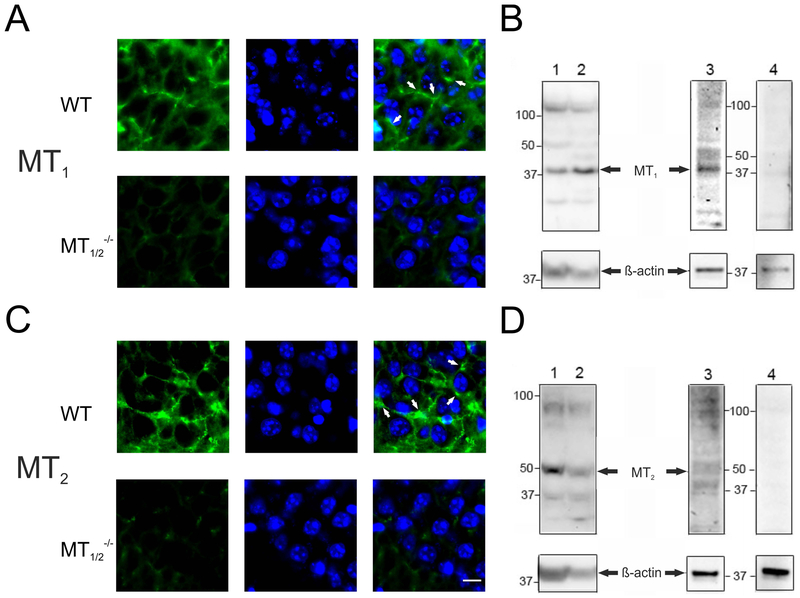
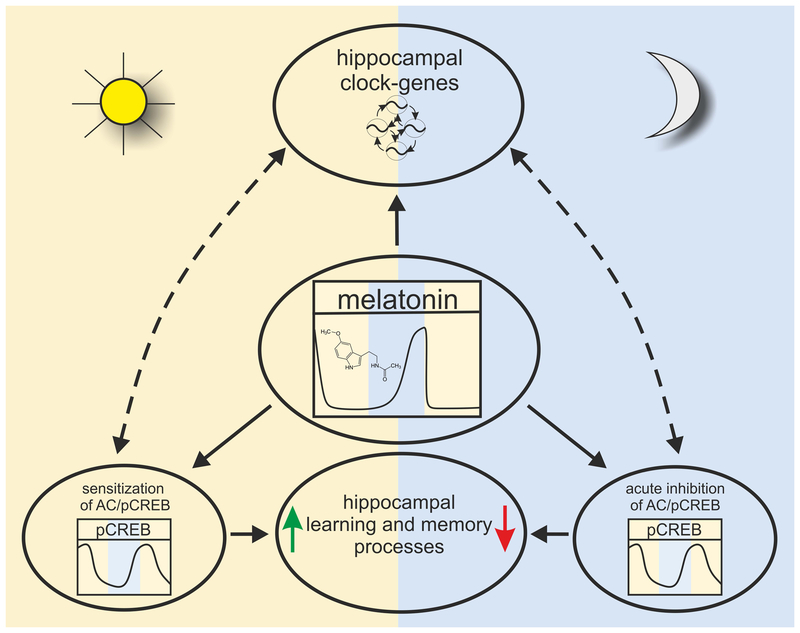
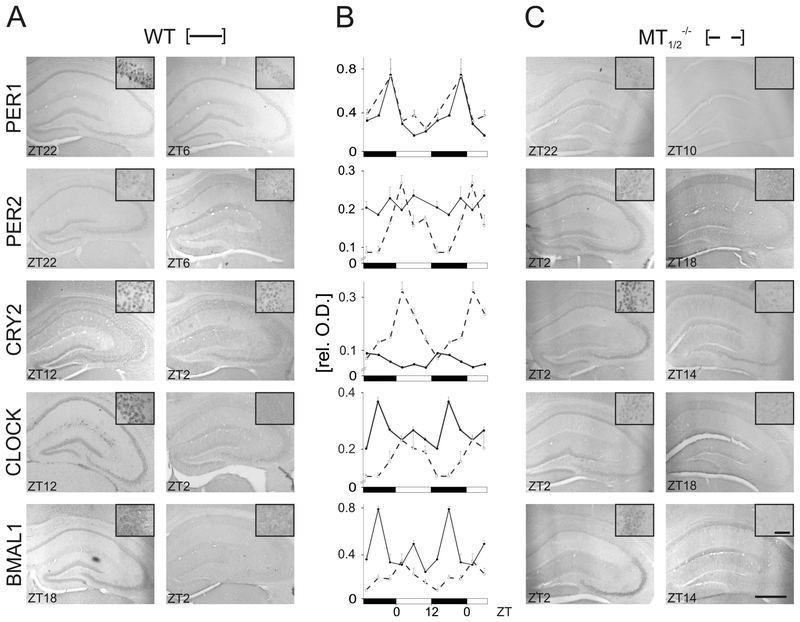
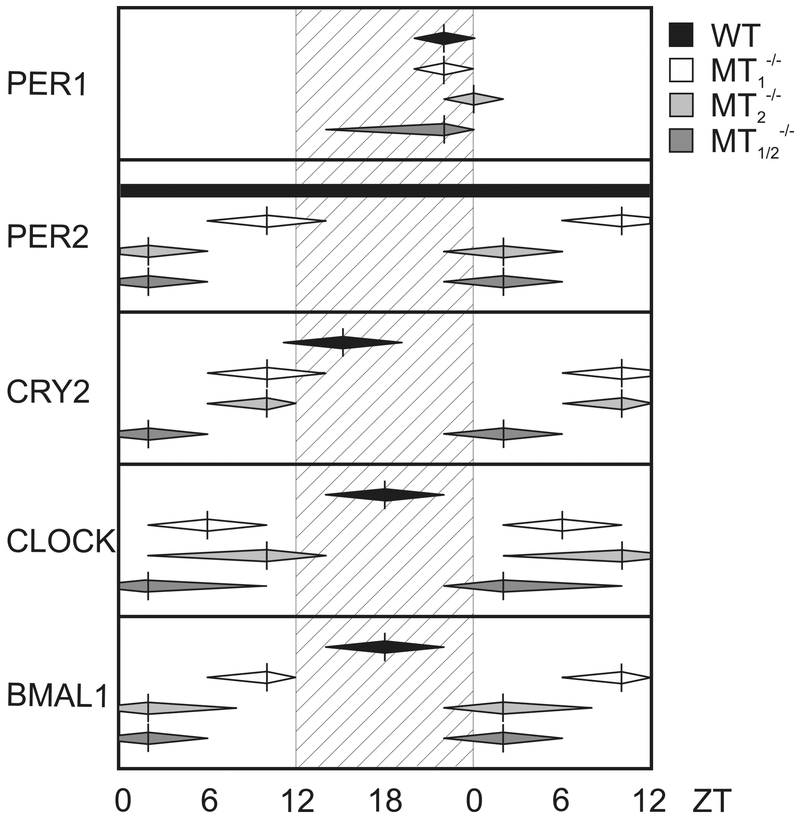
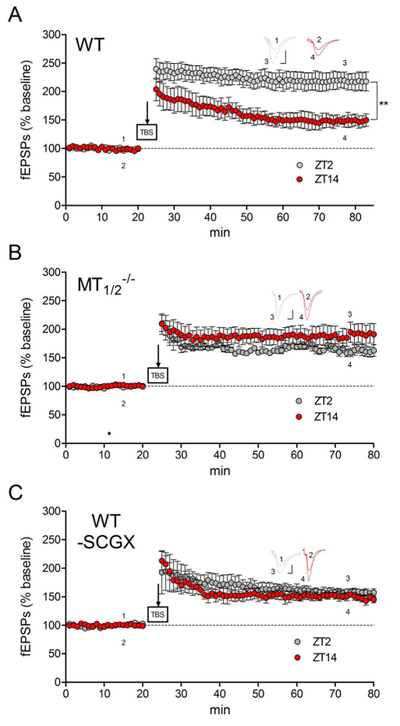
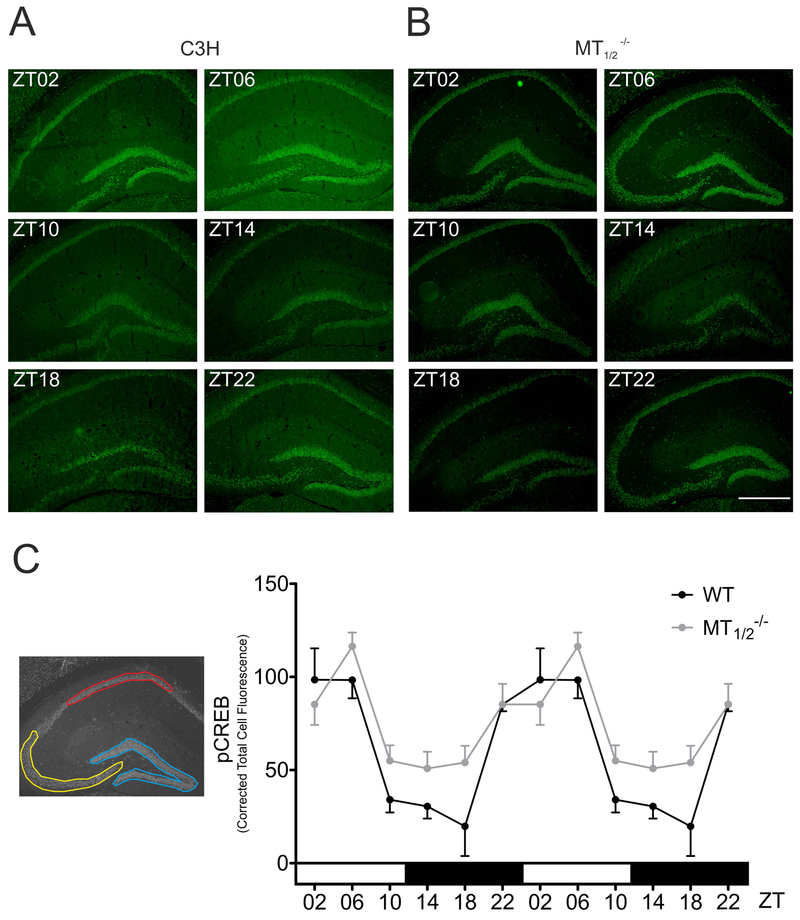
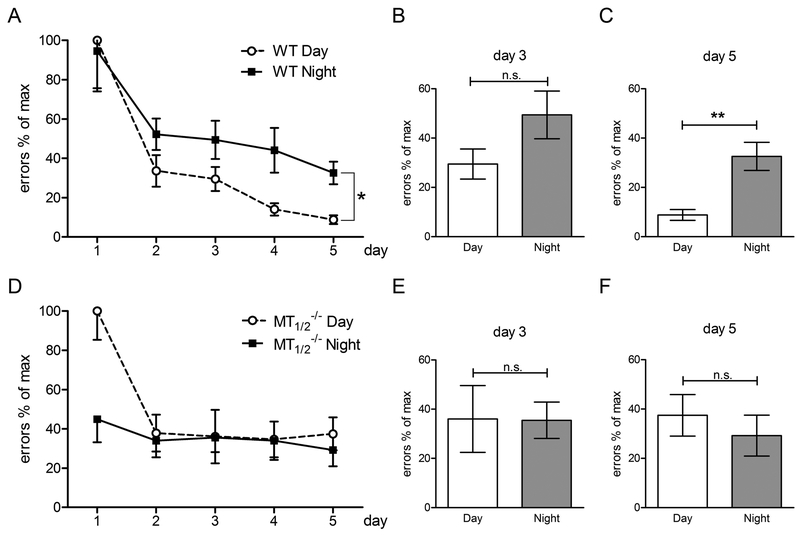
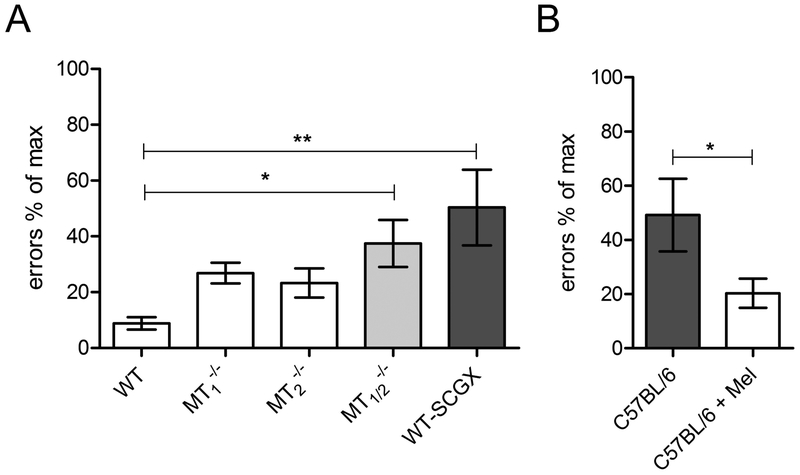
Mechanisms of hippocampus-related memory formation are time-of-day-dependent. While the circadian system and clock genes are related to timing of hippocampal mnemonic processes (acquisition, consolidation, and retrieval of long-term memory [LTM]) and long-term potentiation (LTP), little is known about temporal gating mechanisms. Here, the role of the neurohormone melatonin as a circadian time cue for hippocampal signaling and memory formation was investigated in C3H/He wildtype (WT) and melatonin receptor-knockout ( ) mice. Immunohistochemical and immunoblot analyses revealed the presence of melatonin receptors on mouse hippocampal neurons. Temporal patterns of time-of-day-dependent clock gene protein levels were profoundly altered in mice compared to WT animals. On the behavioral level, WT mice displayed better spatial learning efficiency during daytime as compared to nighttime. In contrast, high error scores were observed in mice during both, daytime and nighttime acquisition. Day-night difference in LTP, as observed in WT mice, was absent in mice and in WT animals, in which the sympathetic innervation of the pineal gland was surgically removed to erase rhythmic melatonin synthesis. In addition, treatment of melatonin-deficient C57BL/6 mice with melatonin at nighttime significantly improved their working memory performance at daytime. These results illustrate that melatonin shapes time-of-day-dependent learning efficiency in parallel to consolidating expression patterns of clock genes in the mouse hippocampus. Our data suggest that melatonin imprints a time cue on mouse hippocampal signaling and gene expression to foster better learning during daytime.
海马体相关记忆形成的机制具有时间依赖性。尽管生物钟系统和时钟基因与海马体记忆过程(获取、巩固和长期记忆[LTM]的检索)和长时程增强(LTP)的时间有关,但关于时间门控机制的了解甚少。在这里,研究了神经激素褪黑素作为海马体信号和记忆形成的生物钟时间线索的作用,在 C3H/He 野生型(WT)和褪黑素受体敲除( )小鼠中进行。免疫组织化学和免疫印迹分析显示褪黑素受体存在于小鼠海马神经元上。与 WT 动物相比, 小鼠中昼夜节律时钟基因蛋白水平的时间依赖性模式发生了深刻改变。在行为水平上,与夜间相比,WT 小鼠在白天显示出更好的空间学习效率。相比之下,在白天和夜间的获取过程中, 小鼠的错误得分都很高。在 WT 小鼠中观察到的 LTP 的昼夜差异在 小鼠中不存在,并且在 WT 动物中,松果体的交感神经支配被手术切除以消除节律性褪黑素合成。此外,在夜间给褪黑素缺乏的 C57BL/6 小鼠施用褪黑素可显著改善它们在白天的工作记忆表现。这些结果表明,褪黑素与时钟基因在小鼠海马体中的表达模式共同塑造了昼夜学习效率。我们的数据表明,褪黑素在小鼠海马体信号和基因表达上打上时间标记,以促进白天更好的学习。