Institute of Vegetables, Zhejiang Academy of Agricultural Sciences, Hangzhou 310021, China.
Food Safety Key Lab of Zhejiang Province, The School of Food Science and Biotechnology, Zhejiang Gongshang University, Hangzhou 310018, China.
Int J Mol Sci. 2019 Jan 10;20(2):262. doi: 10.3390/ijms20020262.
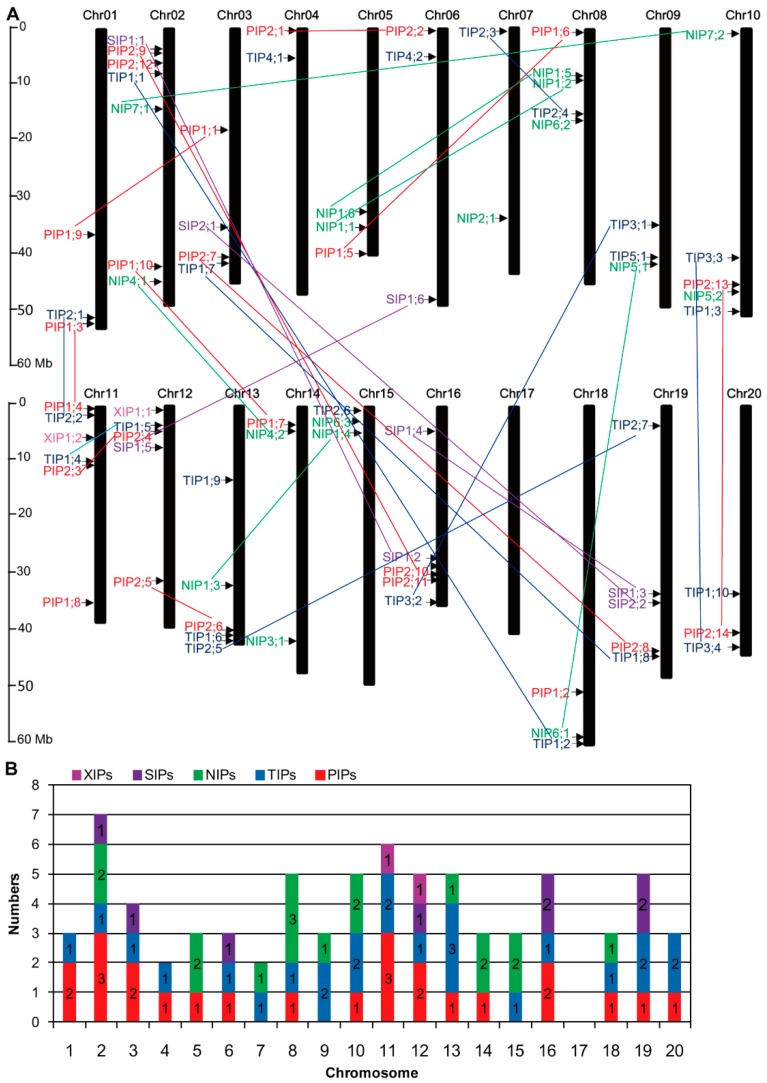
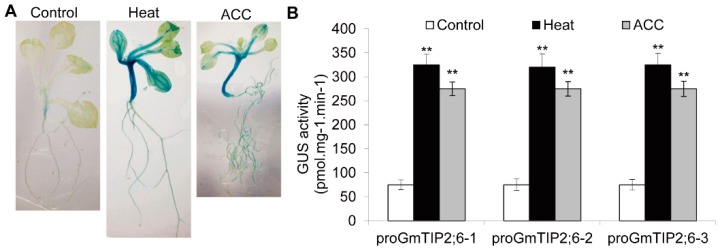
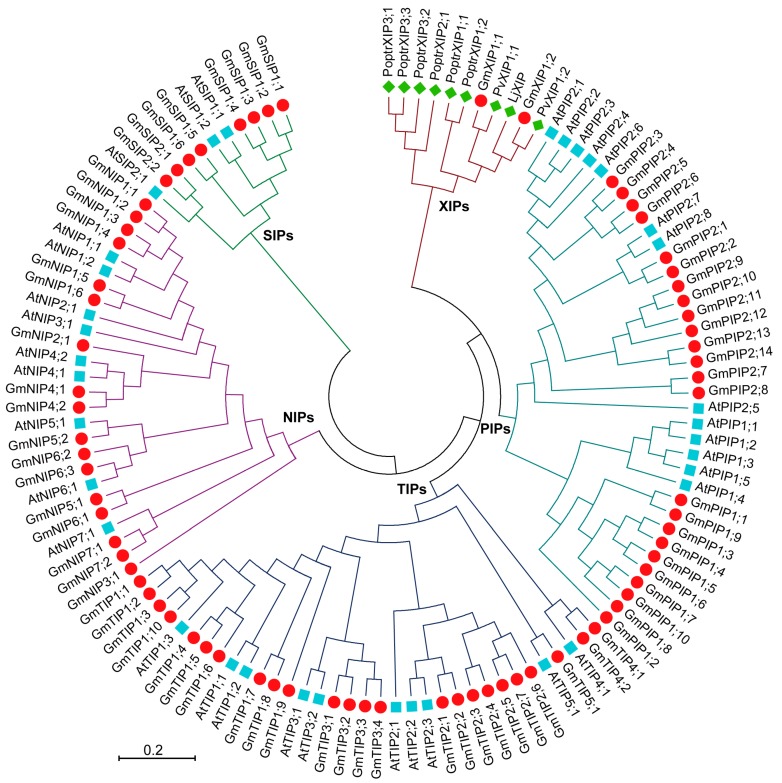
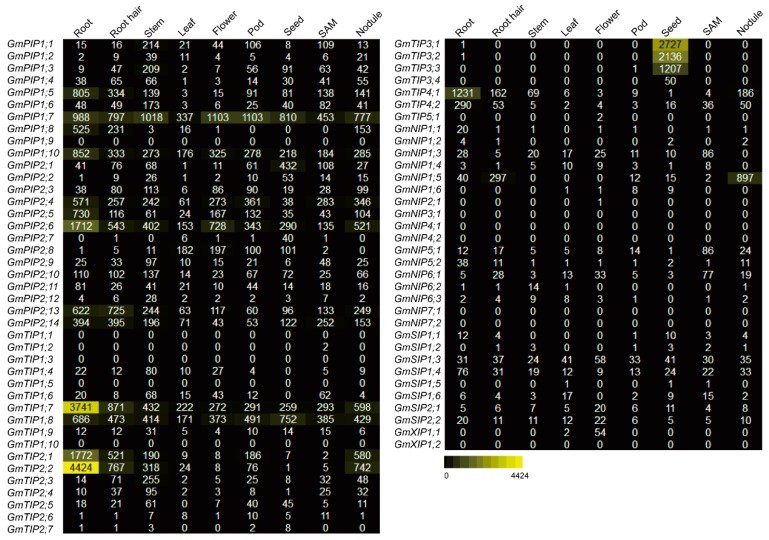
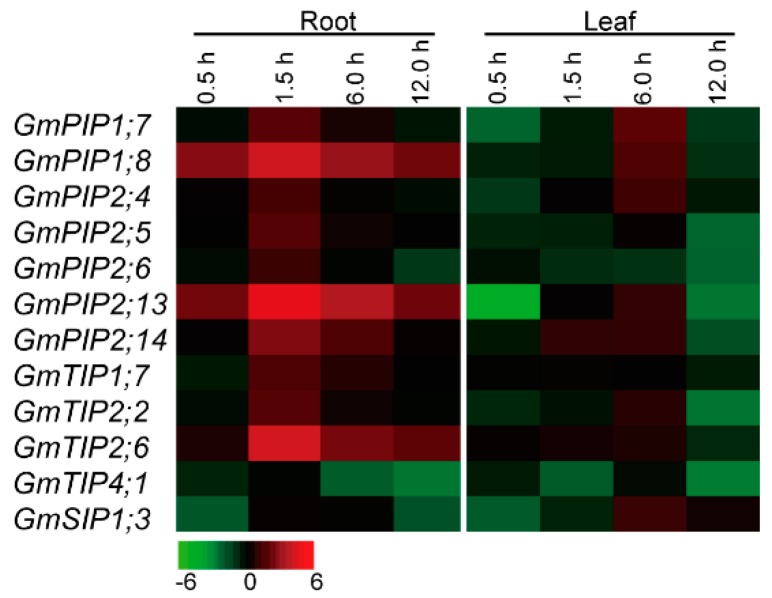
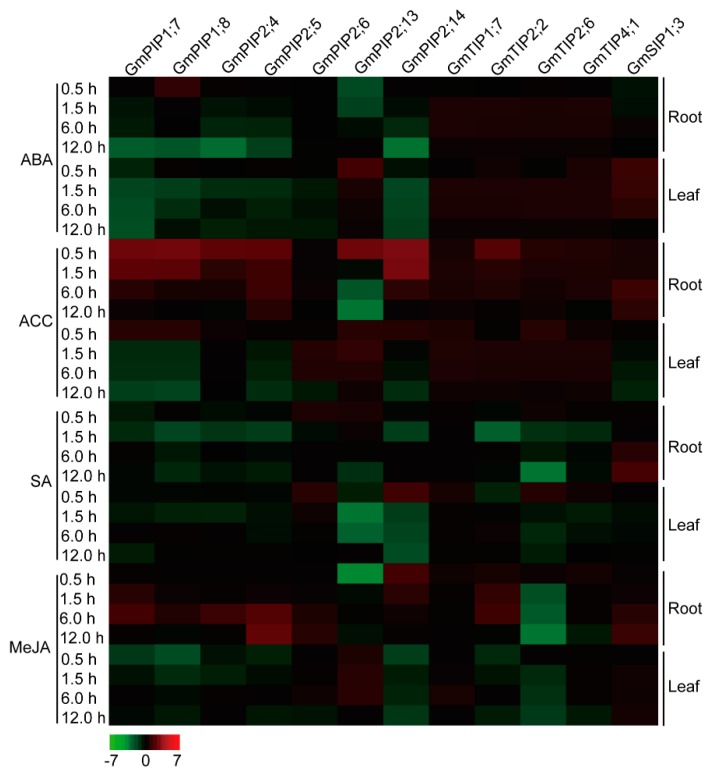
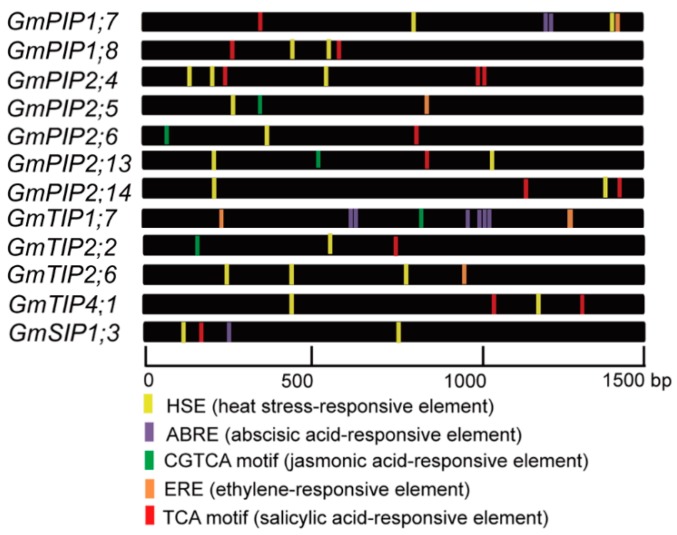
Aquaporins (AQPs) are one diverse family of membrane channel proteins that play crucial regulatory roles in plant stress physiology. However, the heat stress responsiveness of genes in soybean remains poorly understood. In this study, 75 non-redundant AQP encoding genes were identified in soybean. Multiple sequence alignments showed that all GmAQP proteins possessed the conserved regions, which contained 6 trans-membrane domains (TM1 to TM6). Different GmAQP members consisted of distinct Asn-Pro-Ala (NPA) motifs, aromatic/arginine (ar/R) selectivity filters and Froger's positions (FPs). Phylogenetic analyses distinguished five sub-families within these GmAQPs: 24 GmPIPs, 24 GmTIPs, 17 GmNIPs, 8 GmSIPs, and 2 GmXIPs. Promoter -acting elements analyses revealed that distinct number and composition of heat stress and hormone responsive elements existed in different promoter regions of . QRT-PCR assays demonstrated that 12 candidate with relatively extensive expression in various tissues or high expression levels in root or leaf exhibited different expression changes under heat stress and hormone cues (abscisic acid (ABA), l-aminocyclopropane-l-carboxylic acid (ACC), salicylic acid (SA) and methyl jasmonate (MeJA)). Furthermore, the promoter activity of one previously functionally unknown gene- was investigated in transgenic plants. The beta-glucuronidase (GUS) activity driven by the promoter of was strongly induced in the heat- and ACC-treated transgenic plants and tended to be accumulated in the hypocotyls, vascular bundles, and leaf trichomes. These results will contribute to uncovering the potential functions and molecular mechanisms of soybean in mediating heat stress and hormone signal responses.
水通道蛋白(AQP)是膜通道蛋白家族中的一个多样化家族,在植物应激生理学中发挥着关键的调节作用。然而,大豆基因对热应激的反应仍知之甚少。在这项研究中,在大豆中鉴定了 75 个非冗余的 AQP 编码基因。多重序列比对表明,所有 GmAQP 蛋白都具有保守区域,其中包含 6 个跨膜结构域(TM1 到 TM6)。不同的 GmAQP 成员由不同的天冬酰胺-脯氨酸-丙氨酸(NPA)基序、芳香族/精氨酸(ar/R)选择性过滤器和 Froger 位置(FP)组成。系统发育分析将这些 GmAQPs 分为五个亚家族:24 个 GmPIPs、24 个 GmTIPs、17 个 GmNIPs、8 个 GmSIPs 和 2 个 GmXIPs。启动子作用元件分析表明,不同的热应激和激素响应元件的数量和组成存在于不同的 启动子区域。实时定量 PCR 分析表明,在各种组织中表达广泛或在根或叶中表达水平较高的 12 个候选 基因在热应激和激素(脱落酸(ABA)、l-氨基环丙烷-l-羧酸(ACC)、水杨酸(SA)和茉莉酸甲酯(MeJA))刺激下表现出不同的表达变化。此外,对一个先前功能未知的 基因-的启动子活性在转基因 植物中进行了研究。由 启动子驱动的β-葡萄糖醛酸酶(GUS)活性在热和 ACC 处理的转基因植物中强烈诱导,并倾向于在子叶、维管束和叶片毛状体中积累。这些结果将有助于揭示大豆 基因在介导热应激和激素信号反应中的潜在功能和分子机制。