Ling Ming, Zhan Shi, Jiang Dajun, Hu Hai, Zhang Changqing
Department of Orthopedic Surgery and Orthopedic Biomechanical Laboratory, Shanghai Jiao Tong University Affiliated Sixth People's Hospital, No. 600 Yishan Road, Shanghai, 200233, People's Republic of China.
J Orthop Surg Res. 2019 Jan 11;14(1):14. doi: 10.1186/s13018-019-1060-x.
The position of Kirschner wires (K-wires) has an influence on the outcome of modified tension-band wiring (MTBW) in fixing patella fractures. However, the instruction for K-wires positioning is not clear enough. This study tried to clarify the effect of K-wires positioning and provide evidence for a more definite instruction.
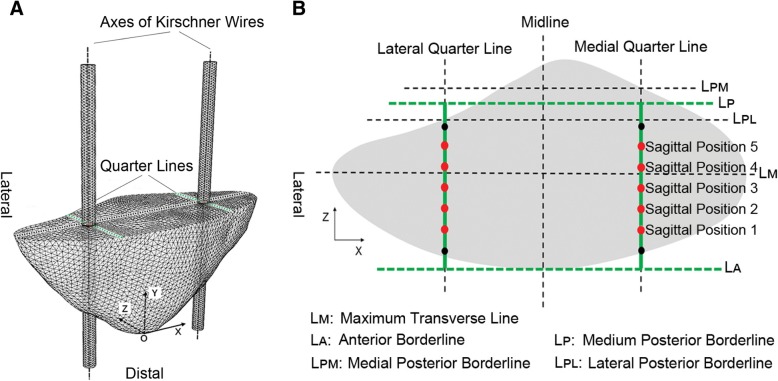
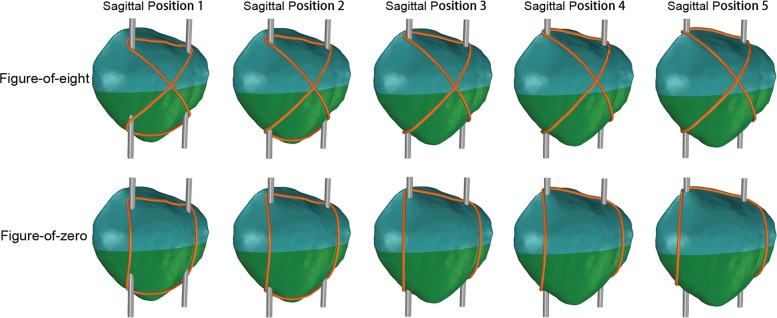
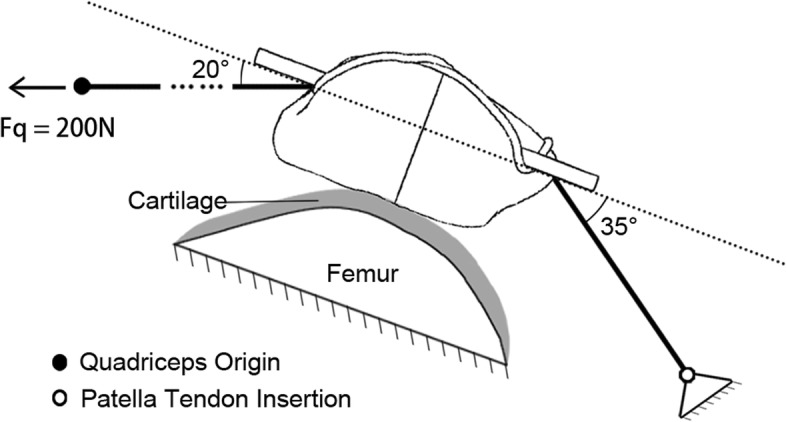
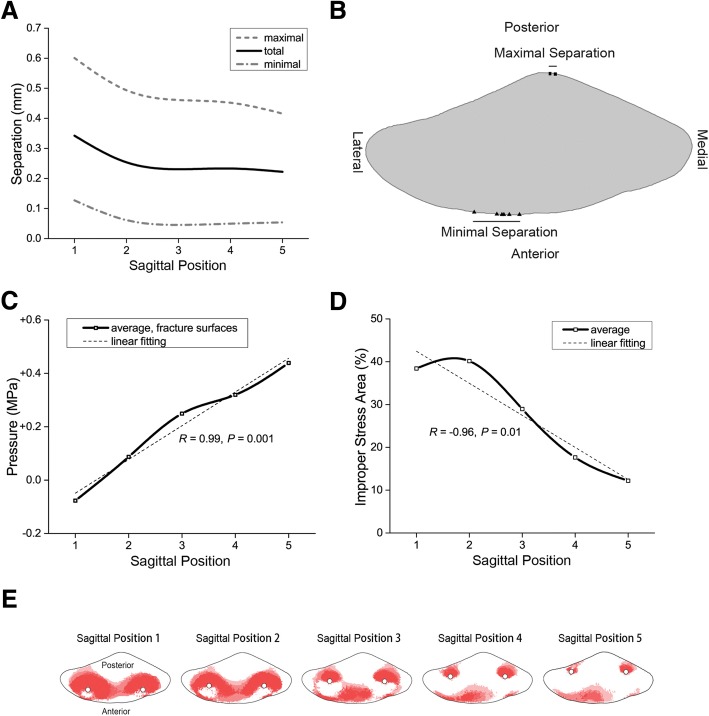
The sagittal position (SP) suitable for placing K-wires was evenly divided into SP 1-5 from anterior to posterior, and the finite element models of midpatella transverse fractures fixed by the figure-of-eight or figure-of-zero MTBW were built up at each SP. Separating displacement of the fracture, stress of the fracture, and stress of the internal fixations were measured at 45° knee flexion by using finite element analysis.
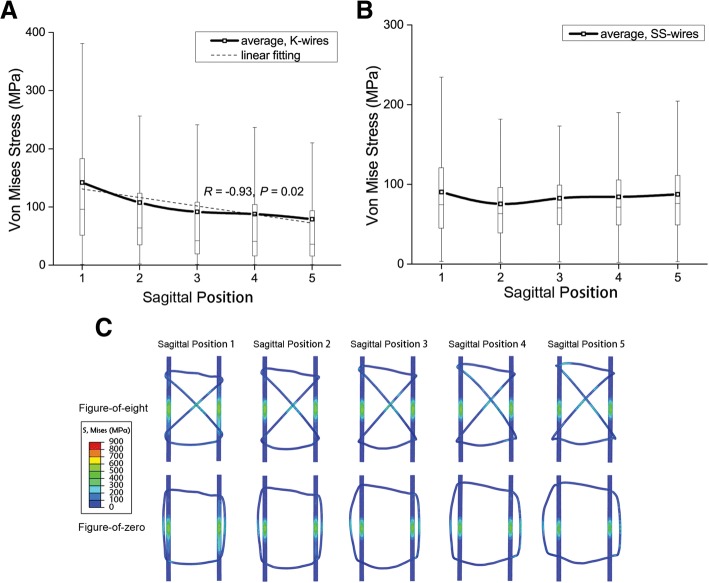
The separating displacement of the fracture was smaller at SP 3-5 (23% smaller than SP 1-2). From SP 1 to 5, the compression of the fracture surfaces increased (R = 0.99, P = 0.001); the improper stress area of the fracture surfaces decreased (R = - 0.96, P = 0.01), and so was the stress of K-wires (R = - 0.93, P = 0.02). However, the stress of stainless steel wires showed a stable trend.
The SP of K-wires plays a role in the function of MTBW in the surgical management of transverse patella fracture. At 45° knee flexion, posteriorly placed (close to the articular surface) K-wires enable optimal stability and stress for the fracture, which provides basis for the positioning of K-wires in clinical practice.
克氏针(K 针)的位置对改良张力带钢丝固定术(MTBW)治疗髌骨骨折的疗效有影响。然而,关于 K 针定位的指导尚不够明确。本研究旨在阐明 K 针定位的作用,并为更明确的指导提供依据。
将适合放置 K 针的矢状位(SP)从前向后均匀分为 SP 1 - 5,在每个 SP 处建立采用 8 字或 0 字 MTBW 固定的髌骨中部横行骨折的有限元模型。通过有限元分析在膝关节屈曲 45°时测量骨折的分离位移、骨折应力和内固定应力。
在 SP 3 - 5 时骨折的分离位移较小(比 SP 1 - 2 小 23%)。从 SP 1 到 5,骨折面的压缩增加(R = 0.99,P = 0.001);骨折面的应力不当区域减小(R = - 0.96,P = 0.01),K 针的应力也减小(R = - 0.93,P = 0.02)。然而,不锈钢丝的应力呈稳定趋势。
K 针的矢状位在髌骨横行骨折手术治疗的 MTBW 功能中起作用。在膝关节屈曲 45°时,向后放置(靠近关节面)的 K 针能为骨折提供最佳稳定性和应力,这为临床实践中 K 针的定位提供了依据。