Tang Haili, Peng Shujia, Dong Yanming, Yang Xiaojun, Yang Ping, Yang Lin, Yang Bing, Bao Guoqiang
Department of General Surgery, Tangdu Hospital, The Fourth Military Medical University, Xi'an, Shaanxi 710038, China,
Department of General Surgery, JingYang Country Hospital, XianYang, Shaanxi 713700, China.
Cancer Manag Res. 2018 Dec 24;11:201-215. doi: 10.2147/CMAR.S190694. eCollection 2019.
Human MARCH5 is a mitochondrial localized E3 ubiquitin-protein ligase that is critical for the regulation of mitochondrial dynamics. A body of evidence has indicated the close links between unbalanced mitochondrial dynamics and cancers. However, the expression, biological functions, and prognostic significance of MARCH5 in breast cancer (BC) have not been determined.
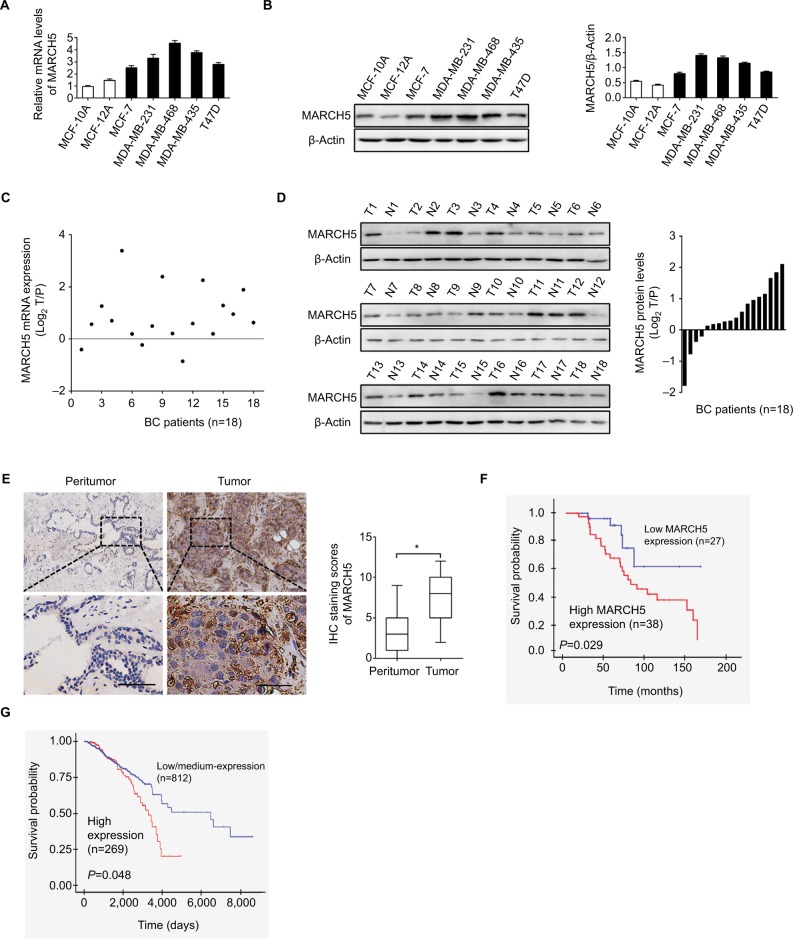
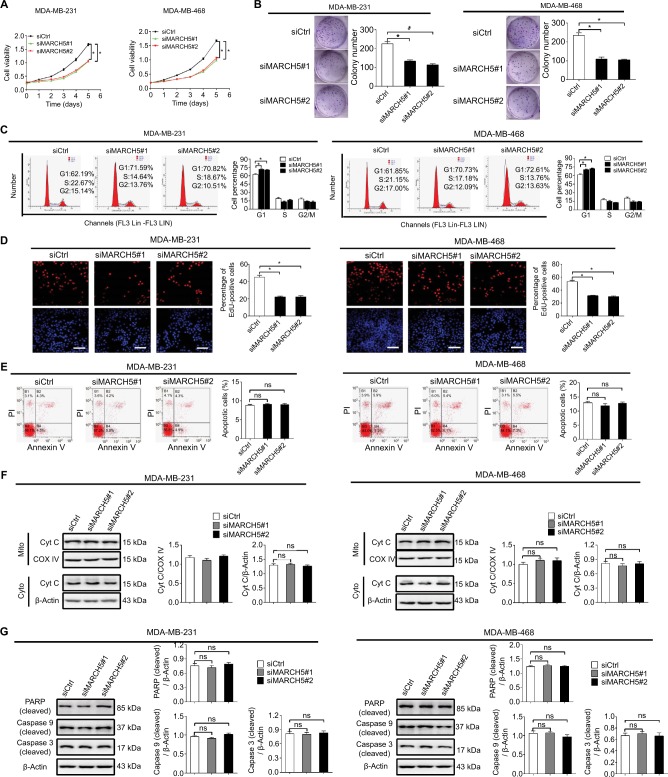
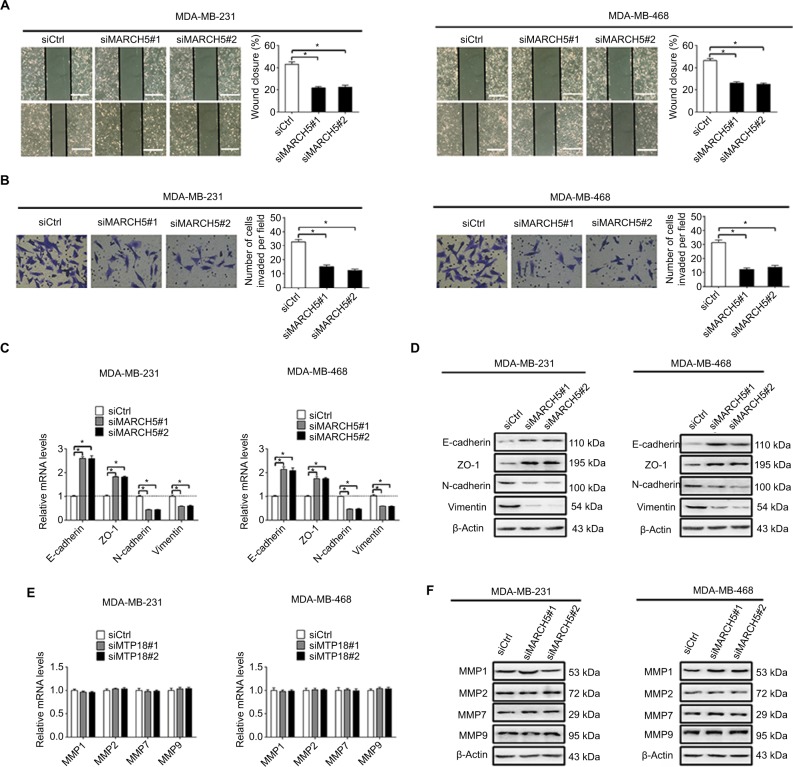
The mRNA and protein expressions of MARCH5 were evaluated by quantitative real-time PCR and Western blot analysis in BC cell lines and tumor tissues. Clinical prognostic significance of MARCH5 was assessed in 65 patients with BC. The biological functions of MARCH5 were determined by in vitro cell proliferation, apoptosis, cell cycle, migration and invasion assays, and in vivo tumor growth and metastasis assays through knockdown or overexpression of MARCH5 in BC cells. In addition, the underlying mechanisms by which MARCH5 regulated BC cell growth and metastasis were explored.
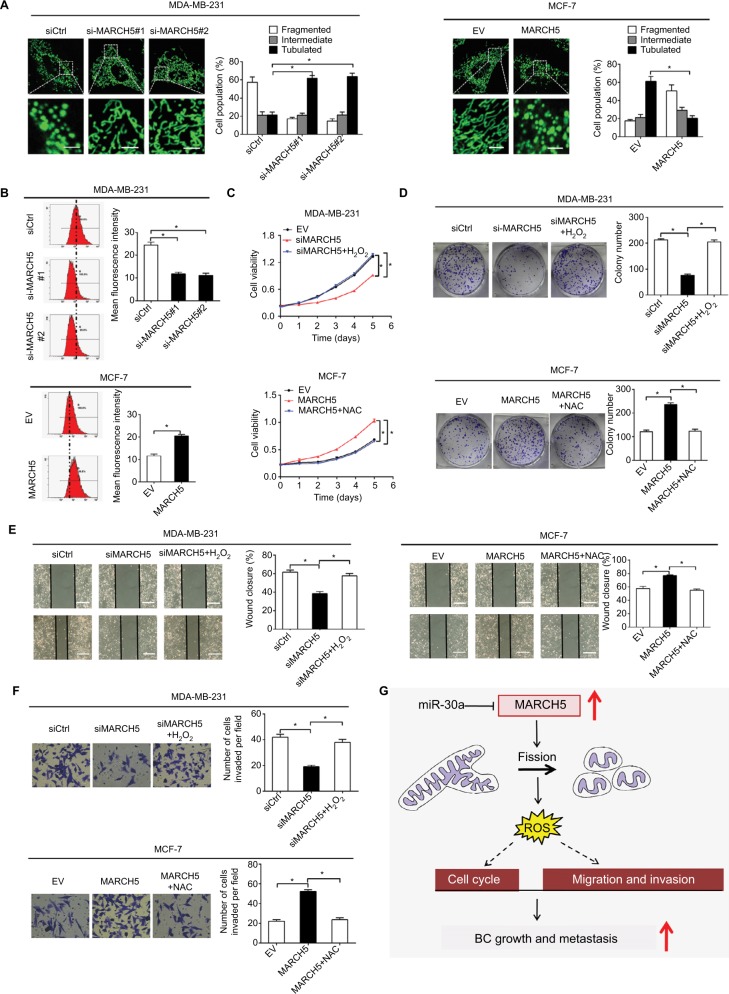
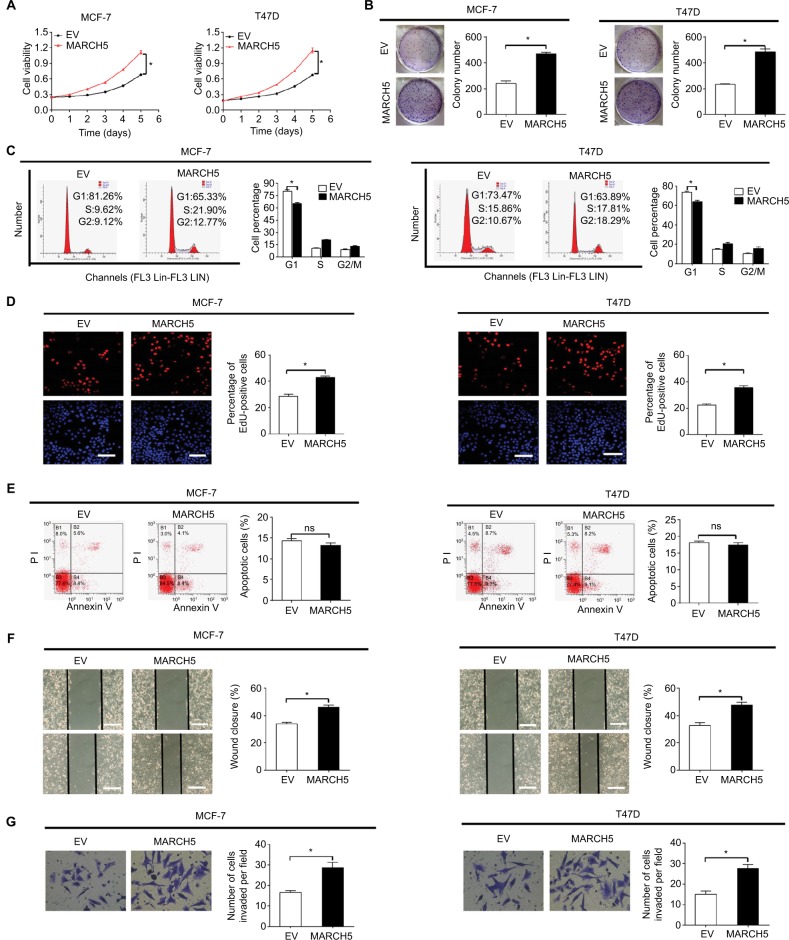
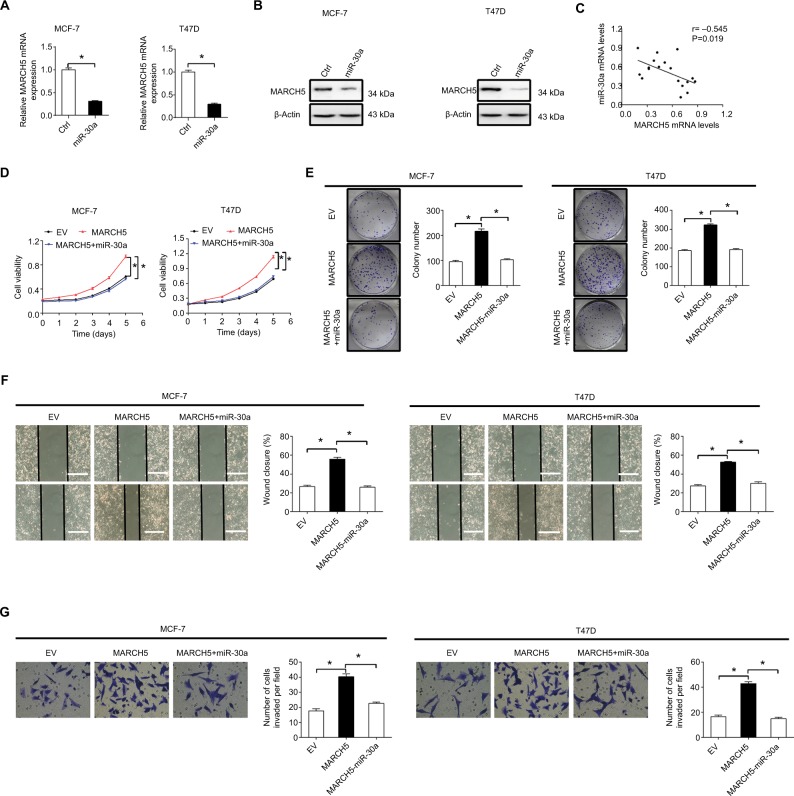
MARCH5 was substantially upregulated in BC cells mainly due to the downregulation of miR-30a, which contributed to the poor survival of BC patients. MARCH5 promoted the growth and metastasis of BC cells both in vitro and in vivo by inducing G1-S cell cycle arrest and epithelial-mesenchymal transition. Mechanistic investigations revealed that the oncogenic effect of MARCH5 was mainly mediated by increased mitochondrial fission and subsequent ROS production in BC cells.
Our findings demonstrate that MARCH5 plays a critical oncogenic role in BC cells, which provides experimental evidence supporting MARCH5 as a potential therapeutic target in BC therapy.
人MARCH5是一种定位于线粒体的E3泛素蛋白连接酶,对线粒体动力学的调节至关重要。大量证据表明线粒体动力学失衡与癌症之间存在密切联系。然而,MARCH5在乳腺癌(BC)中的表达、生物学功能及预后意义尚未明确。
采用定量实时PCR和蛋白质印迹分析评估BC细胞系和肿瘤组织中MARCH5的mRNA和蛋白质表达。对65例BC患者评估MARCH5的临床预后意义。通过在BC细胞中敲低或过表达MARCH5,采用体外细胞增殖、凋亡、细胞周期、迁移和侵袭实验以及体内肿瘤生长和转移实验确定MARCH5的生物学功能。此外,探讨MARCH5调节BC细胞生长和转移的潜在机制。
BC细胞中MARCH5显著上调,主要归因于miR-30a的下调,这导致BC患者预后不良。MARCH5通过诱导G1-S期细胞周期阻滞和上皮-间质转化,在体外和体内促进BC细胞的生长和转移。机制研究表明,MARCH5的致癌作用主要由BC细胞中线粒体分裂增加及随后的活性氧生成介导。
我们的研究结果表明,MARCH5在BC细胞中发挥关键的致癌作用,这为支持MARCH5作为BC治疗潜在治疗靶点提供了实验证据。