Key Laboratory of Theoretical Physics, Institute of Theoretical Physics, Chinese Academy of Sciences, 55 East Zhongguancun Road, Beijing, 100190, China.
School of Physical Sciences, University of Chinese Academy of Sciences, No. 19A Yuquan Road, Beijing, 100049, China.
Sci Rep. 2019 Jan 14;9(1):85. doi: 10.1038/s41598-018-36347-7.
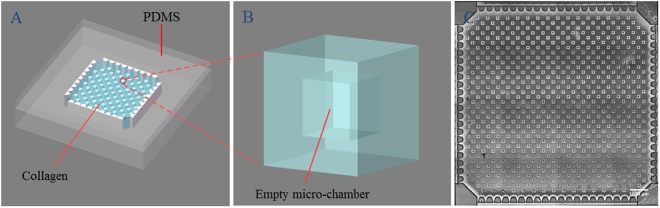
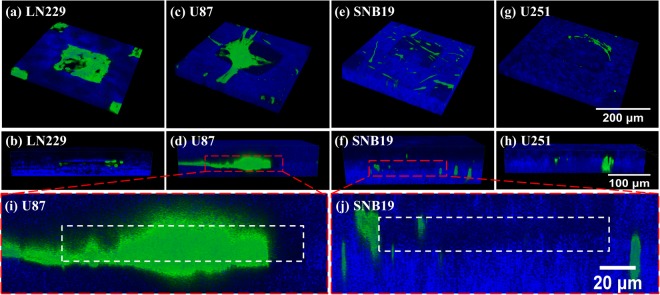
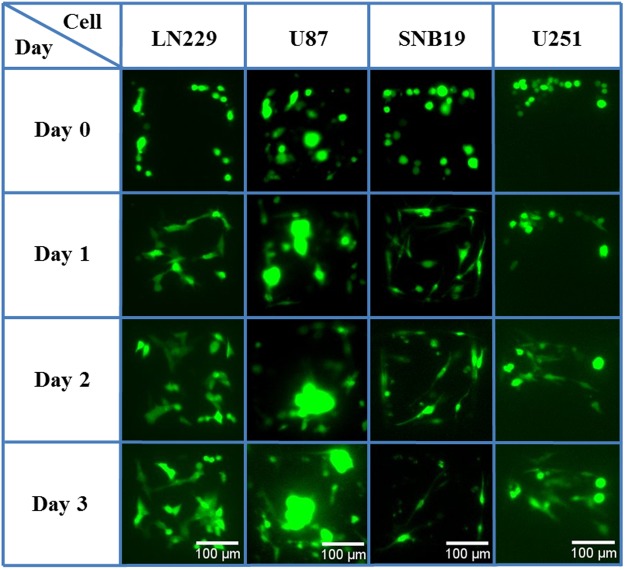
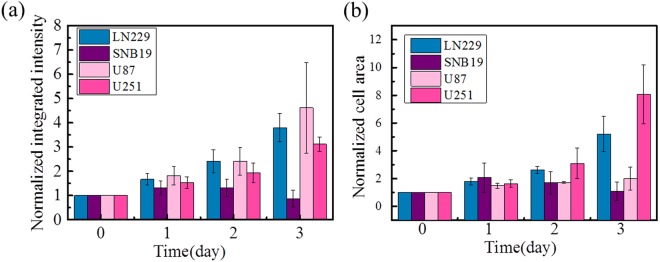
Glioblastoma (GBM) is the most malignant and highly aggressive brain tumor. In this study, four types of typical GBM cell lines (LN229, SNB19, U87, U251) were cultured in a microfabricated 3-D model to study their in vitro behaviors. The 3-D in vitro model provides hollow micro-chamber arrays containing a natural collagen interface and thus allows the GBM cells to grow in the 3-D chambers. The GBM cells in this model showed specific properties on the aspects of cell morphology, proliferation, migration, and invasion, some of which were rarely observed before. Furthermore, how the cells invaded into the surrounding ECM and the corresponding specific invasion patterns were observed in details, implying that the four types of cells have different features during their development in cancer. This complex in vitro model, if applied to patient derived cells, possesses the potential of becoming a clinically relevant predictive model.
胶质母细胞瘤(GBM)是最恶性和高度侵袭性的脑肿瘤。在这项研究中,培养了四种典型的 GBM 细胞系(LN229、SNB19、U87、U251)在微制造的 3D 模型中,以研究它们的体外行为。3D 体外模型提供了包含天然胶原界面的中空微腔阵列,从而允许 GBM 细胞在 3D 腔室中生长。在这个模型中,GBM 细胞在细胞形态、增殖、迁移和侵袭等方面表现出特定的特性,其中一些特性以前很少观察到。此外,还详细观察了细胞如何侵入周围的 ECM 以及相应的特定侵入模式,这表明这四种细胞在癌症发展过程中具有不同的特征。如果将这种复杂的体外模型应用于患者来源的细胞,它有可能成为一种具有临床相关性的预测模型。