Laboratory of Ion Channel Research, Department of Cellular and Molecular Medicine, KU Leuven; VIB Center for Brain & Disease Research, Herestraat 49, Campus Gasthuisberg O&N1 bus 802, 3000 Leuven, Belgium.
Instituto de Neurociencias de Alicante, Universidad Miguel Hernández y CSIC, E-03550 Alicante , Spain.
Int J Mol Sci. 2019 Jan 16;20(2):371. doi: 10.3390/ijms20020371.
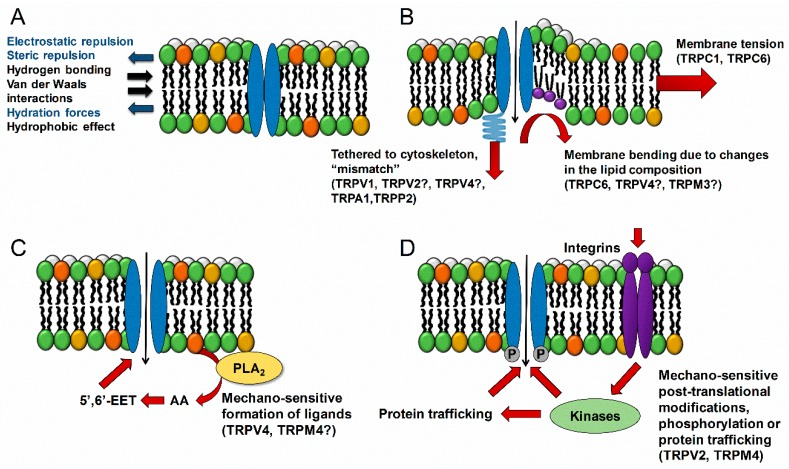
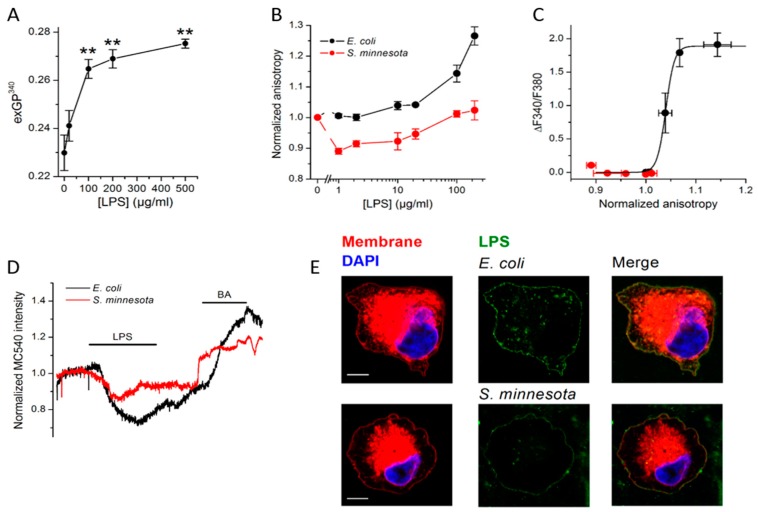
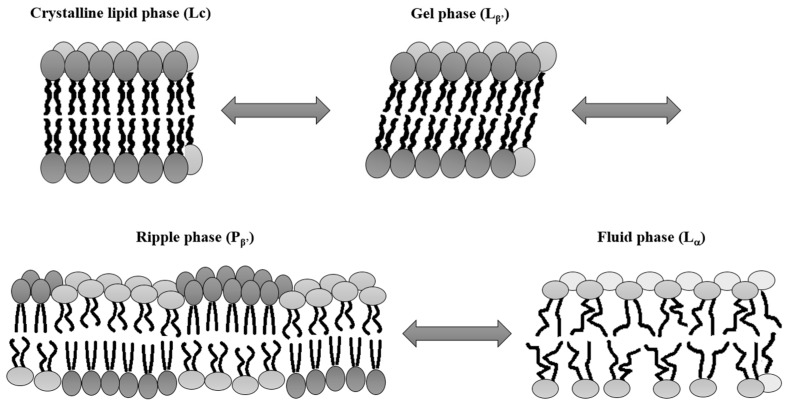
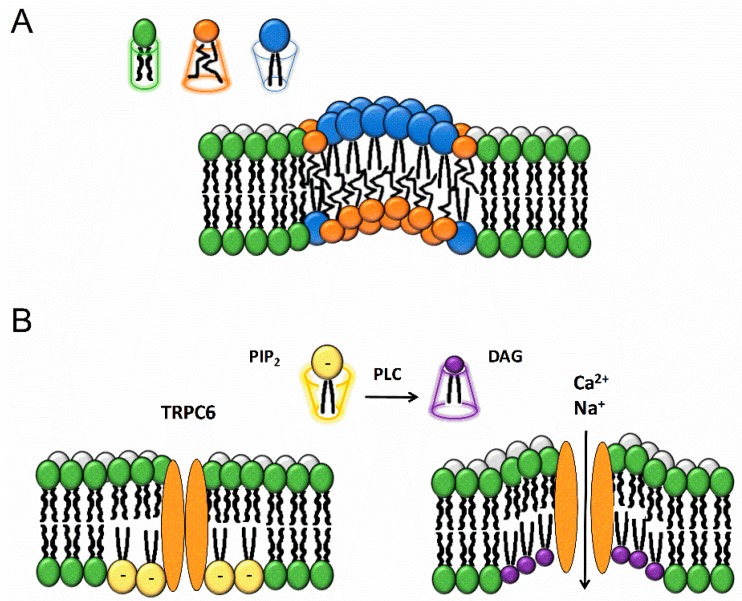
Transient Receptor Potential ion channels (TRPs) have been described as polymodal sensors, being responsible for transducing a wide variety of stimuli, and being involved in sensory functions such as chemosensation, thermosensation, mechanosensation, and photosensation. Mechanical and chemical stresses exerted on the membrane can be transduced by specialized proteins into meaningful intracellular biochemical signaling, resulting in physiological changes. Of particular interest are compounds that can change the local physical properties of the membrane, thereby affecting nearby proteins, such as TRP channels, which are highly sensitive to the membrane environment. In this review, we provide an overview of the current knowledge of TRP channel activation as a result of changes in the membrane properties induced by amphipathic structural lipidic components such as cholesterol and diacylglycerol, and by exogenous amphipathic bacterial endotoxins.
瞬时受体电位离子通道(TRP)被描述为多模态传感器,负责转导各种刺激,并参与感觉功能,如化学感觉、热感觉、机械感觉和光感觉。作用于膜上的机械和化学应力可以通过专门的蛋白质转化为有意义的细胞内生化信号,导致生理变化。特别感兴趣的是能够改变膜局部物理性质的化合物,从而影响附近的蛋白质,如 TRP 通道,它们对膜环境高度敏感。在这篇综述中,我们概述了目前关于 TRP 通道激活的知识,这些激活是由胆固醇和二酰基甘油等两亲性结构性脂质成分以及外源性两亲性细菌内毒素引起的膜性质变化所导致的。