Department of Dermatology, Erasmus University Medical Center, Rotterdam, the Netherlands.
Department of Rheumatology, Erasmus University Medical Center, Rotterdam, the Netherlands.
Br J Dermatol. 2019 Aug;181(2):314-323. doi: 10.1111/bjd.17641. Epub 2019 Apr 12.
Biologics targeting inflammatory mediators can achieve clinical improvements in hidradenitis suppurativa (HS). However, their clinical efficacy shows great interpatient variability in daily practice.
To investigate the anti-inflammatory potency of a selection of currently available biologics and prednisolone for the treatment of HS in an ex vivo skin culture system using lesional HS biopsies.
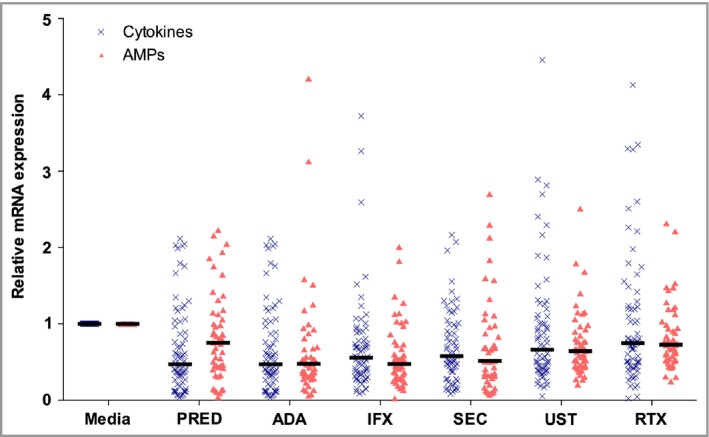
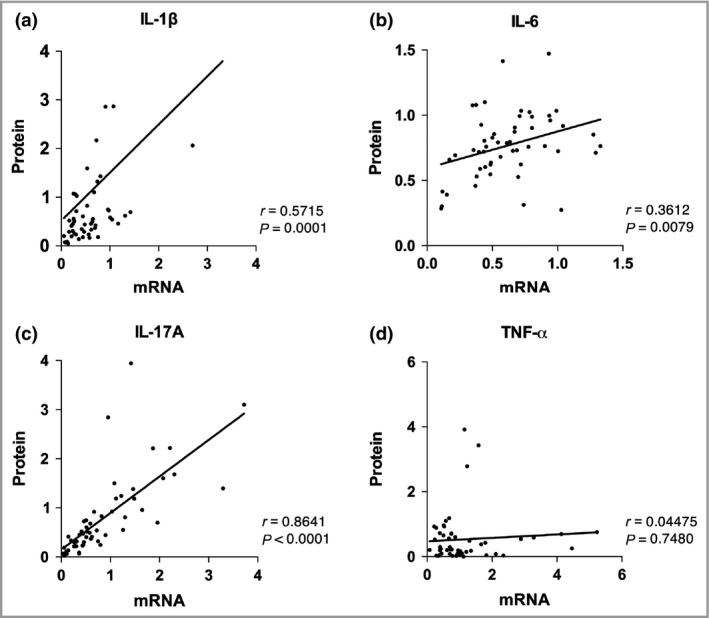
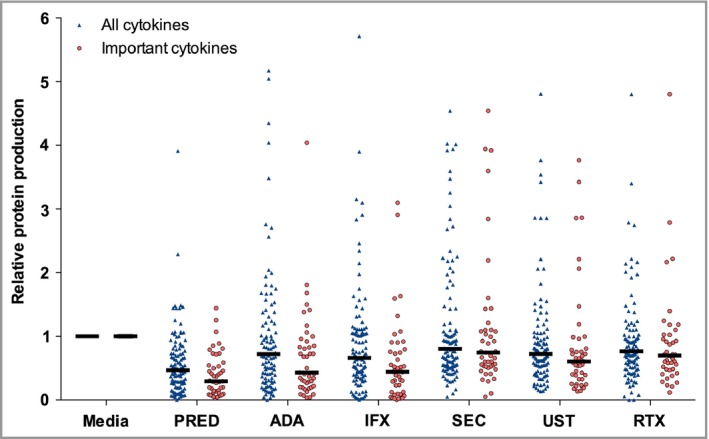
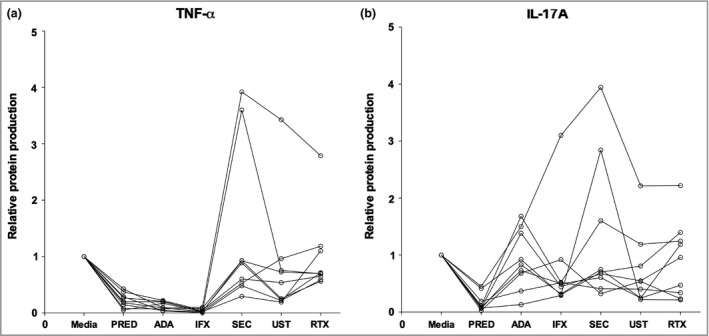
Lesional skin samples from 10 patients with HS and skin samples from five healthy controls were cultured ex vivo and exposed to prednisolone or biologics targeting tumour necrosis factor (TNF)-α, interleukin (IL)-17A, IL-12/23p40 or CD20 (adalimumab, infliximab, secukinumab, ustekinumab and rituximab, respectively). Real-time quantitative polymerase chain reaction and cytokine bead arrays were used to measure the inhibitory effect of the biologics on cytokines and antimicrobial peptides (AMPs).
The relative mRNA expression of all tested cytokines and AMPs was significantly downregulated by all anti-inflammatory agents (P < 0·001). The protein production of the proinflammatory cytokines TNF-α, interferon γ, IL-1β, IL-6 and IL-17A was significantly inhibited by adalimumab, infliximab, ustekinumab, prednisolone (all P < 0·001) and rituximab (P = 0·0071), but not by secukinumab (P = 0·0663). On both mRNA and protein levels, adalimumab, infliximab and prednisolone reduced the levels of a broader mix of individual cytokines than secukinumab, ustekinumab and rituximab. Moreover, a significant inhibitory effect on mRNA expression levels of inflammatory markers in healthy control skin was observed only for TNF-α inhibitors (P < 0·001) and prednisolone (P = 0·0015).
This ex vivo study suggests that TNF-α inhibitors and prednisolone are the most powerful inhibitors of proinflammatory cytokines and AMPs in HS lesional skin, which concurs with our clinical experience in patients with HS.
针对炎症介质的生物制剂可在化脓性汗腺炎(HS)中实现临床改善。然而,在日常实践中,它们的临床疗效在患者间存在很大差异。
使用来自 HS 病变活检的离体皮肤培养系统,研究目前可用的生物制剂和泼尼松龙对 HS 的抗炎作用。
对 10 例 HS 患者的病变皮肤样本和 5 例健康对照者的皮肤样本进行离体培养,并分别暴露于泼尼松龙或靶向肿瘤坏死因子(TNF)-α、白细胞介素(IL)-17A、IL-12/23p40 或 CD20 的生物制剂(阿达木单抗、英夫利昔单抗、司库奇尤单抗、乌司奴单抗和利妥昔单抗)。使用实时定量聚合酶链反应和细胞因子珠阵列来测量生物制剂对细胞因子和抗菌肽(AMPs)的抑制作用。
所有测试的细胞因子和 AMP 的相对 mRNA 表达均被所有抗炎药物显著下调(P < 0.001)。TNF-α、干扰素 γ、IL-1β、IL-6 和 IL-17A 的促炎细胞因子的蛋白产生均被阿达木单抗、英夫利昔单抗、乌司奴单抗、泼尼松龙(均 P < 0.001)和利妥昔单抗(P = 0.0071)显著抑制,但司库奇尤单抗(P = 0.0663)则无。在 mRNA 和蛋白水平上,阿达木单抗、英夫利昔单抗和泼尼松龙降低了与司库奇尤单抗、乌司奴单抗和利妥昔单抗相比更为广泛的各种细胞因子的水平。此外,仅 TNF-α抑制剂(P < 0.001)和泼尼松龙(P = 0.0015)对健康对照皮肤的炎症标志物的 mRNA 表达水平有显著的抑制作用。
这项离体研究表明,TNF-α抑制剂和泼尼松龙是 HS 病变皮肤中促炎细胞因子和 AMP 的最有效抑制剂,这与我们在 HS 患者中的临床经验一致。