Department of Chemistry, University of Georgia, Athens, GA 30602, USA.
Nano Electrochemistry Laboratory, School of Chemical, Materials and Biomedical Engineering, University of Georgia, Athens, GA 30602, USA.
Sensors (Basel). 2019 Jan 18;19(2):392. doi: 10.3390/s19020392.
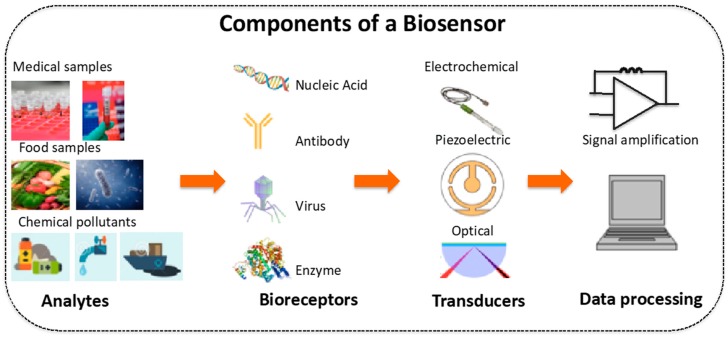
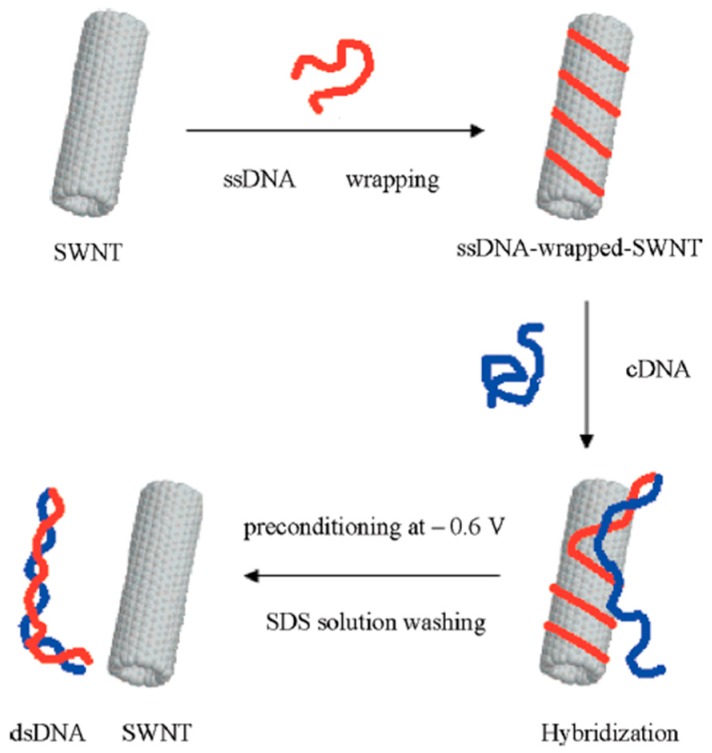
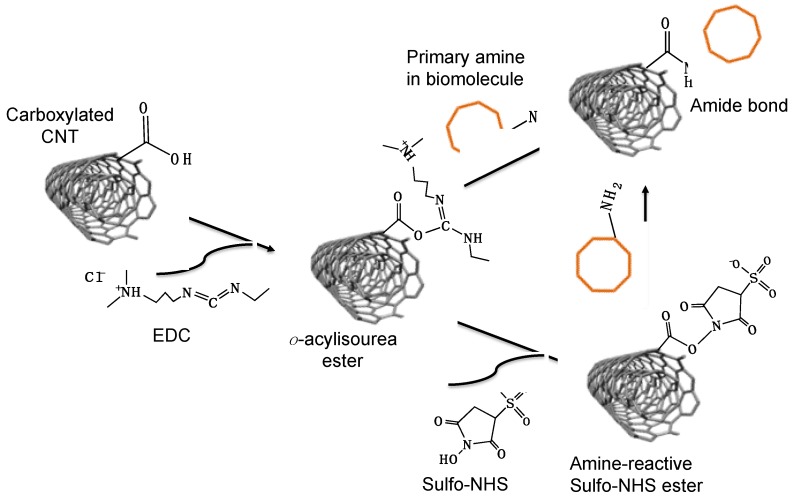
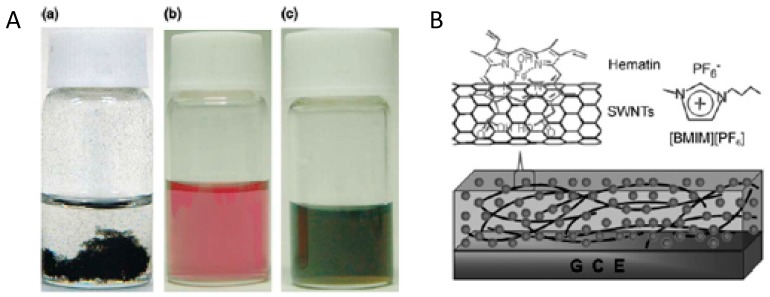
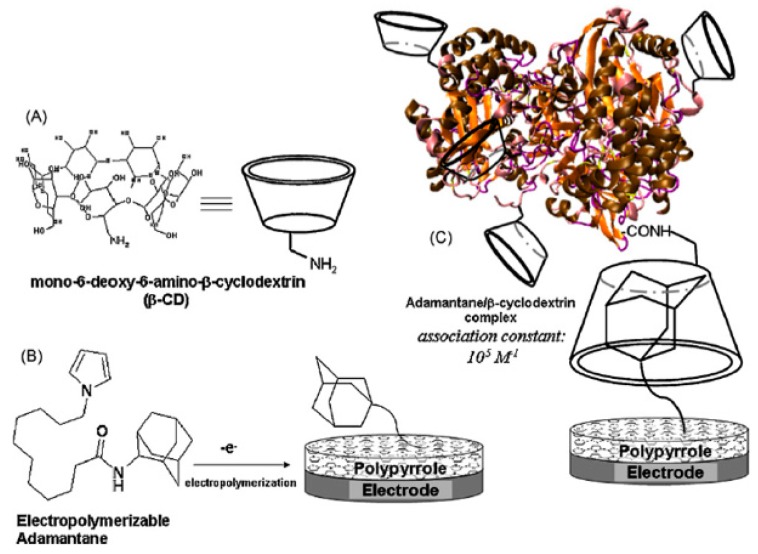
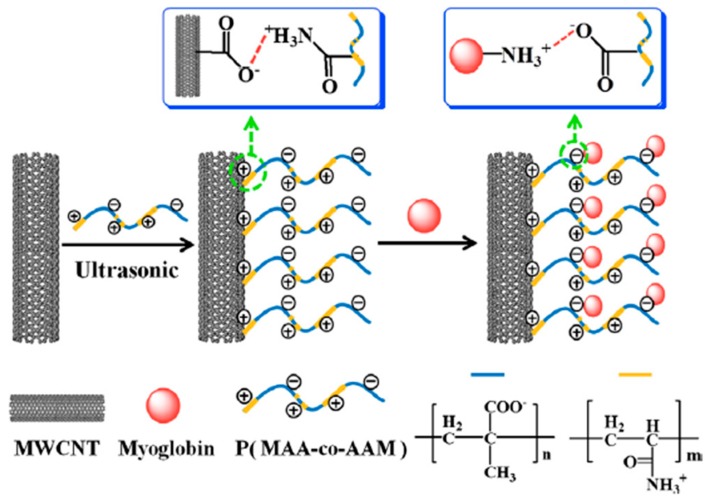
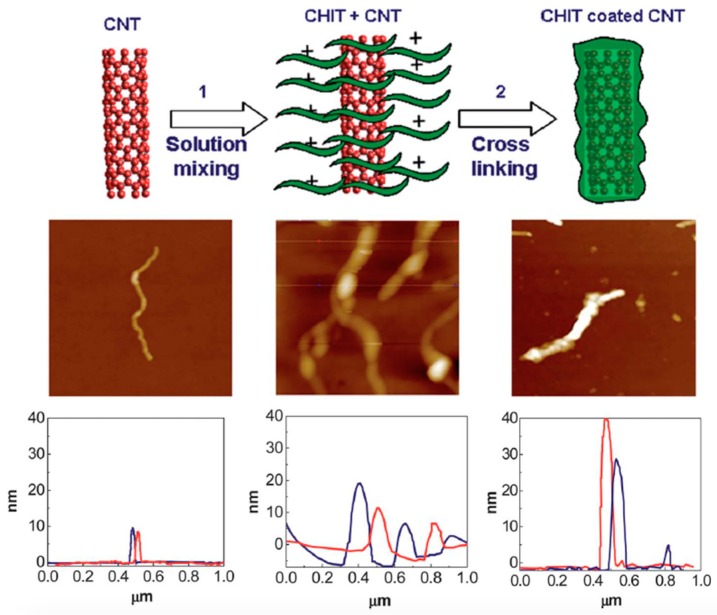
Carbon nanotubes (CNTs) have been widely studied and used for the construction of electrochemical biosensors owing to their small size, cylindrical shape, large surface-to-volume ratio, high conductivity and good biocompatibility. In electrochemical biosensors, CNTs serve a dual purpose: they act as immobilization support for biomolecules as well as provide the necessary electrical conductivity for electrochemical transduction. The ability of a recognition molecule to detect the analyte is highly dependent on the type of immobilization used for the attachment of the biomolecule to the CNT surface, a process also known as biofunctionalization. A variety of biofunctionalization methods have been studied and reported including physical adsorption, covalent cross-linking, polymer encapsulation etc. Each method carries its own advantages and limitations. In this review we provide a comprehensive review of non-covalent functionalization of carbon nanotubes with a variety of biomolecules for the development of electrochemical biosensors. This method of immobilization is increasingly being used in bioelectrode development using enzymes for biosensor and biofuel cell applications.
碳纳米管(CNTs)由于其尺寸小、圆柱形形状、大的表面积与体积比、高导电性和良好的生物相容性而被广泛研究和用于电化学生物传感器的构建。在电化学生物传感器中,碳纳米管具有双重作用:它们既可以作为生物分子的固定化支撑,又可以为电化学转换提供必要的导电性。识别分子检测分析物的能力高度依赖于用于将生物分子附着到碳纳米管表面的固定化类型,这个过程也称为生物功能化。已经研究并报道了多种生物功能化方法,包括物理吸附、共价交联、聚合物封装等。每种方法都有其自身的优点和局限性。在本综述中,我们全面回顾了各种生物分子与碳纳米管的非共价功能化,以开发电化学生物传感器。这种固定化方法越来越多地用于生物电极的开发,包括酶在生物传感器和生物燃料电池应用中的应用。