Carrot Inc, Redwood City, CA, United States.
Biostatistics Core for the Center for Gastrointestinal Biology and Disease and the biostatistician for the Clinical Nutrition Research Center, Department of Medicine, Division of Gastroenterology and Hepatology, University of North Carolina at Chapel Hill, Chapel Hill, NC, United States.
JMIR Mhealth Uhealth. 2019 Feb 4;7(2):e12609. doi: 10.2196/12609.
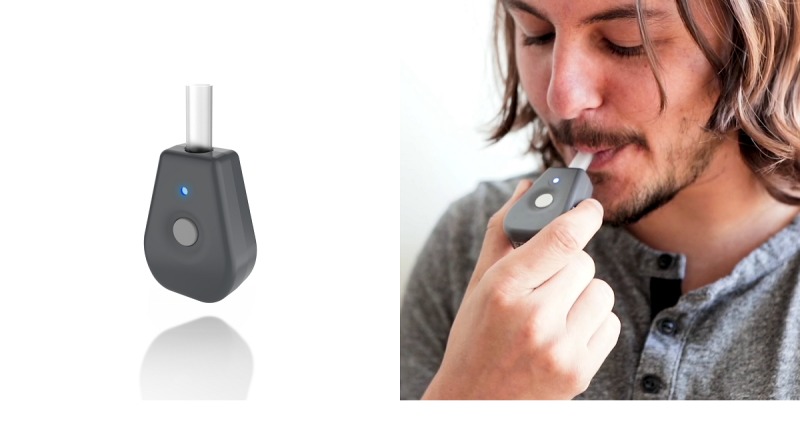
Cigarette smoking is the leading cause of preventable morbidity and mortality, excess health care expenditure, and lost work productivity. Otherwise effective evidence-based treatments have had limited success owing to challenges with access, engagement, and scale. Pivot is a comprehensive digital smoking cessation program that incorporates a Food and Drug Administration-cleared carbon monoxide breath sensor, smartphone app, and text-based human coaching.
This initial evaluation of Pivot aimed to assess participant engagement, changes in attitudes toward quitting, and changes in smoking behavior.
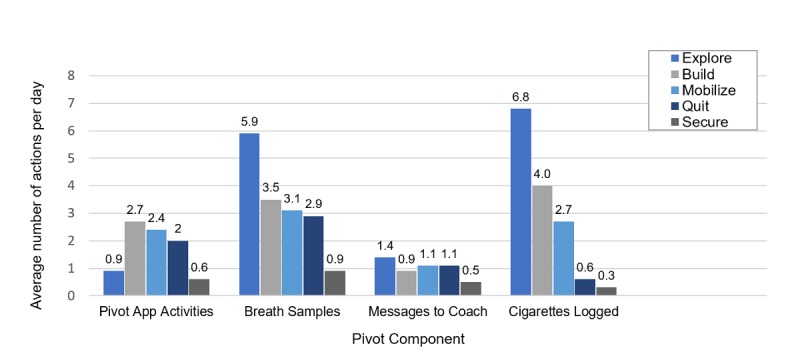
US cigarette smokers aged 18 to 65 years who smoked ≥5 cigarettes per day (CPD) were recruited online. Participants completed a screening call, electronic informed consent, registration, and onboarding before beginning Pivot. Pivot includes 5 sequential stages (Explore, Build, Mobilize, Quit, and Secure), taking 14.5 to 18.5 weeks to complete. Data were collected via app and online questionnaires. Outcomes included engagement and retention (ie, weeks of active engagement and Pivot stage progression); attitudes toward quitting (ie, quit readiness, quit confidence, and expected difficulty maintaining quit); and smoking behavior (ie, quit attempts, cigarette reduction, and abstinence (7- and 30-day point prevalence abstinence [PPA]).
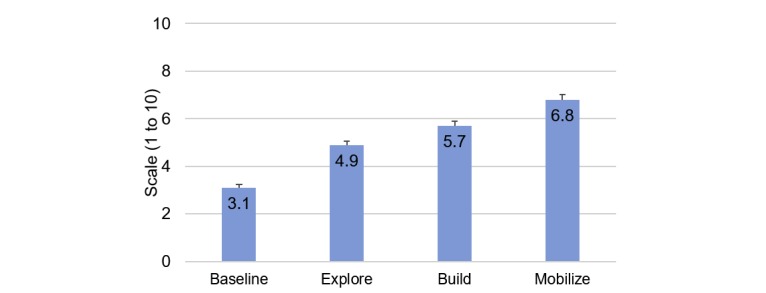
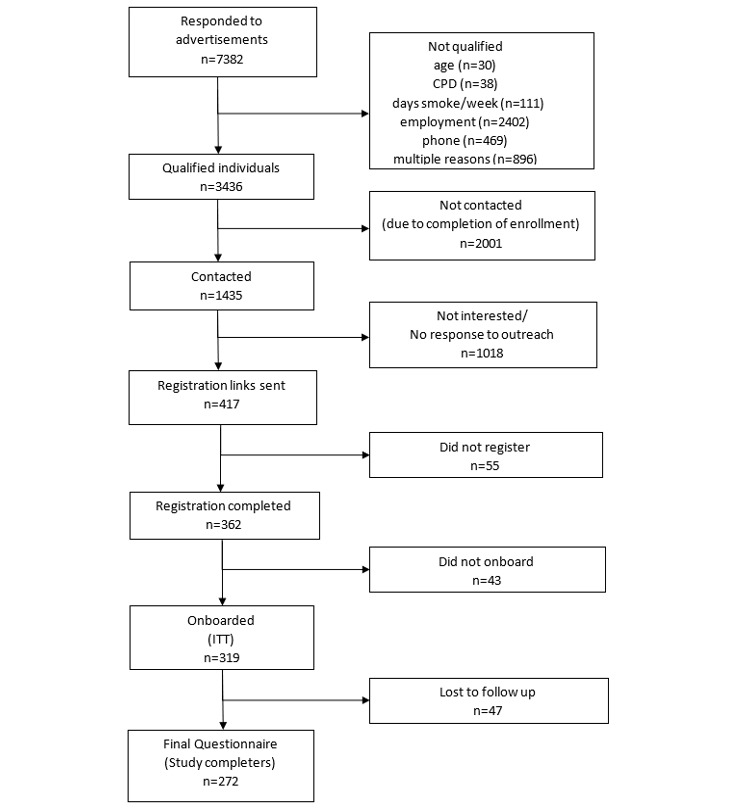
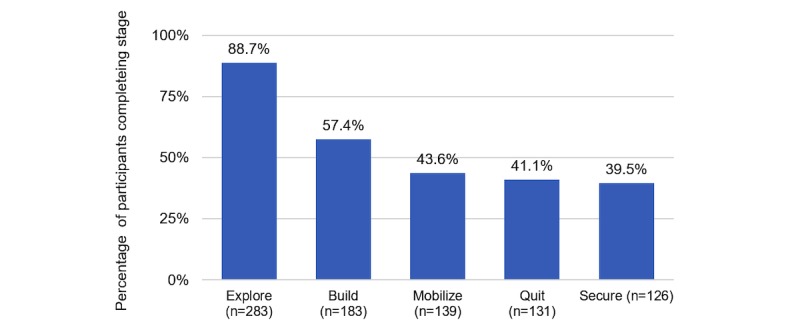
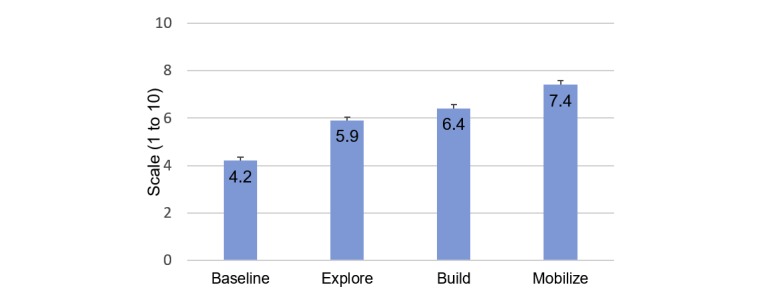
A total of 319 participants completed onboarding (intention-to-treat [ITT] sample); 272/319 participants (85.3%) completed the end-of-Pivot questionnaire (study completer sample). Most (212/319, 66.5%) were not ready to quit in the next 30 days at baseline. On average, participants actively engaged in the program for a mean 12.4 (SD 7.1) weeks. Pivot stage completion rates were Explore: 88.7% (283/319), Build: 57.4% (183/319), Mobilize: 43.6% (139/319), Quit: 41.1% (131/319), and Secure: 39.5% (126/319). Repeated measures linear mixed model analyses demonstrated positive changes in attitudes from baseline to Mobilize (pre-Quit): increased confidence to quit (4.2 to 7.4, P<.001) and decreased expected difficulty maintaining quit (3.1 to 6.8, P<.001). The quit attempt rate (ie, those making ≥1 quit attempt lasting ≥1 day) was 79.4% (216/272, completer). At the end of Pivot, 7-day PPA rates were 32.0% (102/319, ITT) and 37.5% (102/272, completer); 30-day PPA rates were 27.6% (88/319, ITT) and 32.4% (88/272, completer). Moreover, 30-day PPA rates were comparable among those ready and not ready to quit in the next 30 days at baseline. Of those not achieving abstinence, 25.9% (44/170, completer) achieved ≥50% reduction in CPD by study end.
This study evaluated Pivot's initial performance with comparable quit rates among those ready and not ready to quit in the next 30 days at entry. The present data, considered with the program's accessibility, innovation, evidence-based foundation, and design for all smokers, suggest Pivot has the potential to address limitations of reach and scale and thereby advance smoking cessation efforts.
ClinicalTrials.gov NCT03295643; https://clinicaltrials.gov/ct2/show/NCT03295643 (Archived by WebCite at http://www.webcitation.org/75TiNe6BE).
吸烟是可预防的发病率和死亡率、过度的医疗保健支出以及丧失工作生产力的主要原因。由于在获取、参与和规模方面存在挑战,否则有效的循证治疗方法收效甚微。Pivot 是一个全面的数字戒烟计划,它结合了美国食品和药物管理局批准的一氧化碳呼气传感器、智能手机应用程序和基于文本的人类教练。
本研究对 Pivot 的初始评估旨在评估参与者的参与度、戒烟态度的变化以及吸烟行为的变化。
我们招募了年龄在 18 岁至 65 岁之间、每天吸烟≥5 支(CPD)的美国烟民。参与者在开始使用 Pivot 之前,通过电话进行筛选、电子知情同意、注册和入职。Pivot 包括 5 个连续阶段(探索、建立、动员、戒烟和巩固),需要 14.5 至 18.5 周才能完成。数据通过应用程序和在线问卷收集。结果包括参与度和保留度(即活跃参与的周数和 Pivot 阶段进展)、戒烟态度(即戒烟准备、戒烟信心和戒烟预期难度)和吸烟行为(即戒烟尝试、香烟减少和 abstinence(7 天和 30 天的点 prevalence abstinence [PPA])。
共有 319 名参与者完成了入职(意向治疗 [ITT] 样本);319 名参与者中的 272 名(85.3%)完成了结束时的问卷(研究完成者样本)。大多数(212/319,66.5%)在基线时没有准备好在接下来的 30 天内戒烟。平均而言,参与者积极参与该计划的时间为 12.4 周(SD 7.1)。Pivot 阶段完成率为:探索:88.7%(283/319),建立:57.4%(183/319),动员:43.6%(139/319),戒烟:41.1%(131/319),巩固:39.5%(126/319)。重复测量线性混合模型分析表明,从基线到动员(戒烟前),态度发生了积极变化:戒烟信心增加(4.2 至 7.4,P<.001),戒烟预期难度降低(3.1 至 6.8,P<.001)。尝试戒烟的比例(即≥1 次持续≥1 天的戒烟尝试)为 79.4%(216/272,完成者)。在 Pivot 结束时,7 天 PPA 率为 32.0%(319 名中的 102 名,ITT)和 37.5%(272 名中的 102 名,完成者);30 天 PPA 率为 27.6%(319 名中的 88 名,ITT)和 32.4%(272 名中的 88 名,完成者)。此外,在基线时准备在接下来的 30 天内戒烟的人和没有准备戒烟的人,30 天 PPA 率相似。在没有戒烟的人中,25.9%(170 名中的 44 名,完成者)在研究结束时达到了 CPD 减少≥50%的目标。
本研究评估了 Pivot 的初步表现,在进入研究时准备在接下来的 30 天内戒烟的人和没有准备戒烟的人之间,戒烟率相当。目前的数据,考虑到该计划的可及性、创新性、基于循证的基础以及为所有吸烟者设计,表明 Pivot 有可能解决覆盖面和规模的局限性,从而推进戒烟工作。
ClinicalTrials.gov NCT03295643;https://clinicaltrials.gov/ct2/show/NCT03295643(由 WebCite 存档,http://www.webcitation.org/75TiNe6BE)。