Biocatalysis Group, Department of Biotechnology , Delft University of Technology , Van der Maasweg 9 , 2629 HZ Delft , The Netherlands.
Materials for Energy Conversion and Storage (MECS), Department of Chemical Engineering , Delft University of Technology , Van der Maasweg 9 , 2629 HZ Delft , The Netherlands.
J Am Chem Soc. 2019 Feb 20;141(7):3116-3120. doi: 10.1021/jacs.8b12282. Epub 2019 Feb 6.
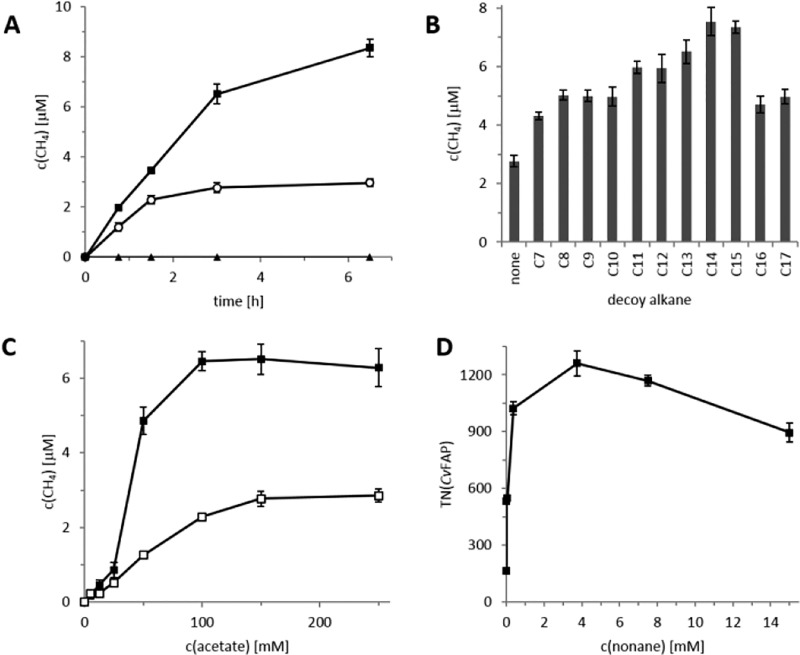
A recently discovered photodecarboxylase from Chlorella variabilis NC64A ( CvFAP) bears the promise for the efficient and selective synthesis of hydrocarbons from carboxylic acids. CvFAP, however, exhibits a clear preference for long-chain fatty acids thereby limiting its broad applicability. In this contribution, we demonstrate that the decoy molecule approach enables conversion of a broad range of carboxylic acids by filling up the vacant substrate access channel of the photodecarboxylase. These results not only demonstrate a practical application of a unique, photoactivated enzyme but also pave the way to selective production of short-chain alkanes from waste carboxylic acids under mild reaction conditions.
最近从衣藻 NC64A(CvFAP)中发现的一种光脱羧酶具有从羧酸高效且选择性合成烃的潜力。然而,CvFAP 对长链脂肪酸表现出明显的偏好,从而限制了其广泛的适用性。在本研究中,我们证明了诱饵分子方法能够通过填满光脱羧酶的空缺底物进入通道来转化广泛的羧酸。这些结果不仅展示了一种独特的、光激活酶的实际应用,而且为在温和的反应条件下从废羧酸中选择性生产短链烷烃铺平了道路。