NUTRIM School of Nutrition and Translational Research in Metabolism, Department Pharmacology & Toxicology, Maastricht University, Maastricht, The Netherlands.
NUTRIM School of Nutrition and Translational Research in Metabolism, Department of Human Biology, Maastricht University, Maastricht, The Netherlands.
Sci Rep. 2019 Jan 24;9(1):554. doi: 10.1038/s41598-018-37210-5.
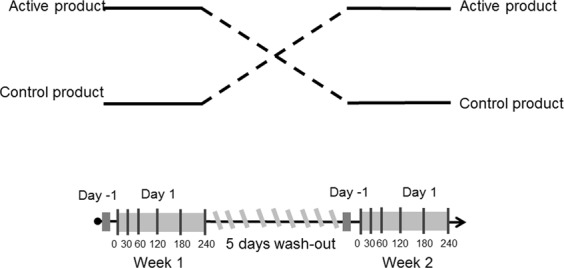
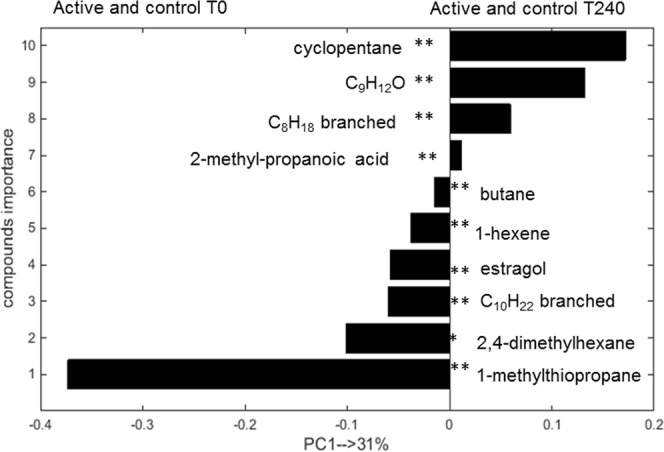
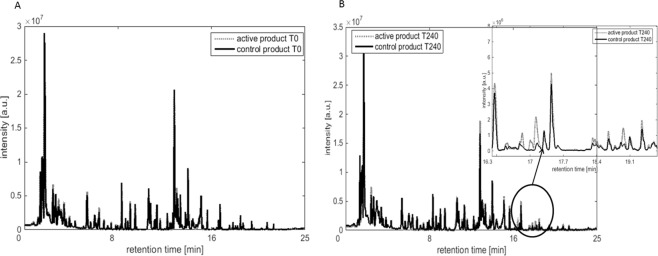
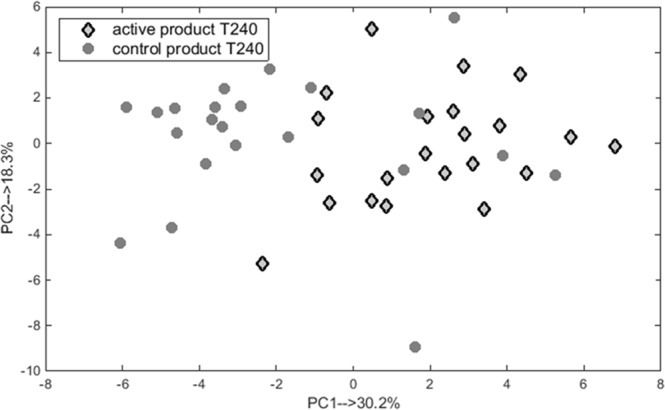
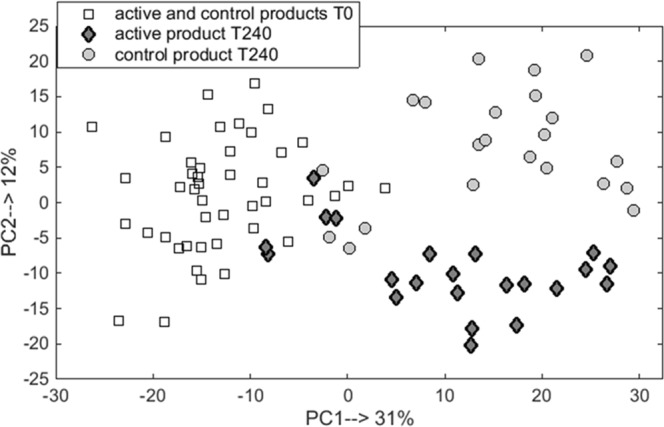
Infant formulae have been used since decades as an alternative to or a complement to human milk. Human milk, the "gold standard" of infant nutrition, has been studied for its properties in order to create infant formulae that bring similar benefits to the infant. One of the characteristics of milk is the size of the lipid droplets which is known to affect the digestion, gastric emptying and triglyceride metabolism. In the current study a concept infant milk formula with large, phospholipid coating of lipid droplets (mode diameter 3-5 μm; NUTURIS, further described as "active"), was compared to a commercially available formula milk characterised by smaller lipid droplets, further described as "control" (both products derived from Nutricia). We investigated whether we could find an effect of lipid droplet size on volatile compounds in exhaled air upon ingestion of either product. For that purpose, exhaled breath was collected from a group of 29 healthy, non-smoking adult males before ingestion of a study product (baseline measurements, T0) and at the following time points after the test meal: 30, 60, 120, 180 and 240 min. Volatile organic compounds (VOCs) in breath were detected by gas chromatography-time-of-flight-mass spectrometry. Any differences in the time course of VOCs patterns upon intake of active and control products were investigated by regularised multivariate analysis of variance (rMANOVA). The rMANOVA analysis revealed statistically significant differences in the exhaled breath composition 240 min after ingestion of the active formula compared to control product (p-value < 0.0001), but did not show significant changes between active and control product at any earlier time points. A set of eight VOCs in exhaled breath had the highest contribution to the difference found at 240 minutes between the two formulas. A set of ten VOCs was different between baseline and the two formulae at T240 with p-value < 0.0001. To our knowledge this is the first study that shows the ability of VOCs in exhaled breath to monitor metabolic effects after ingestion of infant formulae with different lipid structure. The statistically significant differences in compound abundance found between active and control formula milk may be related to: (i) specific differences in the digestion, (ii) absorption of lipids and proteins and (iii) assimilation of the products in the gut.
婴儿配方奶粉作为母乳的替代品或补充品已经使用了几十年。母乳作为婴儿营养的“金标准”,其特性已经被研究过,以便创造出能给婴儿带来类似益处的婴儿配方奶粉。牛奶的一个特性是脂肪滴的大小,已知这会影响消化、胃排空和甘油三酯代谢。在目前的研究中,一种具有大的、磷脂层包裹的脂肪滴的概念性婴儿配方奶粉(模式直径 3-5μm;NUTURIS,进一步描述为“活性”)与一种商业上可获得的配方奶粉进行了比较,该配方奶粉的特点是脂肪滴较小,进一步描述为“对照”(两种产品均来自 Nutricia)。我们研究了摄入这两种产品是否会影响摄入后呼出空气中的挥发性化合物。为此,从一组 29 名健康、不吸烟的成年男性中收集呼气,在摄入研究产品前(基线测量,T0)和测试餐后以下时间点:30、60、120、180 和 240 分钟。通过气相色谱-飞行时间-质谱法检测呼气中的挥发性有机化合物(VOC)。通过正则化多变量方差分析(rMANOVA)研究活性和对照产品摄入时 VOC 模式时间过程中的任何差异。rMANOVA 分析表明,与对照产品相比,活性配方在摄入后 240 分钟时呼出的呼吸组成有统计学上的显著差异(p 值<0.0001),但在任何较早的时间点,活性和对照产品之间没有显示出显著变化。呼气中 8 种 VOC 的集合对两种配方在 240 分钟时的差异有最高的贡献。在 T240 时,有一组 10 种 VOC 在两种配方之间存在差异,p 值<0.0001。据我们所知,这是第一项表明呼出的挥发性有机化合物能够监测不同脂质结构婴儿配方奶粉摄入后代谢影响的研究。在活性和对照配方奶粉之间发现的化合物丰度的统计学显著差异可能与:(i)消化的特定差异,(ii)脂质和蛋白质的吸收,以及(iii)产品在肠道中的同化有关。