Zhang Zhifa, Peng Zhaohui, Cao Junying, Wang Jiaqi, Hao Yongyu, Song Kai, Wang Yan, Hu Wei, Zhang Xuesong
1Department of Orthopaedic Surgery, the PLA General Hospital, Beijing, 100000 China.
Department of Radiology, Changzheng Hospital, Second Military Medical University, Shanghai, 200003 China.
Cancer Cell Int. 2019 Jan 22;19:20. doi: 10.1186/s12935-019-0734-0. eCollection 2019.
Increasingly evidences suggest that long noncoding RNAs (lncRNAs) play important roles in various cancers. LncRNA PXN-AS1-L is recently revealed to act as on oncogene in liver cancer. However, the expression, functions, and mechanisms of action of PXN-AS-L in non-small cell lung cancer (NSCLC) remain unclear.
The expression of PXN-AS1-L in primary NSCLC tissues, NSCLC bone metastasis tissues, and cell lines was measured by quantitative real-time PCR. The correlations between PXN-AS1-L expression and clinicopathological characteristics of NSCLC patients were analyzed by Pearson Chi square test and log-rank test. The roles of PXN-AS1-L in cell viability, proliferation, apoptosis, and migration of NSCLC cells, and in vivo NSCLC tumor growth were investigated by a series of gain-of-function and loss-of-function assays. The regulatory roles of PXN-AS1-L on PXN were determined by quantitative real-time PCR and western blot.
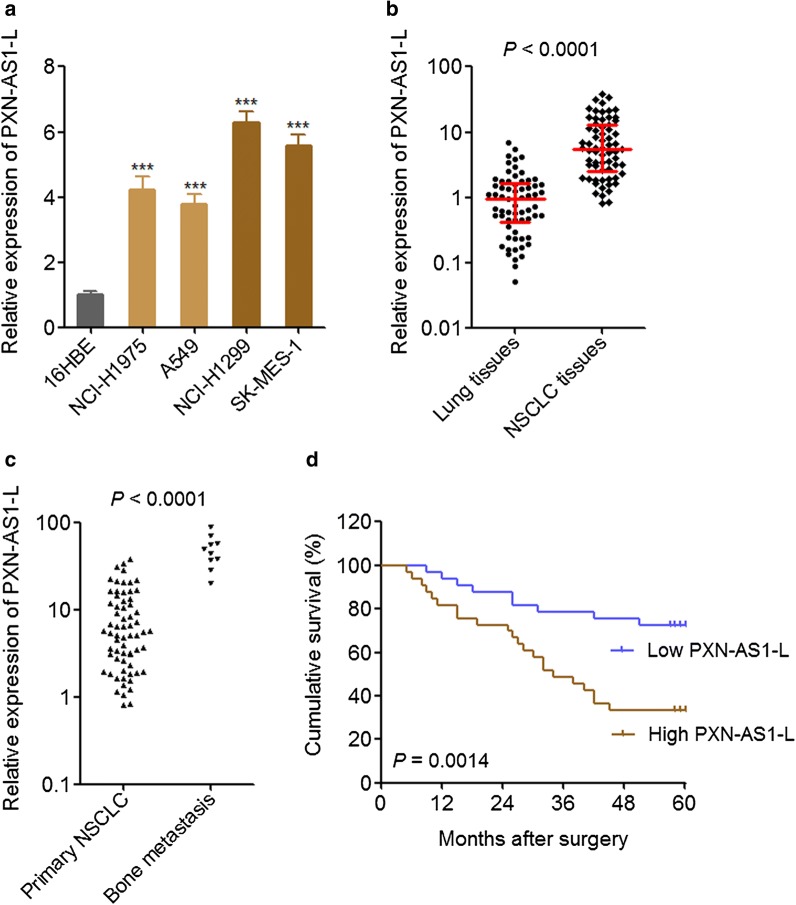
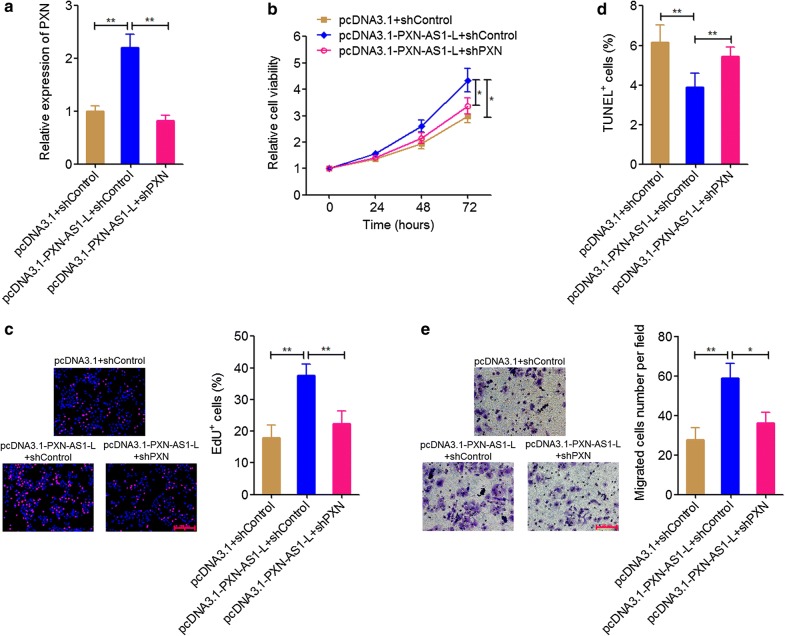
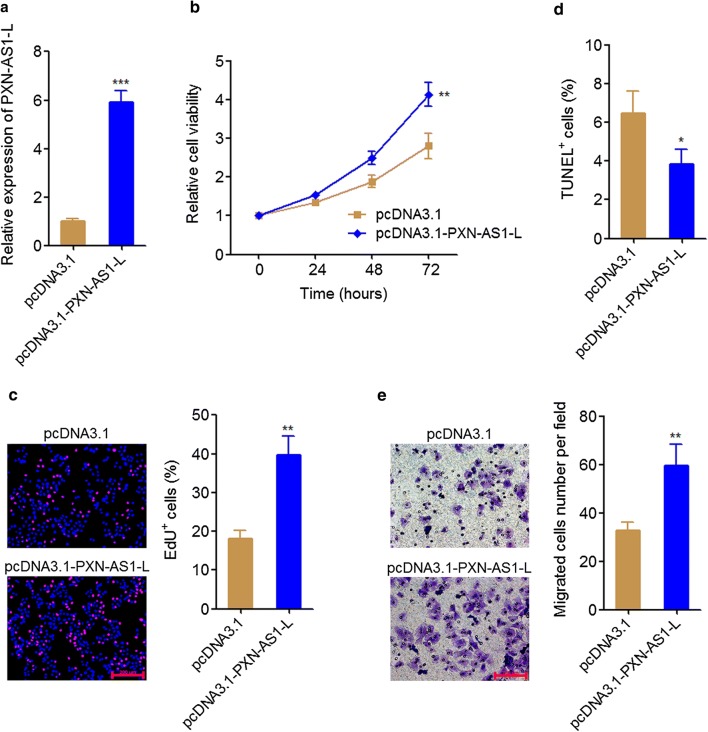
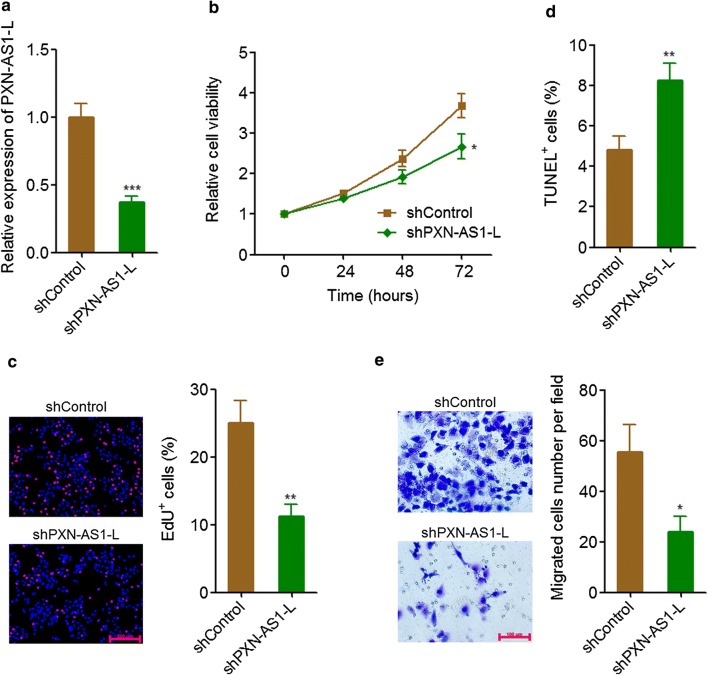
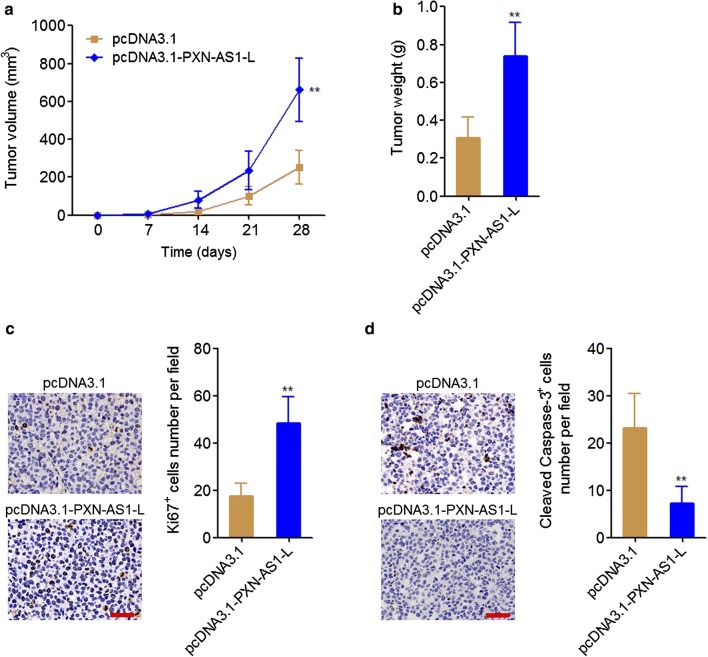
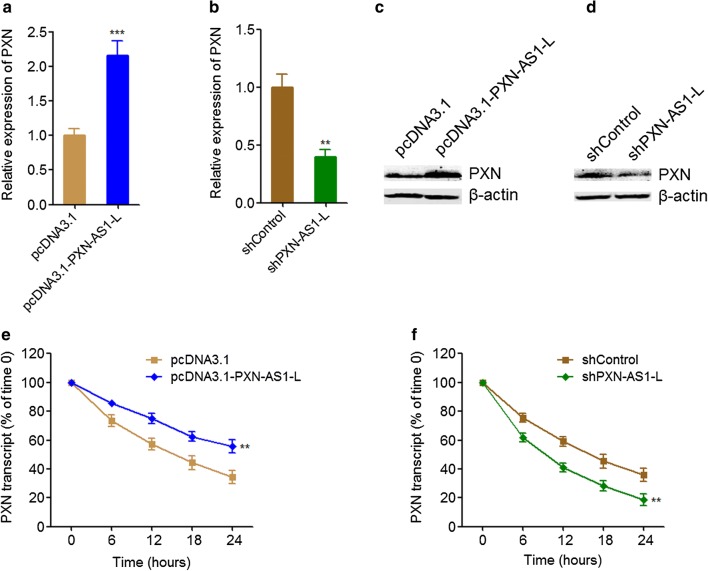
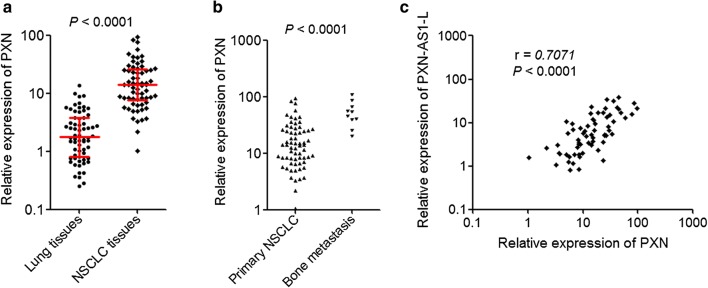
PXN-AS1-L was up-regulated in NSCLC tissues compared with noncancerous lung tissues, and PXN-AS1-L was further up-regulated in NSCLC bone metastasis tissues. Increased expression of PXN-AS1-L was positively associated with advanced TNM stages and poor prognosis. Gain-of-function and loss-of-function assays showed that PXN-AS1-L increased cell viability, promoted cell proliferation, inhibited cell apoptosis, and promoted cell migration of NSCLC cells. Xenograft assays showed that PXN-AS1-L also promoted NSCLC tumor growth in vivo. Mechanistically, we found that PXN-AS1-L, as an antisense transcript of PXN, up-regulated the expression of PXN. PXN was also up-regulated in NSCLC tissues. The expression of PXN and PXN-AS1-L was positively correlated in NSCLC tissues. Furthermore, PXN knockdown attenuated the roles of PXN-AS1-L in increasing cell viability, promoting cell proliferation, inhibiting cell apoptosis, and promoting cell migration of NSCLC cells.
Our data revealed that PXN-AS1-L is up-regulated and acts as an oncogene in NSCLC via up-regulating PXN. Our data suggested that PXN-AS1-L might serve as a potential prognostic biomarker and therapeutic target for NSCLC.
越来越多的证据表明,长链非编码RNA(lncRNA)在各种癌症中发挥重要作用。最近有研究表明lncRNA PXN-AS1-L在肝癌中作为癌基因发挥作用。然而,PXN-AS-L在非小细胞肺癌(NSCLC)中的表达、功能及作用机制仍不清楚。
采用定量实时PCR检测PXN-AS1-L在原发性NSCLC组织、NSCLC骨转移组织及细胞系中的表达。通过Pearson卡方检验和对数秩检验分析PXN-AS1-L表达与NSCLC患者临床病理特征之间的相关性。通过一系列功能获得和功能丧失实验研究PXN-AS1-L在NSCLC细胞的细胞活力、增殖、凋亡和迁移以及体内NSCLC肿瘤生长中的作用。通过定量实时PCR和蛋白质印迹法确定PXN-AS1-L对PXN的调控作用。
与癌旁肺组织相比,PXN-AS1-L在NSCLC组织中上调,且在NSCLC骨转移组织中进一步上调。PXN-AS1-L表达增加与晚期TNM分期和不良预后呈正相关。功能获得和功能丧失实验表明,PXN-AS1-L增加NSCLC细胞的细胞活力,促进细胞增殖,抑制细胞凋亡,并促进细胞迁移。异种移植实验表明,PXN-AS1-L在体内也促进NSCLC肿瘤生长。机制上,我们发现PXN-AS1-L作为PXN的反义转录本,上调了PXN的表达。PXN在NSCLC组织中也上调。NSCLC组织中PXN和PXN-AS1-L的表达呈正相关。此外,敲低PXN减弱了PXN-AS1-L在增加NSCLC细胞活力、促进细胞增殖、抑制细胞凋亡和促进细胞迁移中的作用。
我们的数据表明,PXN-AS1-L在NSCLC中上调,并通过上调PXN作为癌基因发挥作用。我们的数据表明,PXN-AS1-L可能作为NSCLC的潜在预后生物标志物和治疗靶点。