Department of Surgical Pathology, Medical, Molecular and Critical Area, University of Pisa, Pisa, Italy.
Otorhinolaryngology Unit, Department of Surgical Pathology, Medical, Molecular and Critical Area, Azienda Ospedaliero-Universitaria Pisana, Pisa, Italy.
PLoS One. 2019 Jan 25;14(1):e0210968. doi: 10.1371/journal.pone.0210968. eCollection 2019.
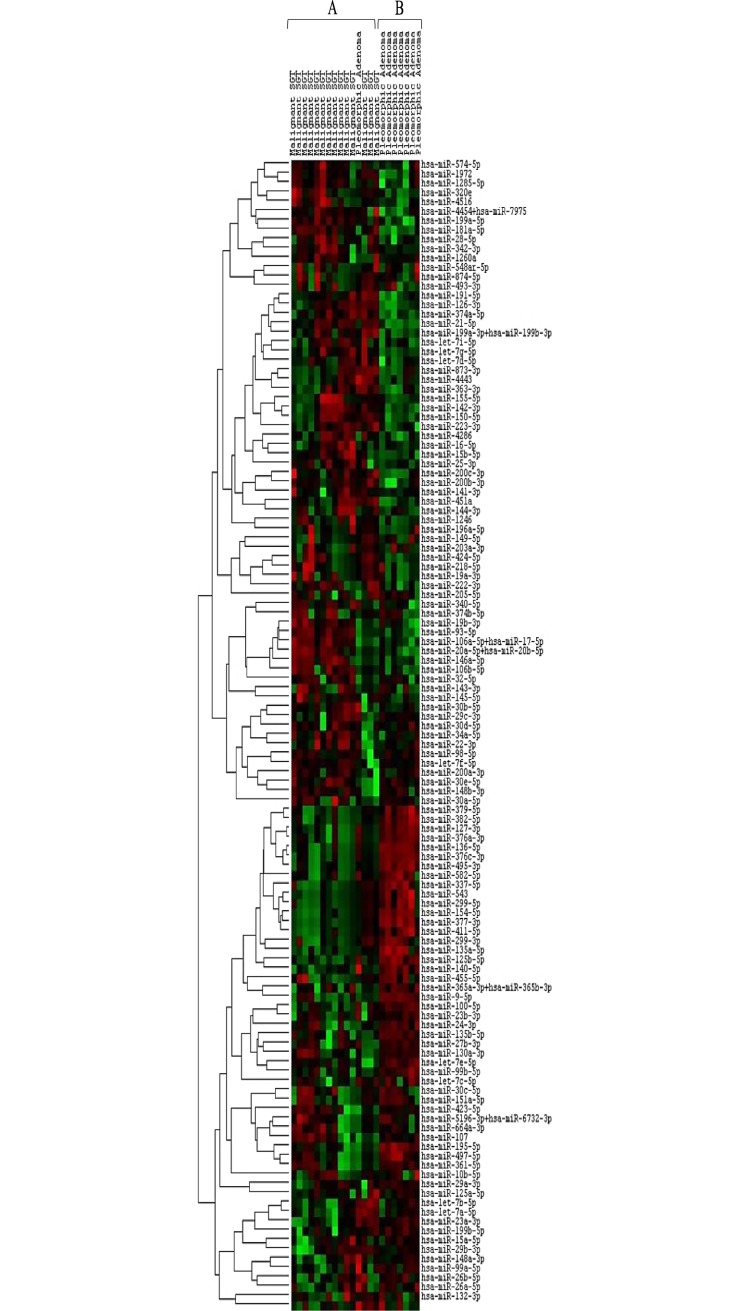
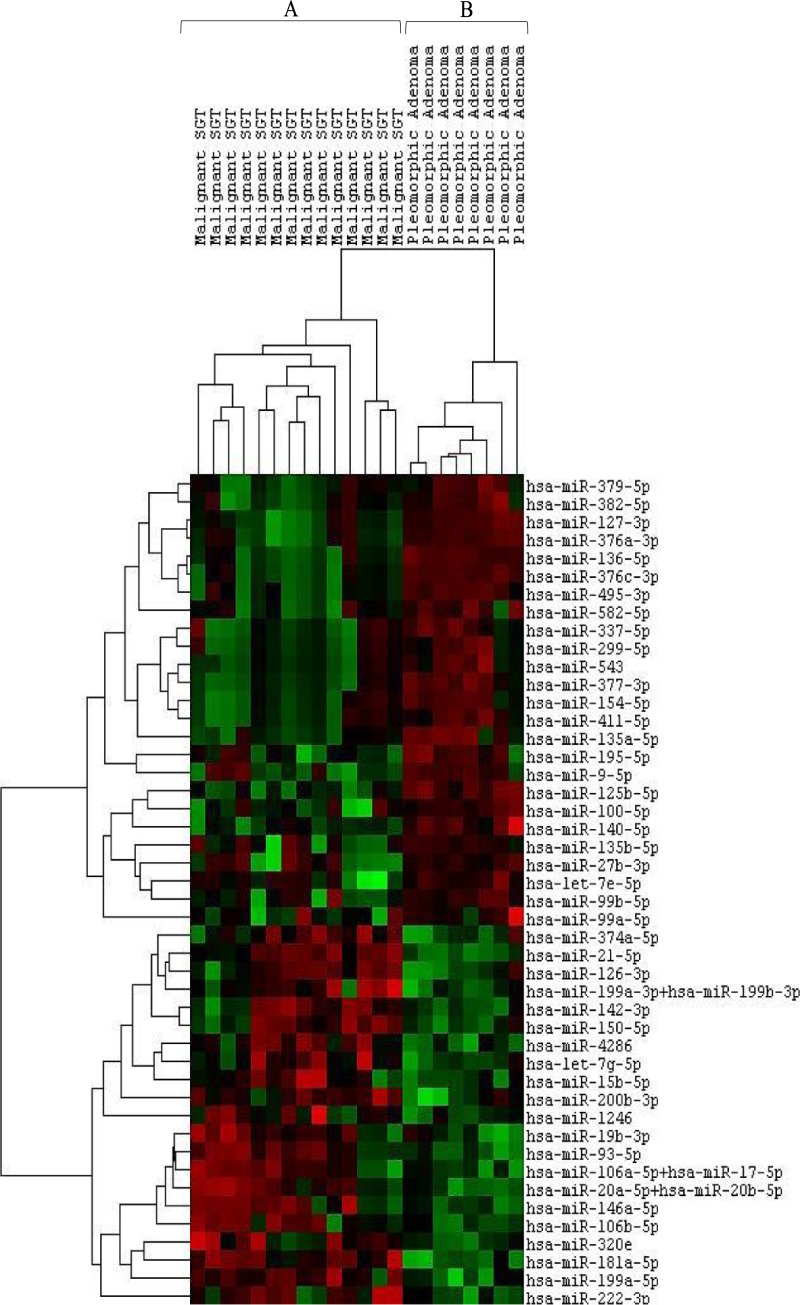
Salivary gland tumors (SGTs) are rare tumors of the head and neck with different clinical behavior. Preoperative diagnosis, based on instrumental and cytologic examinations, is crucial for their correct management. The identification of molecular markers might improve the accuracy of pre-surgical diagnosis helping to plan the proper treatment especially when a definitive diagnosis based only on cytomorphology cannot be achieved. miRNAs appear to be new promising biomarkers in the diagnosis and prognosis of cancer. Studies concerning the useful of miRNA expression in clinical decision-making regarding SGTs remain limited and controversial.The expression of a panel of 798 miRNAs was investigated using Nanostring technology in 14 patients with malignant SGTs (6 mucoepidermoid carcinomas, 4 adenoid cystic carcinomas, 1 acinic cell carcinoma, 1 ductal carcinoma, 1 cystadenocarcinoma and 1 adenocarcinoma) and in 10 patients with benign SGTs (pleomorphic adenomas). The DNA Intelligent Analysis (DIANA)-miRPath v3.0 software was used to determinate the miRNA regulatory roles and to identify the controlled significant Kyoto Encyclopedia of Genes and Genomes (KEGG) molecular pathways. Forty six miRNAs were differentially expressed (False Discovery Rate-FDR<0.05) between malignant and benign SGTs. DIANA miRPath software revealed enriched pathways involved in cancer processes as well as tumorigenesis, cell proliferation, cell growth and survival, tumor suppressor expression, angiogenesis and tumor progression. Interestingly, clustering analysis showed that this signature of 46 miRNAs is able to differentiate the two analyzed groups. We found a correlation between histological diagnosis (benign or malignant) and miRNA expression profile.The molecular signature identified in this study might become an important preoperative diagnostic tool.
唾液腺肿瘤(SGT)是头颈部罕见的肿瘤,具有不同的临床行为。基于仪器和细胞学检查的术前诊断对于正确管理至关重要。分子标志物的鉴定可能会提高术前诊断的准确性,有助于制定适当的治疗方案,尤其是当仅基于细胞学形态学无法获得明确诊断时。miRNA 似乎是癌症诊断和预后的新有前途的生物标志物。关于 miRNA 表达在 SGT 临床决策中的有用性的研究仍然有限且存在争议。使用 Nanostring 技术在 14 名患有恶性 SGT(6 例黏液表皮样癌、4 例腺样囊性癌、1 例腺泡细胞癌、1 例导管癌、1 例囊腺癌和 1 例腺癌)和 10 名患有良性 SGT(多形性腺瘤)的患者中研究了 798 种 miRNA 的表达。使用 DNA 智能分析(DIANA)-miRPath v3.0 软件确定 miRNA 的调控作用,并确定受控制的显著京都基因与基因组百科全书(KEGG)分子途径。46 种 miRNA 在恶性和良性 SGT 之间表达差异(错误发现率-FDR<0.05)。DIANA miRPath 软件揭示了涉及癌症过程以及肿瘤发生、细胞增殖、细胞生长和存活、肿瘤抑制因子表达、血管生成和肿瘤进展的富集途径。有趣的是,聚类分析表明,这 46 种 miRNA 的特征能够区分分析的两组。我们发现组织学诊断(良性或恶性)与 miRNA 表达谱之间存在相关性。本研究中确定的分子特征可能成为重要的术前诊断工具。