Kumstát Michal, Hlinský Tomáš, Struhár Ivan, Thomas Andy
Masaryk University Brno, Faculty of Sport Studies, Department of Health Promotion, Brno-Bohunice, Czech Republic.
University of South Wales, School of Sport, Health and Professional Practice, Sports Park, Pontypridd, United Kingdom.
J Hum Kinet. 2018 Dec 31;65:89-98. doi: 10.2478/hukin-2018-0022. eCollection 2018 Dec.
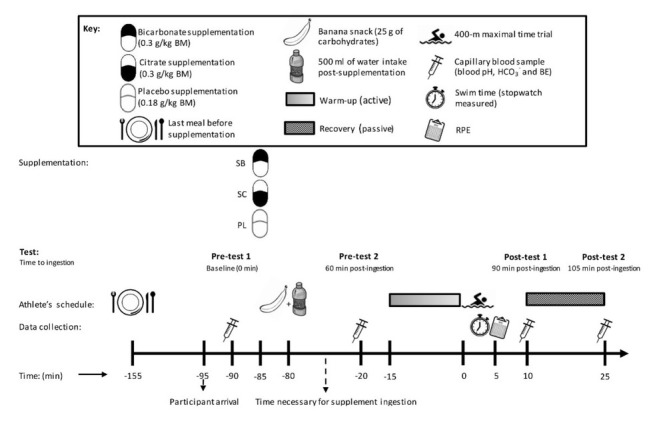
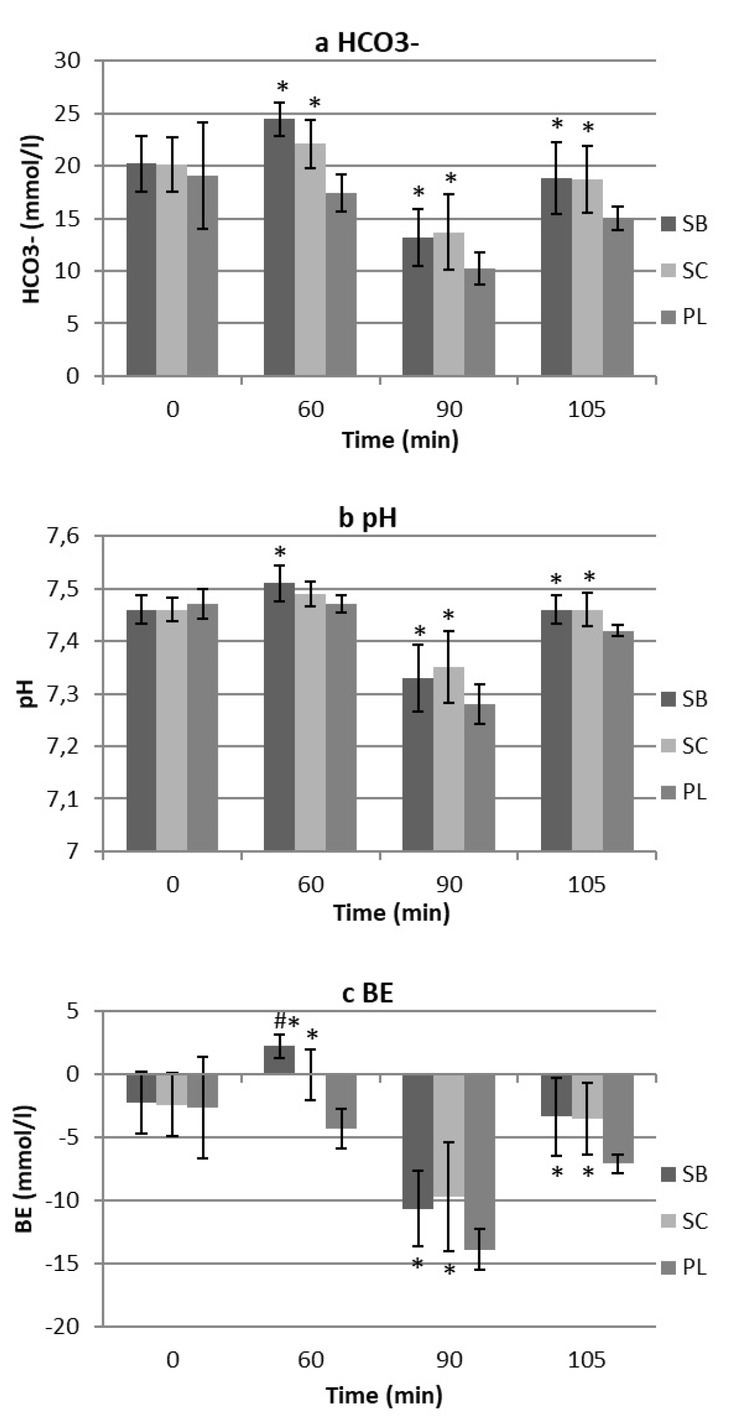
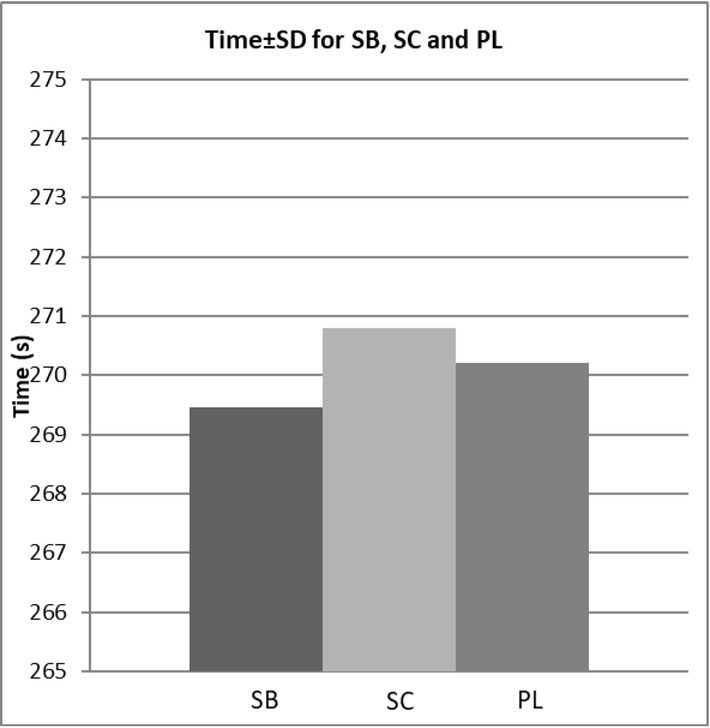
The aim of this study was to investigate the effect of ingesting sodium bicarbonate (SB) and sodium citrate (SC) on 400 m high-intensity swimming performance and blood responses. Six nationally ranked male swimmers (20.7 ± 2.1 yrs; 184 ± 6 cm; 79.9 ± 3.9 kg; 10.6 ± 1% body fat) participated in a double blinded, placebo controlled crossover trial. Ninety minutes after consuming SB (0.3 g·kg), SC (0.3 g·kg) or a placebo (PL) participants completed a single 400-m freestyle maximal test on three consecutive days. The order of the supplementation was randomized. Capillary blood samples were collected on 4 occasions: at rest (baseline), 60 min post-ingestion, immediately post-trial and 15 min post-trial. Blood pH, HCO concentration and base excess (BE) were determined. Blood pH, HCO, BE were significantly elevated from before loading to the pre-test (60 min post-ingestion) (p < 0.05) after SB ingestion, but not after SC ingestion (p > 0.05). Performance times were improved by 0.6% (p > 0.05) after supplementation of SB over PL in 5 out of 6 participants (responders). In contrast, ingestion of SC decreased performance by 0.2% (p > 0.05). No side effects were observed in either trial. Delayed blood response was observed after SC ingestion compared to SB and this provided no or modest ergogenic effect, respectively, for single bout high-intensity swimming exercise. Monitoring the magnitude of the time-to-peak level rise in alkalosis may be recommended in order to individualize the loading time accordingly before commencement of exercise.
本研究旨在探讨摄入碳酸氢钠(SB)和柠檬酸钠(SC)对400米高强度游泳成绩及血液反应的影响。六名全国排名的男性游泳运动员(20.7±2.1岁;184±6厘米;79.9±3.9千克;体脂率10.6±1%)参与了一项双盲、安慰剂对照的交叉试验。在摄入SB(0.3克·千克)、SC(0.3克·千克)或安慰剂(PL)90分钟后,参与者连续三天每天完成一次400米自由泳最大测试。补充剂的顺序是随机的。在四个时间点采集毛细血管血样:静息时(基线)、摄入后60分钟、试验结束后立即采集以及试验结束后15分钟采集。测定血液pH值、HCO浓度和碱剩余(BE)。摄入SB后,从负荷前到测试前(摄入后60分钟),血液pH值、HCO、BE显著升高(p<0.05),但摄入SC后未出现显著升高(p>0.05)。在6名参与者中有5名(反应者)补充SB后相对于补充PL成绩提高了0.6%(p>0.05)。相比之下,摄入SC使成绩下降了0.2%(p>0.05)。两项试验均未观察到副作用。与SB相比,摄入SC后观察到血液反应延迟,这对单次高强度游泳运动分别没有或仅有适度的促力作用。建议监测碱中毒达到峰值水平上升的时间幅度,以便在运动开始前相应地个体化负荷时间。