Institute for Health and Sport, Victoria University, Melbourne, Australia.
Applied Physiology and Nutrition Research Group, School of Physical Education and Sport; Rheumatology Division; Faculdade de Medicina FMUSP, Universidade de Sao Paulo, Sao Paulo, SP, BR, University of São Paulo, Sao Paulo, Brazil.
J Int Soc Sports Nutr. 2021 Sep 9;18(1):61. doi: 10.1186/s12970-021-00458-w.
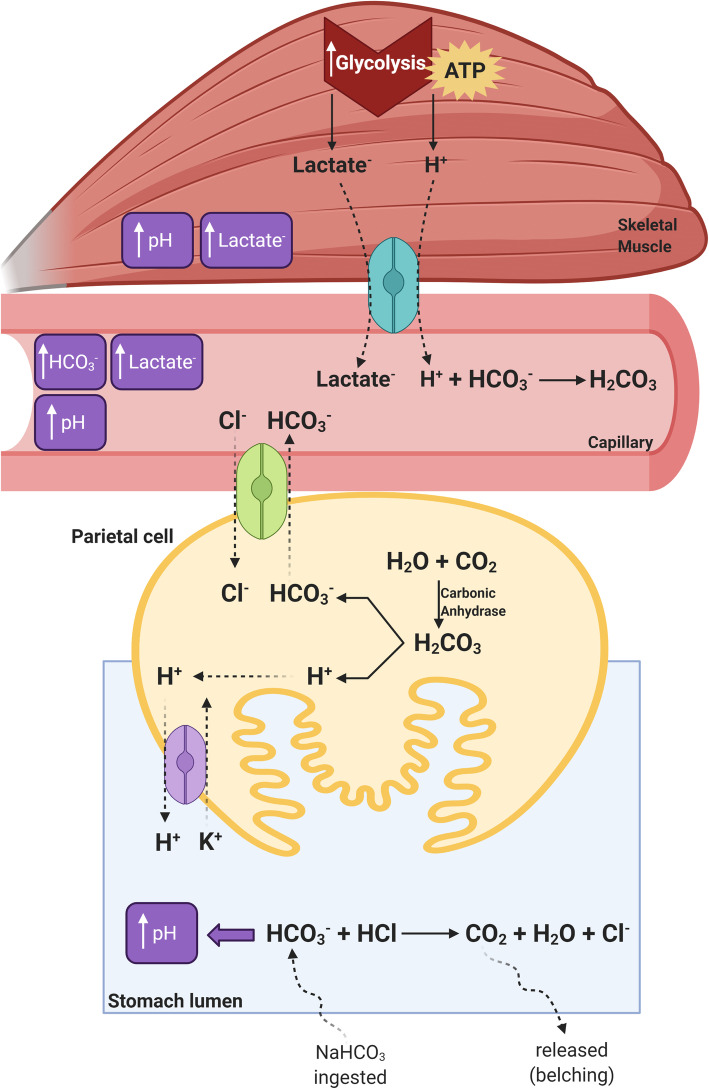
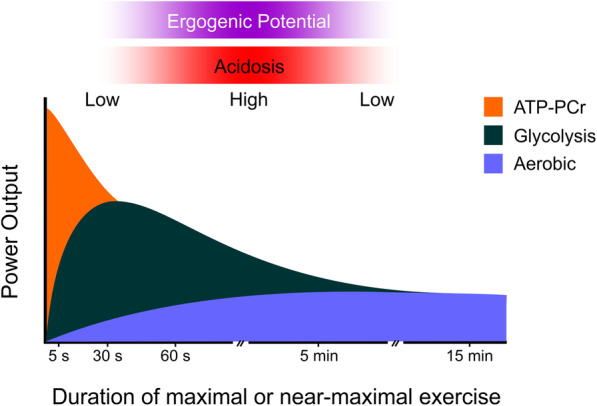
Based on a comprehensive review and critical analysis of the literature regarding the effects of sodium bicarbonate supplementation on exercise performance, conducted by experts in the field and selected members of the International Society of Sports Nutrition (ISSN), the following conclusions represent the official Position of the Society: 1. Supplementation with sodium bicarbonate (doses from 0.2 to 0.5 g/kg) improves performance in muscular endurance activities, various combat sports, including boxing, judo, karate, taekwondo, and wrestling, and in high-intensity cycling, running, swimming, and rowing. The ergogenic effects of sodium bicarbonate are mostly established for exercise tasks of high-intensity that last between 30 s and 12 min. 2. Sodium bicarbonate improves performance in single- and multiple-bout exercise. 3. Sodium bicarbonate improves exercise performance in both men and women. 4. For single-dose supplementation protocols, 0.2 g/kg of sodium bicarbonate seems to be the minimum dose required to experience improvements in exercise performance. The optimal dose of sodium bicarbonate dose for ergogenic effects seems to be 0.3 g/kg. Higher doses (e.g., 0.4 or 0.5 g/kg) may not be required in single-dose supplementation protocols, because they do not provide additional benefits (compared with 0.3 g/kg) and are associated with a higher incidence and severity of adverse side-effects. 5. For single-dose supplementation protocols, the recommended timing of sodium bicarbonate ingestion is between 60 and 180 min before exercise or competition. 6. Multiple-day protocols of sodium bicarbonate supplementation can be effective in improving exercise performance. The duration of these protocols is generally between 3 and 7 days before the exercise test, and a total sodium bicarbonate dose of 0.4 or 0.5 g/kg per day produces ergogenic effects. The total daily dose is commonly divided into smaller doses, ingested at multiple points throughout the day (e.g., 0.1 to 0.2 g/kg of sodium bicarbonate consumed at breakfast, lunch, and dinner). The benefit of multiple-day protocols is that they could help reduce the risk of sodium bicarbonate-induced side-effects on the day of competition. 7. Long-term use of sodium bicarbonate (e.g., before every exercise training session) may enhance training adaptations, such as increased time to fatigue and power output. 8. The most common side-effects of sodium bicarbonate supplementation are bloating, nausea, vomiting, and abdominal pain. The incidence and severity of side-effects vary between and within individuals, but it is generally low. Nonetheless, these side-effects following sodium bicarbonate supplementation may negatively impact exercise performance. Ingesting sodium bicarbonate (i) in smaller doses (e.g., 0.2 g/kg or 0.3 g/kg), (ii) around 180 min before exercise or adjusting the timing according to individual responses to side-effects, (iii) alongside a high-carbohydrate meal, and (iv) in enteric-coated capsules are possible strategies to minimize the likelihood and severity of these side-effects. 9. Combining sodium bicarbonate with creatine or beta-alanine may produce additive effects on exercise performance. It is unclear whether combining sodium bicarbonate with caffeine or nitrates produces additive benefits. 10. Sodium bicarbonate improves exercise performance primarily due to a range of its physiological effects. Still, a portion of the ergogenic effect of sodium bicarbonate seems to be placebo-driven.
基于对有关碳酸氢钠补充对运动表现影响的文献的全面回顾和批判性分析,由该领域的专家和国际运动营养学会(ISSN)的选定成员进行,以下结论代表了学会的官方立场:
补充碳酸氢钠(剂量为 0.2 至 0.5 克/千克)可提高肌肉耐力活动、各种格斗运动(包括拳击、柔道、空手道、跆拳道和摔跤)以及高强度自行车、跑步、游泳和划船的表现。碳酸氢钠的生能效应主要适用于持续 30 秒至 12 分钟的高强度运动任务。
碳酸氢钠可提高单次和多次运动的表现。
碳酸氢钠可提高男性和女性的运动表现。
对于单剂量补充方案,0.2 克/千克的碳酸氢钠似乎是改善运动表现所需的最低剂量。碳酸氢钠的最佳剂量似乎为 0.3 克/千克,以获得生能效果。较高剂量(例如 0.4 或 0.5 克/千克)在单剂量补充方案中可能不是必需的,因为它们不会提供额外的益处(与 0.3 克/千克相比),并且与更高的发生率和更严重的不良反应相关。
对于单剂量补充方案,建议在运动或比赛前 60 至 180 分钟摄入碳酸氢钠。
碳酸氢钠的多日补充方案可以有效提高运动表现。这些方案的持续时间通常为运动测试前 3 至 7 天,每天补充 0.4 或 0.5 克/千克的碳酸氢钠可产生生能效果。总日剂量通常分为较小剂量,全天分多次摄入(例如,早餐、午餐和晚餐摄入 0.1 至 0.2 克/千克的碳酸氢钠)。多日方案的好处是可以帮助减少比赛当天碳酸氢钠引起的不良反应的风险。
长期使用碳酸氢钠(例如,每次运动训练前)可能会增强训练适应,例如增加疲劳时间和功率输出。
碳酸氢钠补充的最常见副作用是腹胀、恶心、呕吐和腹痛。副作用的发生率和严重程度因人而异,但通常较低。尽管如此,这些副作用可能会对运动表现产生负面影响。摄入较小剂量的碳酸氢钠(例如 0.2 克/千克或 0.3 克/千克)、(ii)在运动或根据个体对副作用的反应调整时间前 180 分钟左右、(iii)与高碳水化合物餐一起、以及(iv)使用肠溶胶囊是最小化这些副作用的可能性和严重程度的可能策略。
碳酸氢钠与肌酸或β-丙氨酸结合使用可能会对运动表现产生相加作用。目前尚不清楚碳酸氢钠与咖啡因或硝酸盐结合使用是否会产生额外的益处。
碳酸氢钠主要通过一系列生理作用来提高运动表现。尽管如此,碳酸氢钠的一部分生能效应似乎是安慰剂驱动的。