Sun Zuo-Yan, Wang Fu-Jiang, Guo Hong, Chen Lu, Chai Li-Juan, Li Rui-Lin, Hu Li-Min, Wang Hong, Wang Shao-Xia
Tianjin State Key Laboratory of Modern Chinese Medicine, Tianjin University of Traditional Chinese Medicine, Tianjin; Department of Pharmacy, Linyi Central Hospital, Linyi, Shandong Province, China.
Tianjin State Key Laboratory of Modern Chinese Medicine, Tianjin University of Traditional Chinese Medicine, Tianjin, China.
Neural Regen Res. 2019 May;14(5):783-793. doi: 10.4103/1673-5374.249226.
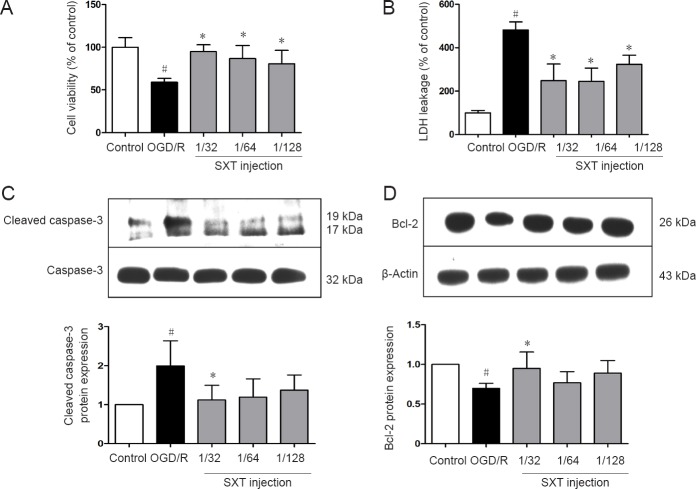
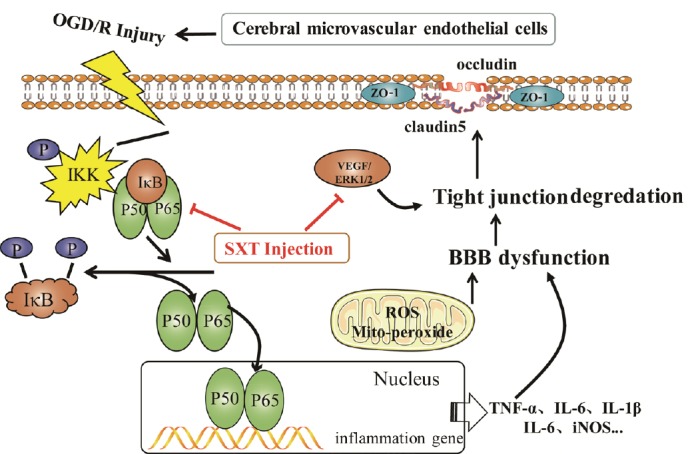
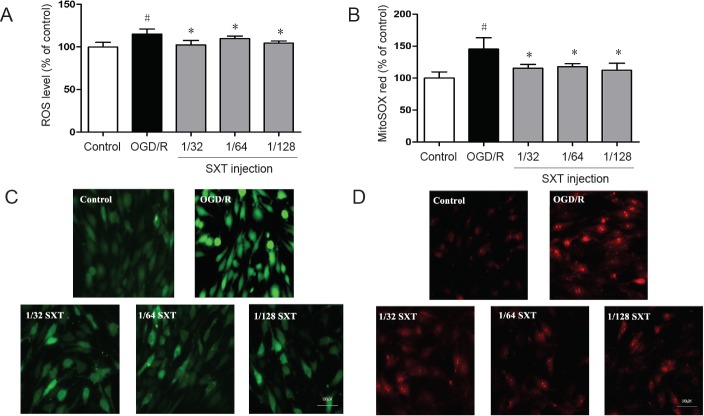
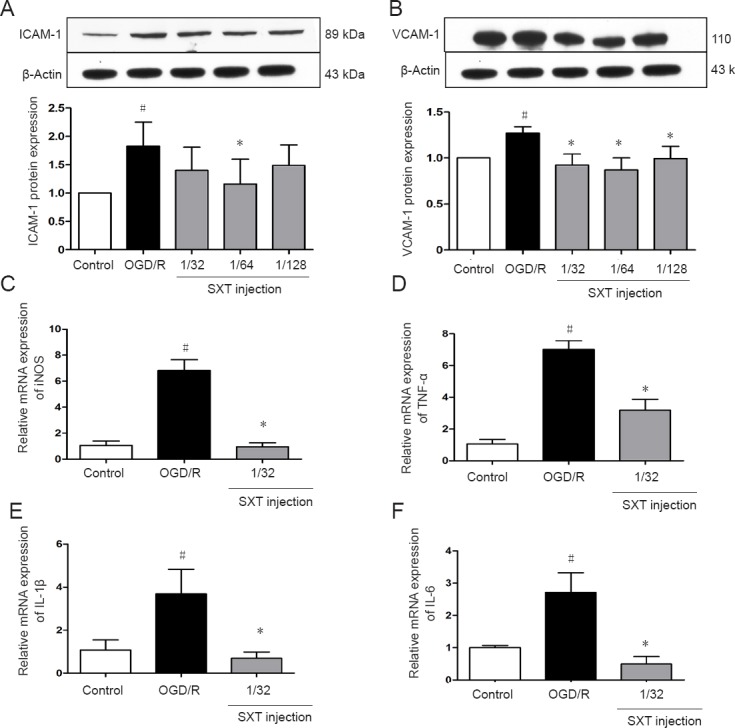
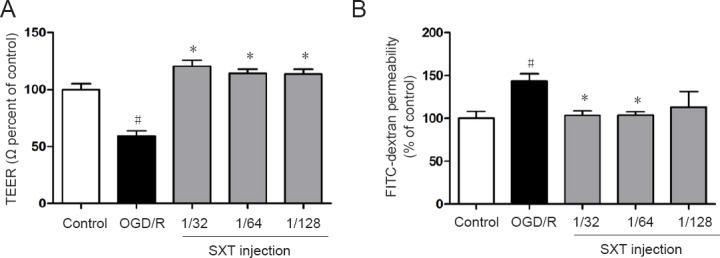
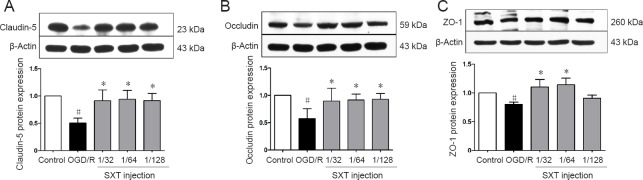
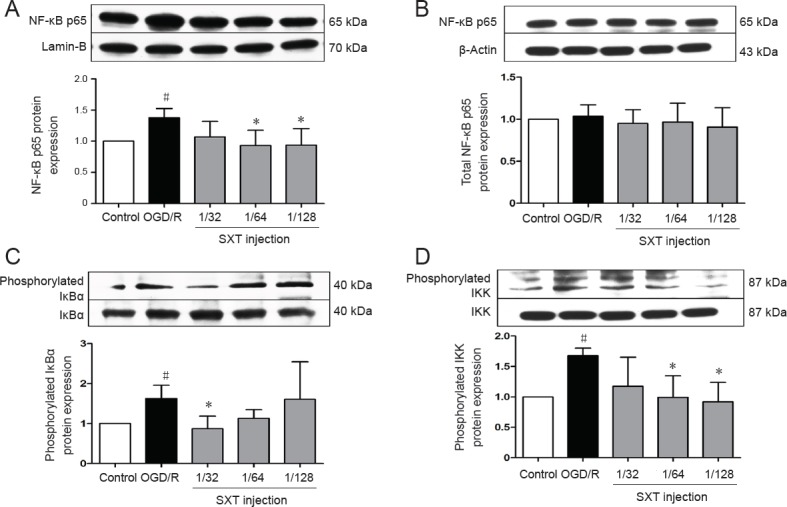
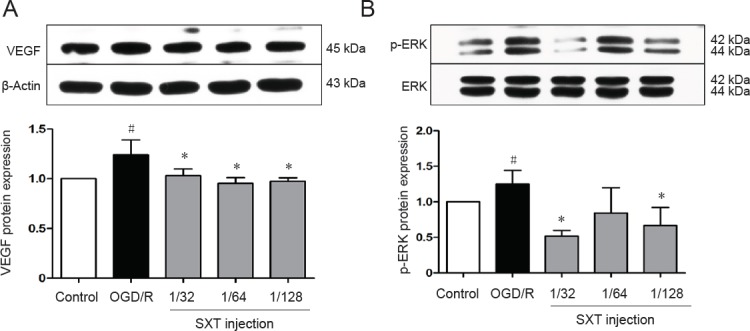
Shuxuetong injection composed of leech (Hirudo nipponica Whitman) and earthworm (Pheretima aspergillum) has been used for the clinical treatment of acute stroke for many years in China. However, the precise neuroprotective mechanism of Shuxuetong injection remains poorly understood. Here, cerebral microvascular endothelial cells (bEnd.3) were incubated in glucose-free Dulbecco's modified Eagle's medium containing 95% N/5% CO for 6 hours, followed by high-glucose medium containing 95% O and 5% CO for 18 hours to establish an oxygen-glucose deprivation/reperfusion model. This in vitro cell model was administered Shuxuetong injection at 1/32, 1/64, and 1/128 concentrations (diluted 32-, 64-, and 128-times). Cell Counting Kit-8 assay was used to evaluate cell viability. A fluorescence method was used to measure lactate dehydrogenase, and a fluorescence microplate reader used to detect intracellular reactive oxygen species. A fluorescent probe was also used to measure mitochondrial superoxide production. A cell resistance meter was used to measure transepithelial resistance and examine integrity of monolayer cells. The fluorescein isothiocyanate-dextran test was performed to examine blood-brain barrier permeability. Real-time reverse transcription polymerase chain reaction was performed to analyze mRNA expression levels of tumor necrosis factor alpha, interleukin-1β, interleukin-6, and inducible nitric oxide synthase. Western blot assay was performed to analyze expression of caspase-3, intercellular adhesion molecule 1, vascular cell adhesion molecule 1, occludin, vascular endothelial growth factor, cleaved caspase-3, B-cell lymphoma 2, phosphorylated extracellular signal-regulated protein kinase, extracellular signal-regulated protein kinase, nuclear factor-κB p65, I kappa B alpha, phosphorylated I kappa B alpha, I kappa B kinase, phosphorylated I kappa B kinase, claudin-5, and zonula occludens-1. Our results show that Shuxuetong injection increases bEnd.3 cell viability and B-cell lymphoma 2 expression, reduces cleaved caspase-3 expression, inhibits production of reactive oxygen species and mitochondrial superoxide, suppresses expression of tumor necrosis factor alpha, interleukin-1β, interleukin-6, inducible nitric oxide synthase mRNA, intercellular adhesion molecule-1, and vascular cell adhesion molecule-1, markedly increases transepithelial resistance, decreases blood-brain barrier permeability, upregulates claudin-5, occludin, and zonula occludens-1 expression, reduces nuclear factor-κB p65 and vascular endothelial growth factor expression, and reduces I kappa B alpha, extracellular signal-regulated protein kinase 1/2, and I kappa B kinase phosphorylation levels. Overall, these findings suggest that Shuxuetong injection has protective effects on brain microvascular endothelial cells after oxygen-glucose deprivation/reperfusion. Moreover, its protective effect is associated with reduction of mitochondrial superoxide production, inhibition of the inflammatory response, and inhibition of vascular endothelial growth factor, extracellular signal-regulated protein kinase 1/2, and the nuclear factor-κB p65 signaling pathway.
疏血通注射液由水蛭(日本医蛭)和地龙(参环毛蚓)组成,在中国已用于急性中风的临床治疗多年。然而,疏血通注射液确切的神经保护机制仍不清楚。在此,将脑微血管内皮细胞(bEnd.3)在含95%N₂/5%CO₂的无糖杜氏改良 Eagle 培养基中孵育6小时,然后在含95%O₂和5%CO₂的高糖培养基中孵育18小时,以建立氧糖剥夺/再灌注模型。该体外细胞模型分别给予浓度为1/32、1/64和1/128(稀释32倍、64倍和128倍)的疏血通注射液。采用细胞计数试剂盒-8法评估细胞活力。采用荧光法测定乳酸脱氢酶,用荧光酶标仪检测细胞内活性氧。还使用荧光探针测量线粒体超氧化物的产生。用细胞电阻仪测量跨上皮电阻并检测单层细胞的完整性。进行异硫氰酸荧光素-葡聚糖试验以检测血脑屏障通透性。采用实时逆转录聚合酶链反应分析肿瘤坏死因子α、白细胞介素-1β、白细胞介素-6和诱导型一氧化氮合酶的mRNA表达水平。采用蛋白质免疫印迹法分析半胱天冬酶-3、细胞间黏附分子1、血管细胞黏附分子1、闭合蛋白、血管内皮生长因子、裂解的半胱天冬酶-3、B细胞淋巴瘤2、磷酸化细胞外信号调节蛋白激酶、细胞外信号调节蛋白激酶、核因子-κB p65、IκBα、磷酸化IκBα、IκB激酶、磷酸化IκB激酶、claudin-5和紧密连接蛋白-1的表达。我们的结果表明,疏血通注射液可提高bEnd.3细胞活力和B细胞淋巴瘤2的表达,降低裂解的半胱天冬酶-3的表达,抑制活性氧和线粒体超氧化物的产生,抑制肿瘤坏死因子α、白细胞介素-1β、白细胞介素-6、诱导型一氧化氮合酶mRNA、细胞间黏附分子-1和血管细胞黏附分子-1的表达,显著增加跨上皮电阻,降低血脑屏障通透性,上调claudin-5、闭合蛋白和紧密连接蛋白-1的表达,降低核因子-κB p65和血管内皮生长因子的表达,并降低IκBα、细胞外信号调节蛋白激酶1/2和IκB激酶的磷酸化水平。总体而言,这些发现表明疏血通注射液对氧糖剥夺/再灌注后的脑微血管内皮细胞具有保护作用。此外,其保护作用与线粒体超氧化物产生的减少、炎症反应的抑制以及血管内皮生长因子、细胞外信号调节蛋白激酶1/2和核因子-κB p65信号通路的抑制有关。