Department of Economics, University of Copenhagen, Harespringet 3, Copenhagen NV, Denmark.
Poverty, Health, and Nutrition Division, International Food Policy Research Institute, 1201 Eye Street, Washington, DC, 20005-3915, USA.
Demography. 2019 Apr;56(2):707-728. doi: 10.1007/s13524-018-0753-9.
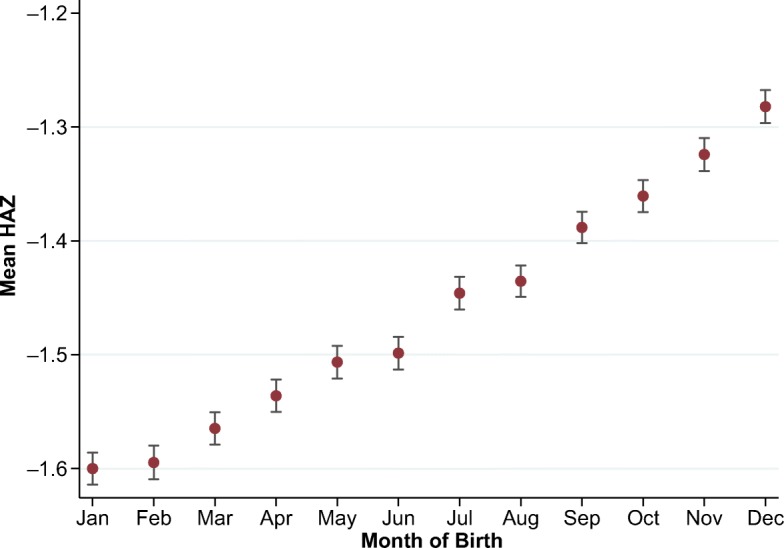
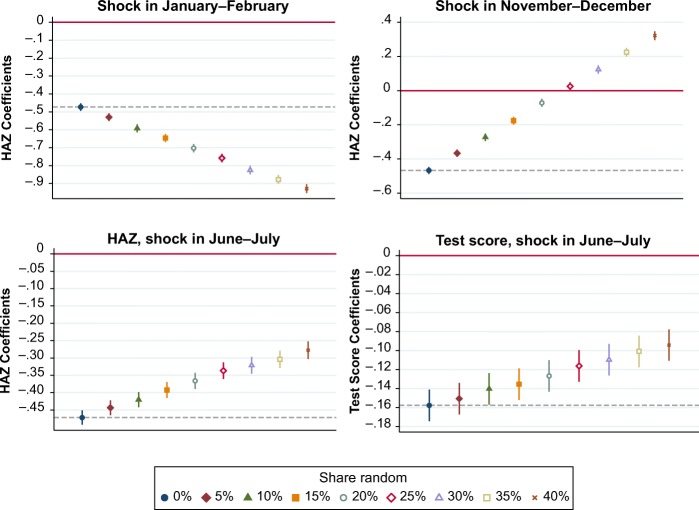
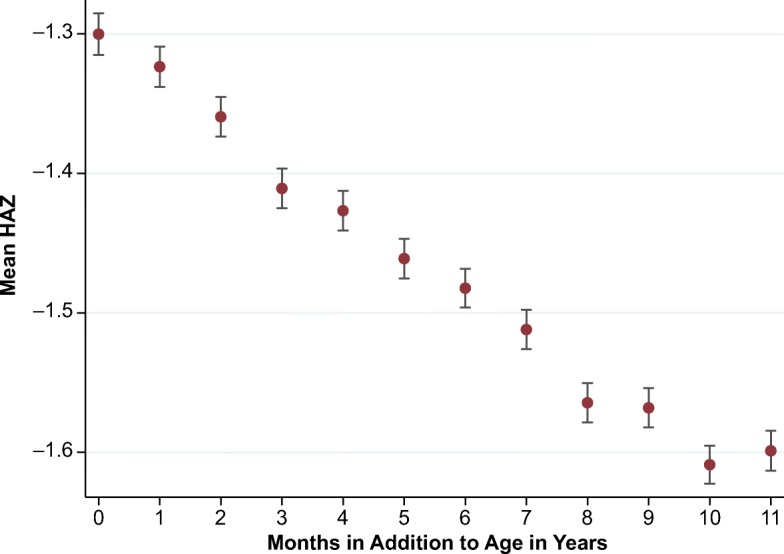
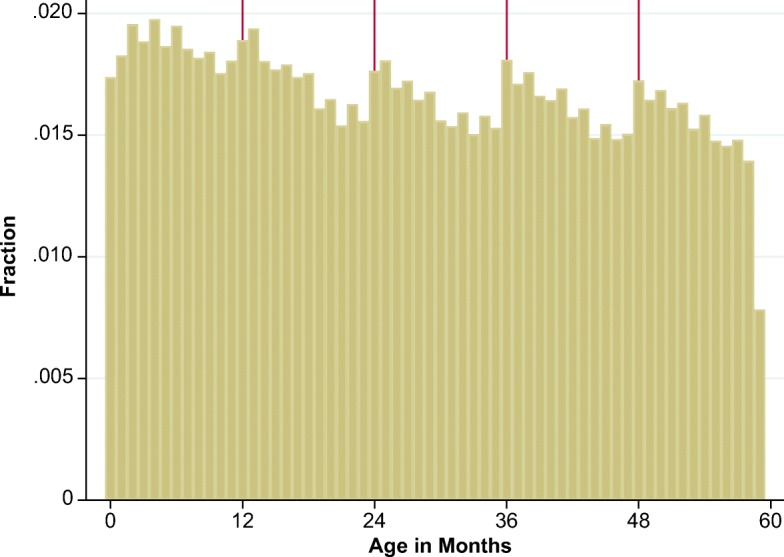
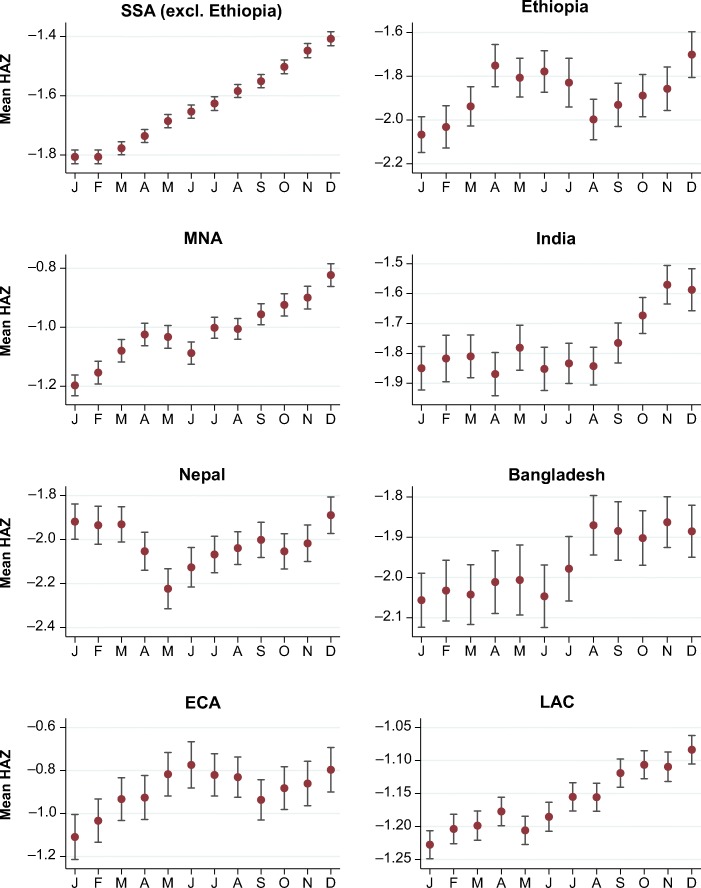
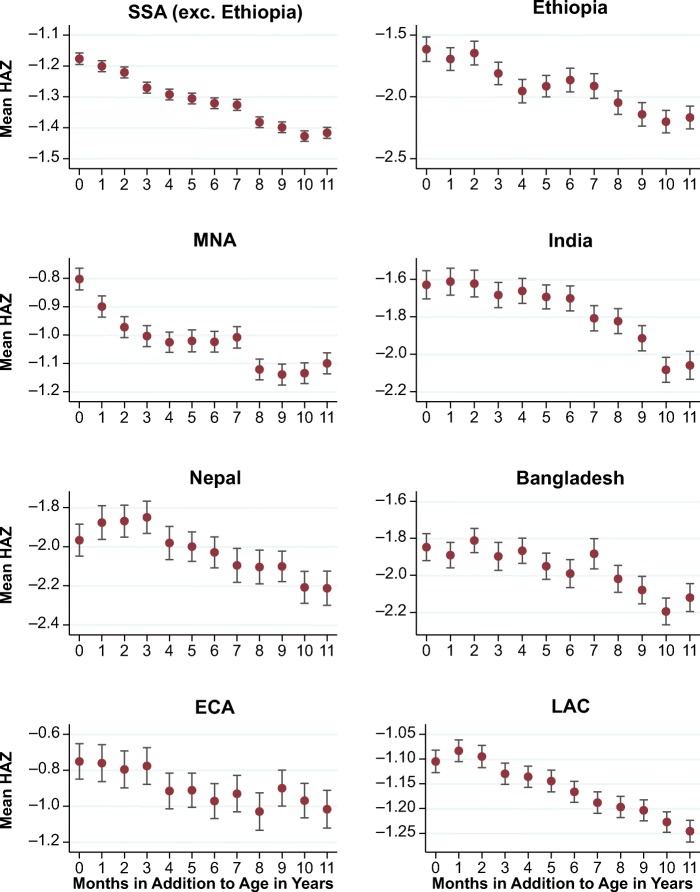
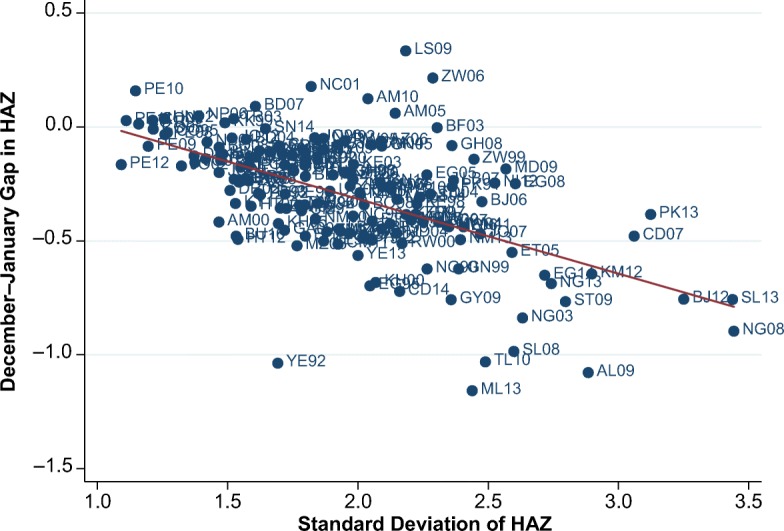
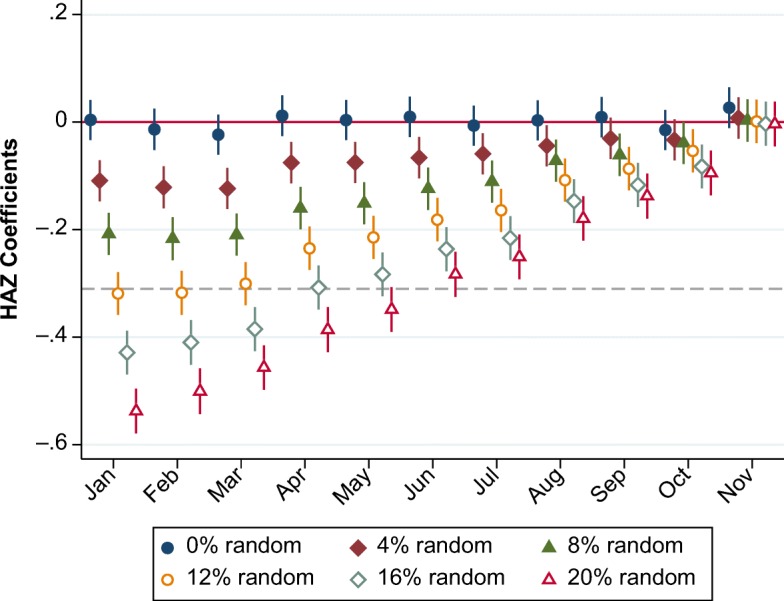
A large literature has used children's birthdays to identify exposure to shocks and estimate their impacts on later outcomes. Using height-for-age z scores (HAZ) for more than 990,000 children in 62 countries from 163 Demographic and Health Surveys (DHS), we show how random errors in birth dates create artifacts in HAZ that can be used to diagnose the extent of age misreporting. The most important artifact is an upward gradient in HAZ by recorded month of birth (MOB) from start to end of calendar years, resulting in a large HAZ differential between December- and January-born children of -0.32 HAZ points. We observe a second artifact associated with round ages, with a downward gradient in HAZ by recorded age in months, and then an upward step after reaching ages 2, 3, and 4. These artifacts have previously been interpreted as actual health shocks. We show that they are not related to agroclimatic conditions but are instead linked to the type of calendar used and arise mainly when enumerators do not see the child's birth registration cards. We explain the size of the December-January gap through simulation in which 11 % of children have their birth date replaced by a random month. We find a minor impact on the average stunting rate but a larger impact in specific error-prone surveys. We further show how misreporting MOB causes attenuation bias when MOB is used for identification of shock exposure as well as systematic bias in the impact on HAZ of events that occur early or late in each calendar year.
大量文献利用儿童的生日来确定冲击的暴露情况,并估计其对后期结果的影响。我们使用来自 163 项人口与健康调查(DHS)的 62 个国家的超过 99 万名儿童的身高年龄 Z 分数(HAZ),展示了出生日期的随机误差如何在 HAZ 中产生伪影,这些伪影可用于诊断年龄报告错误的程度。最重要的伪影是记录的出生月份(MOB)从年初到年末的 HAZ 呈上升趋势,导致 12 月和 1 月出生的儿童之间的 HAZ 差异达到 0.32 个 HAZ 点。我们观察到第二个与整数年龄相关的伪影,记录的月龄呈下降趋势,然后在达到 2、3 和 4 岁后呈上升趋势。这些伪影以前被解释为实际的健康冲击。我们表明,它们与农业气候条件无关,而是与使用的日历类型有关,主要出现在普查员看不到儿童出生登记卡时。我们通过模拟解释了 12 月至 1 月差距的大小,其中 11%的儿童的出生日期被替换为随机月份。我们发现,这种方法对平均发育迟缓率的影响较小,但对特定容易出错的调查的影响较大。我们进一步表明,当 MOB 用于识别冲击暴露时,以及当事件发生在每个日历年的早期或晚期时,MOB 的错误报告会导致衰减偏差和 HAZ 影响的系统偏差。