Centre for Health Sciences Research, School of Health & Society, Salford University, Salford, United Kingdom.
School of Computing, Science and Engineering, Salford University, Salford, United Kingdom.
PLoS One. 2019 Jan 30;14(1):e0210960. doi: 10.1371/journal.pone.0210960. eCollection 2019.
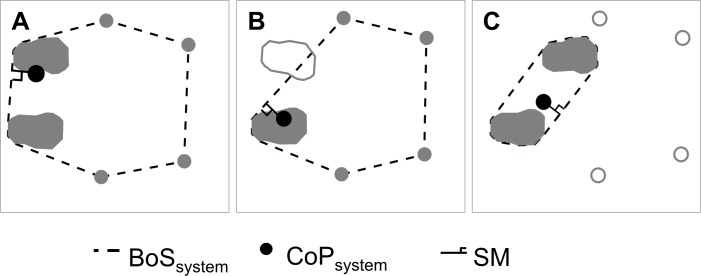
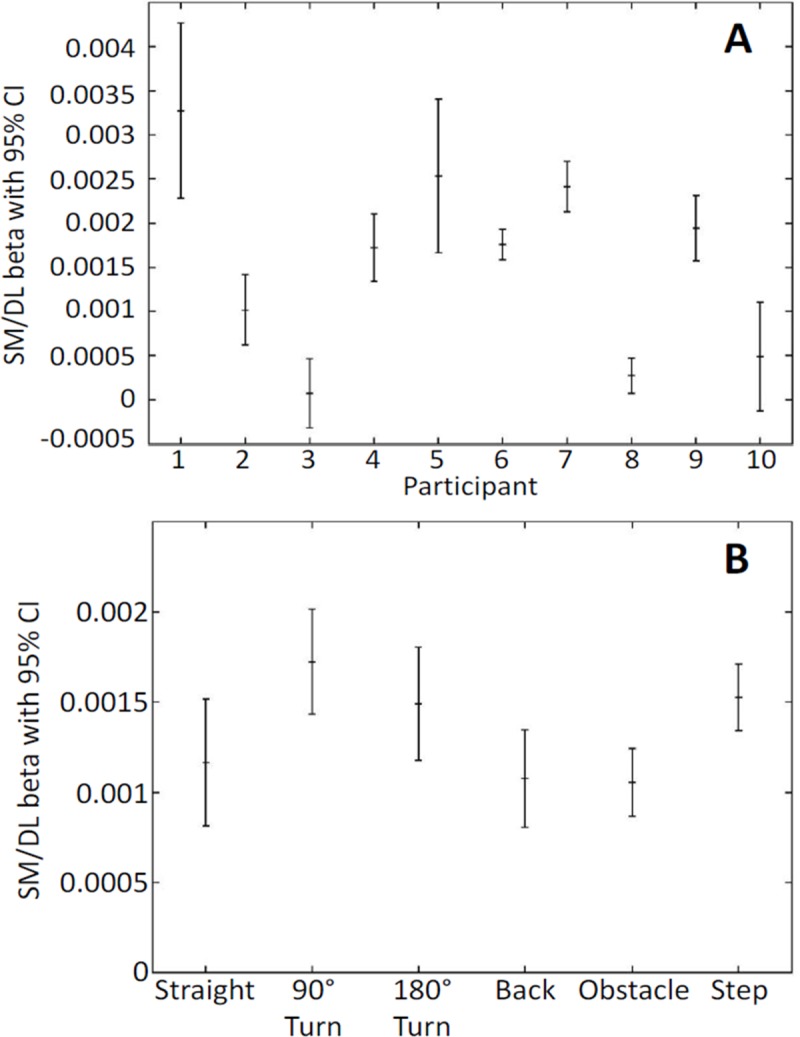
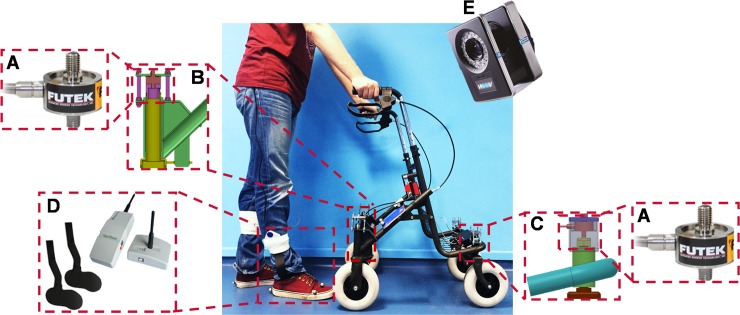
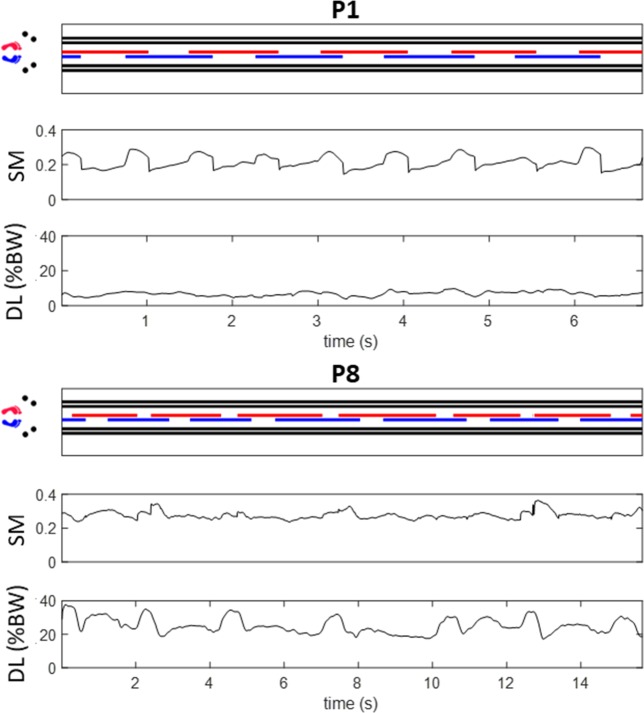
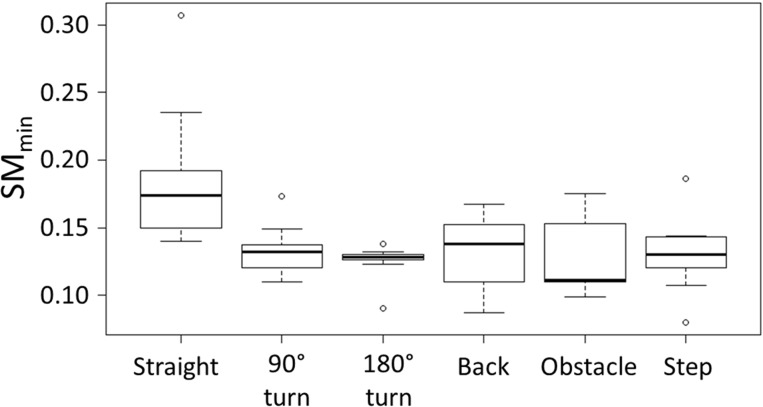
Walking aids are widely used by older adults, however, alarmingly, their use has been linked to increased falls-risk, yet clinicians have no objective way of assessing user stability. This work aims to demonstrate the application of a novel methodology to investigate how the type of walking task, the amount of body weight supported by the device (i.e., device loading), and task performance strategy affect stability of rollator users. In this context, ten users performed six walking tasks with an instrumented rollator. The combined stability margin "SM" was calculated, which considers user and rollator as a combined system. A Friedman Test was used to investigate the effects of task on SM and a least-squares regression model was applied to investigate the relationship between device loading and SM. In addition, the effects of task performance strategy on SM were explored. As a result, it was found that: the minimum SM for straight line walking was higher than for more complex tasks (p<0.05); an increase in device loading was associated with an increase in SM (p<0.05); stepping up a kerb with at least 1 rollator wheel in ground contact at all times resulted in higher SM than lifting all four wheels simultaneously. Hence, we conclude that training should not be limited to straight line walking but should include various everyday tasks. Within person, SM informs on which tasks need practicing, and which strategy facilitates stability, thereby enabling person-specific guidance/training. The relevance of this work lies in an increase in walking aid users, and the costs arising from fall-related injuries.
助行器在老年人中广泛使用,但令人震惊的是,它们的使用与跌倒风险增加有关,但临床医生没有客观的方法来评估使用者的稳定性。这项工作旨在展示一种新方法的应用,以研究行走任务的类型、设备支撑的体重(即设备负载)以及任务执行策略如何影响助行器使用者的稳定性。在这种情况下,十个使用者使用仪器化的助行器完成了六个行走任务。计算了组合稳定性裕度“SM”,它将用户和助行器视为一个组合系统。使用 Friedman 检验研究任务对 SM 的影响,应用最小二乘回归模型研究设备负载与 SM 的关系。此外,还探讨了任务执行策略对 SM 的影响。结果发现:直线行走的最小 SM 高于更复杂的任务(p<0.05);设备负载增加与 SM 增加相关(p<0.05);始终用至少一个助行器轮子着地在路缘上踏步比同时抬起四个轮子产生更高的 SM。因此,我们得出结论,训练不应仅限于直线行走,还应包括各种日常任务。在个体内,SM 可以说明需要练习哪些任务,以及哪种策略有助于稳定性,从而实现个性化的指导/训练。这项工作的相关性在于助行器使用者的增加,以及与跌倒相关的伤害所带来的成本。