• 文献检索
  • 文档翻译
  • 深度研究
  • 学术资讯
  • Suppr Zotero 插件Zotero 插件
  • 邀请有礼
  • 套餐&价格
  • 历史记录
应用&插件
Suppr Zotero 插件Zotero 插件浏览器插件Mac 客户端Windows 客户端微信小程序
定价
高级版会员购买积分包购买API积分包
服务
文献检索文档翻译深度研究API 文档MCP 服务
关于我们
关于 Suppr公司介绍联系我们用户协议隐私条款
关注我们

Suppr 超能文献

核心技术专利:CN118964589B侵权必究
粤ICP备2023148730 号-1Suppr @ 2026

文献检索

告别复杂PubMed语法,用中文像聊天一样搜索,搜遍4000万医学文献。AI智能推荐,让科研检索更轻松。

立即免费搜索

文件翻译

保留排版,准确专业,支持PDF/Word/PPT等文件格式,支持 12+语言互译。

免费翻译文档

深度研究

AI帮你快速写综述,25分钟生成高质量综述,智能提取关键信息,辅助科研写作。

立即免费体验

基于特征的方法计算人类基因组中有害同义变体的识别。

Computational identification of deleterious synonymous variants in human genomes using a feature-based approach.

机构信息

College of Electrical Engineering and Automation, Anhui University, Hefei, 230601, Anhui, China.

Institute of Physical Science and Information Technology, School of Computer Science and Technology, Anhui University, 111 Jiulong Avenue, Hefei, 230601, China.

出版信息

BMC Med Genomics. 2019 Jan 31;12(Suppl 1):12. doi: 10.1186/s12920-018-0455-6.

DOI:10.1186/s12920-018-0455-6
PMID:30704475
原文链接:https://pmc.ncbi.nlm.nih.gov/articles/PMC6357349/
Abstract

BACKGROUND

Although synonymous single nucleotide variants (sSNVs) do not alter the protein sequences, they have been shown to play an important role in human disease. Distinguishing pathogenic sSNVs from neutral ones is challenging because pathogenic sSNVs tend to have low prevalence. Although many methods have been developed for predicting the functional impact of single nucleotide variants, only a few have been specifically designed for identifying pathogenic sSNVs.

RESULTS

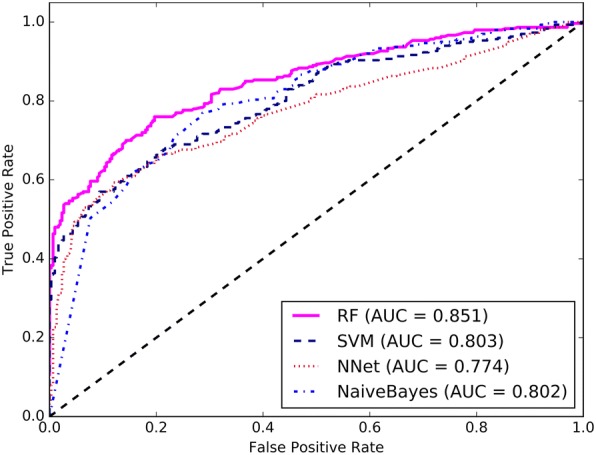
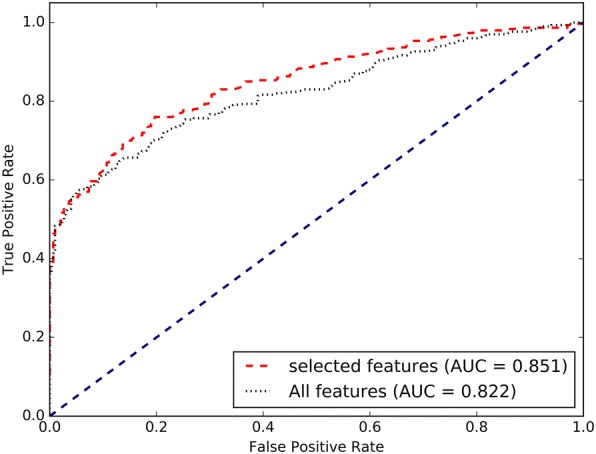
In this work, we describe a computational model, IDSV (Identification of Deleterious Synonymous Variants), which uses random forest (RF) to detect deleterious sSNVs in human genomes. We systematically investigate a total of 74 multifaceted features across seven categories: splicing, conservation, codon usage, sequence, pre-mRNA folding energy, translation efficiency, and function regions annotation features. Then, to remove redundant and irrelevant features and improve the prediction performance, feature selection is employed using the sequential backward selection method. Based on the optimized 10 features, a RF classifier is developed to identify deleterious sSNVs. The results on benchmark datasets show that IDSV outperforms other state-of-the-art methods in identifying sSNVs that are pathogenic.

CONCLUSIONS

We have developed an efficient feature-based prediction approach (IDSV) for deleterious sSNVs by using a wide variety of features. Among all the features, a compact and useful feature subset that has an important implication for identifying deleterious sSNVs is identified. Our results indicate that besides splicing and conservation features, a new translation efficiency feature is also an informative feature for identifying deleterious sSNVs. While the function regions annotation and sequence features are weakly informative, they may have the ability to discriminate deleterious sSNVs from benign ones when combined with other features. The data and source code are available on website http://bioinfo.ahu.edu.cn:8080/IDSV .

摘要

背景

虽然同义单核苷酸变异(sSNV)不会改变蛋白质序列,但它们已被证明在人类疾病中发挥重要作用。区分致病性 sSNV 和中性 sSNV 具有挑战性,因为致病性 sSNV 往往患病率较低。尽管已经开发了许多用于预测单核苷酸变异功能影响的方法,但只有少数方法专门用于识别致病性 sSNV。

结果

在这项工作中,我们描述了一种计算模型 IDSV(有害同义变异识别),它使用随机森林(RF)来检测人类基因组中的有害 sSNV。我们系统地研究了七个类别中的 74 个多方面特征:剪接、保守性、密码子使用、序列、前 mRNA 折叠能、翻译效率和功能区域注释特征。然后,使用逐步后向选择方法进行特征选择,以去除冗余和不相关的特征并提高预测性能。基于优化的 10 个特征,开发了 RF 分类器来识别有害 sSNV。在基准数据集上的结果表明,IDSV 在识别致病性 sSNV 方面优于其他最先进的方法。

结论

我们通过使用各种特征开发了一种有效的基于特征的预测方法(IDSV)来预测有害 sSNV。在所有特征中,确定了一个紧凑且有用的特征子集,对识别有害 sSNV 具有重要意义。我们的结果表明,除了剪接和保守性特征外,新的翻译效率特征也是识别有害 sSNV 的一个信息丰富的特征。虽然功能区域注释和序列特征信息量较弱,但当与其他特征结合使用时,它们可能具有区分有害 sSNV 和良性 sSNV 的能力。数据和源代码可在网站 http://bioinfo.ahu.edu.cn:8080/IDSV 上获得。
https://cdn.ncbi.nlm.nih.gov/pmc/blobs/1178/6357349/4f15f9ea5ff0/12920_2018_455_Fig2_HTML.jpg
https://cdn.ncbi.nlm.nih.gov/pmc/blobs/1178/6357349/d8426aec7589/12920_2018_455_Fig1_HTML.jpg
https://cdn.ncbi.nlm.nih.gov/pmc/blobs/1178/6357349/4f15f9ea5ff0/12920_2018_455_Fig2_HTML.jpg
https://cdn.ncbi.nlm.nih.gov/pmc/blobs/1178/6357349/d8426aec7589/12920_2018_455_Fig1_HTML.jpg
https://cdn.ncbi.nlm.nih.gov/pmc/blobs/1178/6357349/4f15f9ea5ff0/12920_2018_455_Fig2_HTML.jpg

相似文献

1
Computational identification of deleterious synonymous variants in human genomes using a feature-based approach.基于特征的方法计算人类基因组中有害同义变体的识别。
BMC Med Genomics. 2019 Jan 31;12(Suppl 1):12. doi: 10.1186/s12920-018-0455-6.
2
An Ensemble Approach to Predict the Pathogenicity of Synonymous Variants.一种预测同义变体致病性的集成方法。
Genes (Basel). 2020 Sep 21;11(9):1102. doi: 10.3390/genes11091102.
3
Broken silence: 22,841 predicted deleterious synonymous variants identified in the human exome through computational analysis.打破沉默:通过计算分析在人类外显子组中鉴定出22,841个预测的有害同义变体。
Genet Mol Biol. 2024 Jan 22;46(3 Suppl 1):e20230125. doi: 10.1590/1678-4685-GMB-2023-0125. eCollection 2024.
4
Synonymous variants in holoprosencephaly alter codon usage and impact the Sonic Hedgehog protein.无脑回畸形中的同义变体改变密码子使用并影响 Sonic Hedgehog 蛋白。
Brain. 2020 Jul 1;143(7):2027-2038. doi: 10.1093/brain/awaa152.
5
regSNPs-splicing: a tool for prioritizing synonymous single-nucleotide substitution.regSNPs-剪接:一种对同义单核苷酸替换进行优先级排序的工具。
Hum Genet. 2017 Sep;136(9):1279-1289. doi: 10.1007/s00439-017-1783-x. Epub 2017 Apr 8.
6
Inferring Potential Cancer Driving Synonymous Variants.推断潜在致癌同义变体。
Genes (Basel). 2022 Apr 27;13(5):778. doi: 10.3390/genes13050778.
7
Synonymous ADAMTS13 variants impact molecular characteristics and contribute to variability in active protein abundance.同义的 ADAMTS13 变异体影响分子特征,并导致活性蛋白丰度的可变性。
Blood Adv. 2022 Sep 27;6(18):5364-5378. doi: 10.1182/bloodadvances.2022007065.
8
Comparison and integration of computational methods for deleterious synonymous mutation prediction.有害同义突变预测的计算方法比较与整合。
Brief Bioinform. 2020 May 21;21(3):970-981. doi: 10.1093/bib/bbz047.
9
Decoding the effects of synonymous variants.解码同义变体的影响。
Nucleic Acids Res. 2021 Dec 16;49(22):12673-12691. doi: 10.1093/nar/gkab1159.
10
Synonymous Somatic Variants in Human Cancer Are Not Infamous: A Plea for Full Disclosure in Databases and Publications.人类癌症中的同义体细胞变异并非声名狼藉:呼吁在数据库和出版物中全面披露
Hum Mutat. 2017 Apr;38(4):339-342. doi: 10.1002/humu.23163. Epub 2017 Feb 2.

引用本文的文献

1
Ensemble learning-based predictor for driver synonymous mutation with sequence representation.基于集成学习的具有序列表征的驱动同义突变预测器
PLoS Comput Biol. 2025 Jan 6;21(1):e1012744. doi: 10.1371/journal.pcbi.1012744. eCollection 2025 Jan.
2
In silico methods for predicting functional synonymous variants.基于计算机的预测功能同义变体的方法。
Genome Biol. 2023 May 22;24(1):126. doi: 10.1186/s13059-023-02966-1.
3
Evaluation of in silico predictors on short nucleotide variants in , , and associated with haemoglobinopathies.

本文引用的文献

1
Annotating pathogenic non-coding variants in genic regions.注释基因区域中的致病性非编码变异体。
Nat Commun. 2017 Aug 9;8(1):236. doi: 10.1038/s41467-017-00141-2.
2
Investigating DNA-, RNA-, and protein-based features as a means to discriminate pathogenic synonymous variants.研究 DNA、RNA 和蛋白质特征,作为区分致病性同义变体的手段。
Hum Mutat. 2017 Oct;38(10):1336-1347. doi: 10.1002/humu.23283. Epub 2017 Jul 10.
3
regSNPs-splicing: a tool for prioritizing synonymous single-nucleotide substitution.regSNPs-剪接:一种对同义单核苷酸替换进行优先级排序的工具。
评估与血红蛋白病相关的 、 和 中短核苷酸变异的计算预测因子。
Elife. 2022 Dec 1;11:e79713. doi: 10.7554/eLife.79713.
4
Genome interpretation using in silico predictors of variant impact.使用变异影响的计算机预测因子进行基因组解读。
Hum Genet. 2022 Oct;141(10):1549-1577. doi: 10.1007/s00439-022-02457-6. Epub 2022 Apr 30.
5
Synonymous Variants: Necessary Nuance in Our Understanding of Cancer Drivers and Treatment Outcomes.同义变体:在理解癌症驱动因素和治疗结果时需要注意的细微差别。
J Natl Cancer Inst. 2022 Aug 8;114(8):1072-1094. doi: 10.1093/jnci/djac090.
6
Analysis of Pathogenic Pseudoexons Reveals Novel Mechanisms Driving Cryptic Splicing.致病性假外显子分析揭示了驱动隐蔽剪接的新机制。
Front Genet. 2022 Jan 24;12:806946. doi: 10.3389/fgene.2021.806946. eCollection 2021.
7
Decoding the effects of synonymous variants.解码同义变体的影响。
Nucleic Acids Res. 2021 Dec 16;49(22):12673-12691. doi: 10.1093/nar/gkab1159.
8
DLFF-ACP: prediction of ACPs based on deep learning and multi-view features fusion.DLFF-ACP:基于深度学习和多视图特征融合的急性冠脉综合征预测
PeerJ. 2021 Aug 3;9:e11906. doi: 10.7717/peerj.11906. eCollection 2021.
9
New approaches to predict the effect of co-occurring variants on protein characteristics.预测共现变异对蛋白质特性影响的新方法。
Am J Hum Genet. 2021 Aug 5;108(8):1502-1511. doi: 10.1016/j.ajhg.2021.06.011. Epub 2021 Jul 12.
10
An improved DNA-binding hot spot residues prediction method by exploring interfacial neighbor properties.一种通过探索界面邻居性质来改进 DNA 结合热点残基预测方法。
BMC Bioinformatics. 2021 May 17;22(Suppl 3):253. doi: 10.1186/s12859-020-03871-1.
Hum Genet. 2017 Sep;136(9):1279-1289. doi: 10.1007/s00439-017-1783-x. Epub 2017 Apr 8.
4
High-performance web services for querying gene and variant annotation.用于查询基因和变异注释的高性能网络服务。
Genome Biol. 2016 May 6;17(1):91. doi: 10.1186/s13059-016-0953-9.
5
dbDSM: a manually curated database for deleterious synonymous mutations.dbDSM:一个经过人工整理的有害同义突变数据库。
Bioinformatics. 2016 Jun 15;32(12):1914-6. doi: 10.1093/bioinformatics/btw086. Epub 2016 Feb 15.
6
The dark matter of the cancer genome: aberrations in regulatory elements, untranslated regions, splice sites, non-coding RNA and synonymous mutations.癌症基因组的暗物质:调控元件、非编码区、剪接位点、非编码RNA及同义突变中的畸变
EMBO Mol Med. 2016 May 2;8(5):442-57. doi: 10.15252/emmm.201506055. Print 2016 May.
7
A synonymous EGFR polymorphism predicting responsiveness to anti-EGFR therapy in metastatic colorectal cancer patients.一种预测转移性结直肠癌患者对抗表皮生长因子受体(EGFR)治疗反应性的同义EGFR基因多态性。
Tumour Biol. 2016 Jun;37(6):7295-303. doi: 10.1007/s13277-015-4543-3. Epub 2015 Dec 15.
8
The UCSC Genome Browser database: 2016 update.加州大学圣克鲁兹分校基因组浏览器数据库:2016年更新
Nucleic Acids Res. 2016 Jan 4;44(D1):D717-25. doi: 10.1093/nar/gkv1275. Epub 2015 Nov 20.
9
ClinVar: public archive of interpretations of clinically relevant variants.ClinVar:临床相关变异解读的公共存档库。
Nucleic Acids Res. 2016 Jan 4;44(D1):D862-8. doi: 10.1093/nar/gkv1222. Epub 2015 Nov 17.
10
An integrative approach to predicting the functional effects of non-coding and coding sequence variation.一种预测非编码和编码序列变异功能效应的综合方法。
Bioinformatics. 2015 May 15;31(10):1536-43. doi: 10.1093/bioinformatics/btv009. Epub 2015 Jan 11.