Centre for Applied Entomology and Parasitology, School of Life Sciences, Keele University, Newcastle-under-Lyme, Staffordshire, ST5 5BG, UK.
Central Electron Microscope Unit, School of Life Sciences, Keele University, Newcastle-under-Lyme, Staffordshire, ST5 5BG, UK.
Sci Rep. 2019 Jan 31;9(1):1059. doi: 10.1038/s41598-018-37670-9.
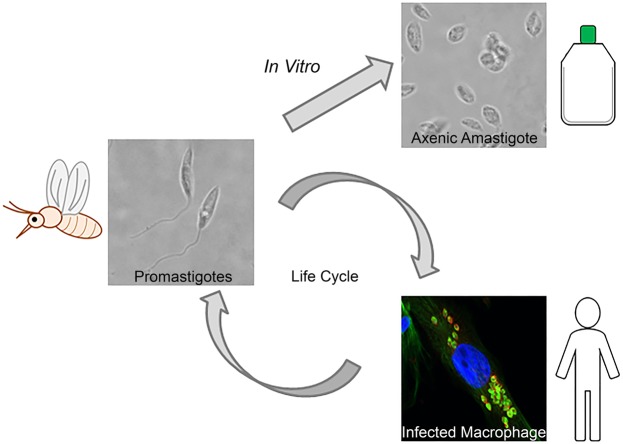
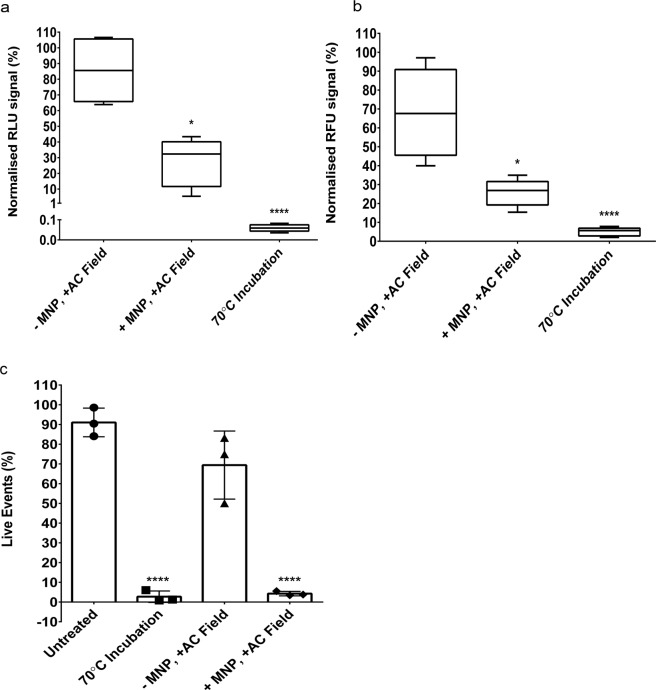
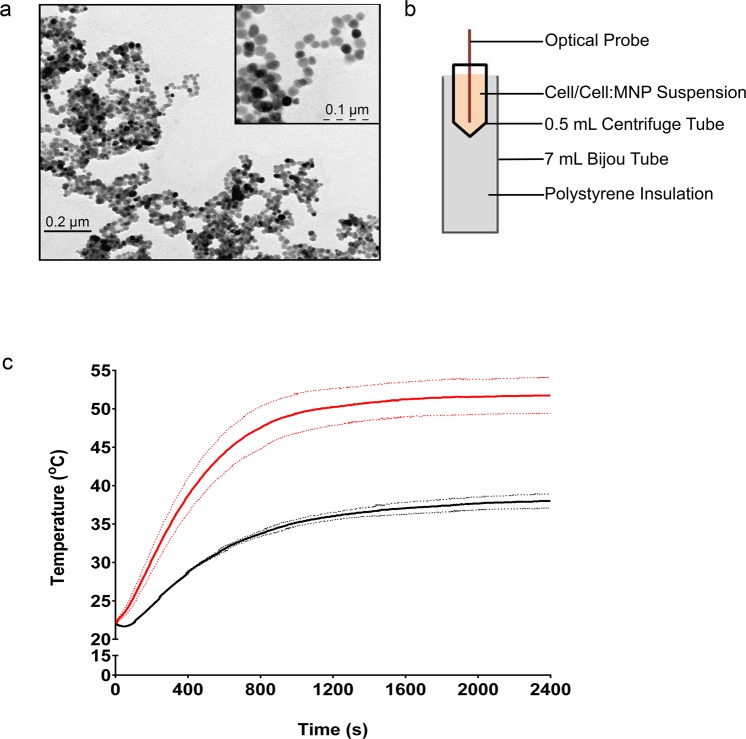
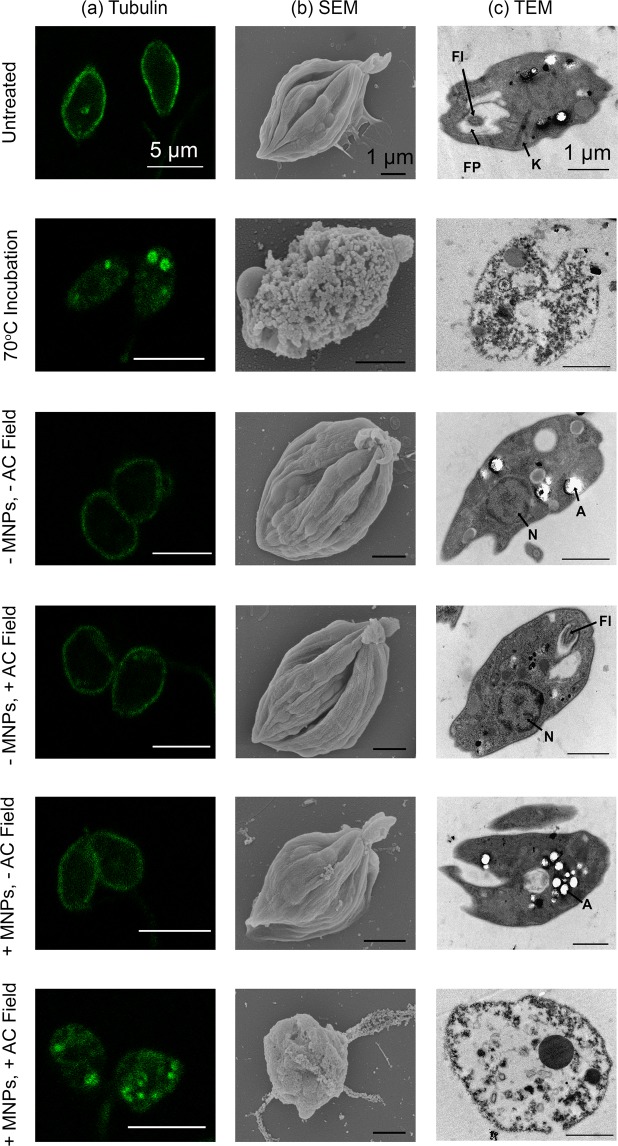
Cutaneous leishmaniasis is a neglected tropical disease characterized by disfiguring skin lesions. Current chemotherapeutic options depend on toxic, expensive drugs that are both difficult to administer and becoming less effective due to increasing levels of resistance. In comparison, thermotherapy displays greater patient compliance and less adverse systemic effects, but there are still significant issues associated with this. The procedure is painful, requiring local anaesthetic, and is less effective against large lesions. Using nanoparticles to controllably generate heat in a localized manner may provide an alternative solution. Here we evaluate magnetic hyperthermia, using iron oxide magnetic nanoparticles, as a localized, heat-based method to kill the human-infective parasite in vitro. We assessed the effectiveness of this method against the differentiated, amastigote form of the parasite using three distinct viability assays: PrestoBlue, Live/Dead stain and a novel luciferase-based assay. Changes in amastigote morphology and ultrastructure were assessed by immunofluorescence, scanning and transmission electron microscopy. Our findings show that magnetic hyperthermia is an effective method to kill host-infective amastigotes, with morphological changes consistent with heat treatment. This method has the potential to be a step-change for research into new therapeutic options that moves away from the expensive chemotherapeutics currently dominating the research climate.
皮肤利什曼病是一种被忽视的热带病,其特征是毁容性皮肤损伤。目前的化学治疗选择依赖于毒性大、价格昂贵的药物,这些药物不仅难以管理,而且由于耐药性的增加,效果越来越差。相比之下,热疗显示出更高的患者依从性和更少的全身不良反应,但仍存在一些重大问题。该程序很痛苦,需要局部麻醉,并且对大的病变效果较差。使用纳米颗粒以可控的方式在局部产生热量可能是一种替代方法。在这里,我们评估了铁氧化物磁性纳米颗粒的磁热疗作为一种局部的基于热的方法,用于体外杀死感染人类的寄生虫。我们使用三种不同的生存能力测定法(PrestoBlue、Live/Dead 染色和新型基于荧光素酶的测定法)评估了这种方法对寄生虫分化的无鞭毛体形式的有效性。通过免疫荧光、扫描和透射电子显微镜评估无鞭毛体形态和超微结构的变化。我们的研究结果表明,磁热疗是一种有效的方法,可以杀死宿主感染的无鞭毛体,形态变化与热疗一致。这种方法有可能成为新的治疗选择研究的重大突破,摆脱目前主导研究环境的昂贵化疗药物。