Lasko Kristofer, Vadrevu Krishna P, Tran Vinh T, Ellicott Evan, Nguyen Thanh T N, Bui Hung Q, Justice Christopher
Department of Geographical Sciences, University of Maryland, College Park, MD 20742, United States of America.
Earth Science Office, NASA Marshall Space Flight Center, Huntsville, AL, United States of America.
Environ Res Lett. 2017 Aug;12(8):085006. doi: 10.1088/1748-9326/aa751d. Epub 2017 Aug 10.
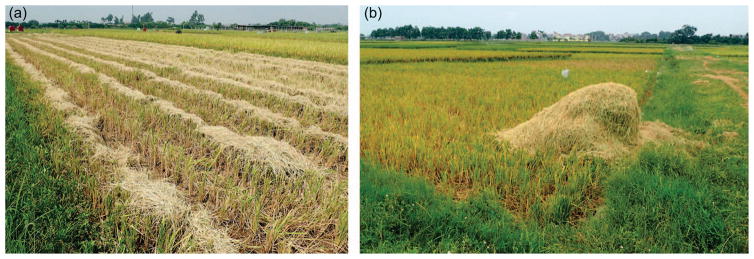
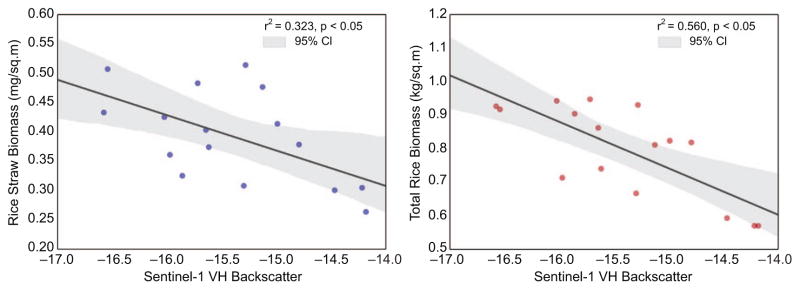
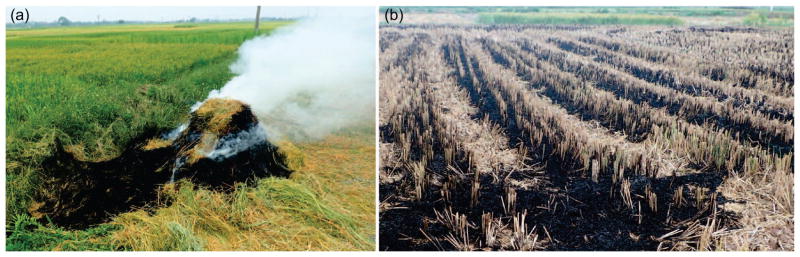
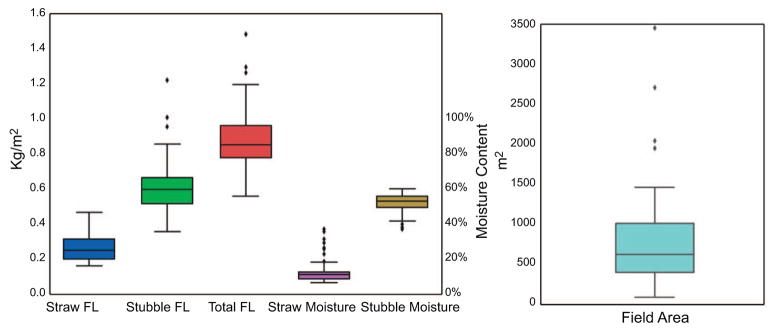
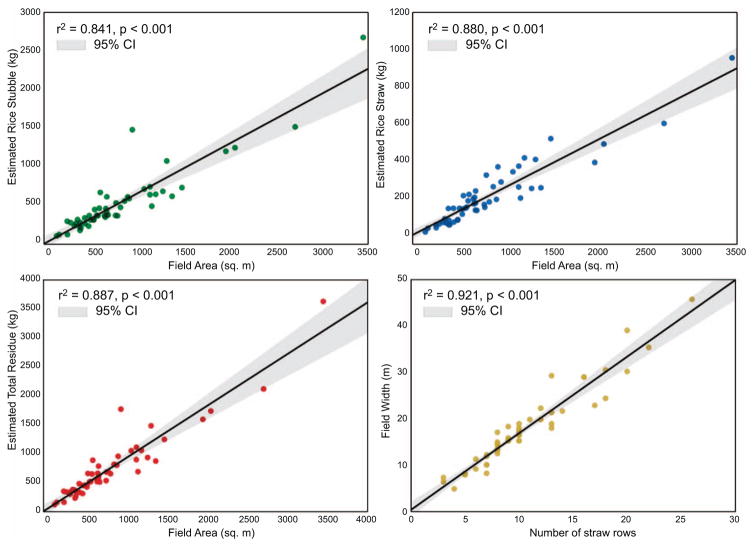
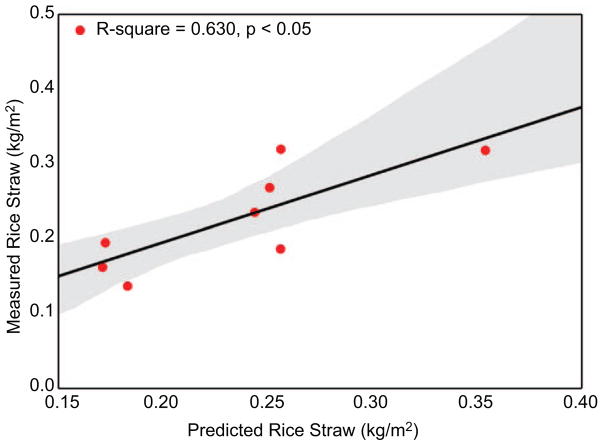
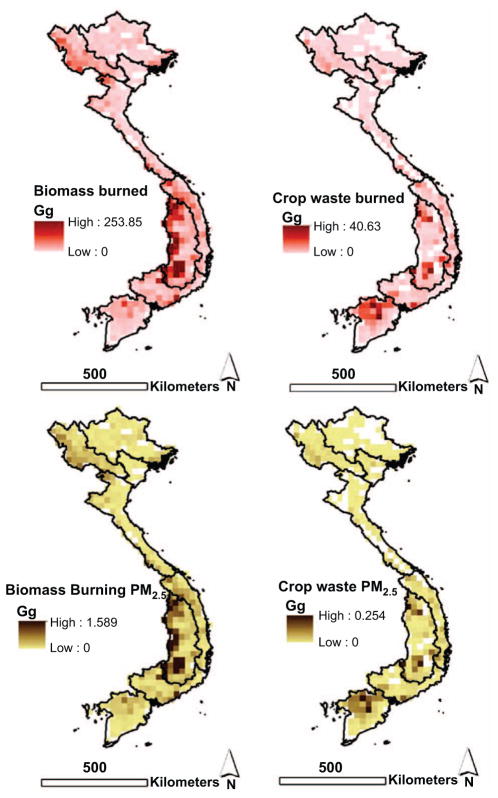
In this study, we estimate rice residue, associated burning emissions, and compare results with existing emissions inventories employing a bottom-up approach. We first estimated field-level post-harvest rice residues, including separate fuel-loading factors for rice straw and rice stubble. Results suggested fuel-loading factors of 0.27 kg m (±0.033), 0.61 kg m (±0.076), and 0.88 kg m (±0.083) for rice straw, stubble, and total post-harvest biomass, respectively. Using these factors, we quantified potential emissions from rice residue burning and compared our estimates with other studies. Our results suggest total rice residue burning emissions as 2.24 Gg PM, 36.54 Gg CO and 567.79 Gg CO for Hanoi Province, which are significantly higher than earlier studies. We attribute our higher emission estimates to improved fuel-loading factors; moreover, we infer that some earlier studies relying on residue-to-product ratios could be underestimating rice residue emissions by more than a factor of 2.3 for Hanoi, Vietnam. Using the rice planted area data from the Vietnamese government, and combining our fuel-loading factors, we also estimated rice residue PM emissions for the entirety of Vietnam and compared these estimates with an existing all-sources emissions inventory, and the Global Fire Emissions Database (GFED). Results suggest 75.98 Gg of PM released from rice residue burning accounting for 12.8% of total emissions for Vietnam. The GFED database suggests 42.56 Gg PM from biomass burning with 5.62 Gg attributed to agricultural waste burning indicating satellite-based methods may be significantly underestimating emissions. Our results not only provide improved residue and emission estimates, but also highlight the need for emissions mitigation from rice residue burning.
在本研究中,我们估算了水稻秸秆残留量、相关燃烧排放,并采用自下而上的方法将结果与现有排放清单进行比较。我们首先估算了田间层面的收获后水稻秸秆残留量,包括稻草和稻茬各自的燃料负荷因子。结果表明,稻草、稻茬和收获后生物质总量的燃料负荷因子分别为0.27千克/平方米(±0.033)、0.61千克/平方米(±0.076)和0.88千克/平方米(±0.083)。利用这些因子,我们对水稻秸秆燃烧的潜在排放进行了量化,并将我们的估算结果与其他研究进行了比较。我们的结果表明,河内省水稻秸秆燃烧的总排放量为2.24千兆克颗粒物、36.54千兆克一氧化碳和567.79千兆克二氧化碳,显著高于早期研究。我们将更高的排放估算归因于改进后的燃料负荷因子;此外,我们推断,一些依赖残留物与产品比率的早期研究可能低估了越南河内水稻秸秆排放量达2.3倍以上。利用越南政府的水稻种植面积数据,并结合我们的燃料负荷因子,我们还估算了越南全国的水稻秸秆颗粒物排放量,并将这些估算结果与现有的全源排放清单以及全球火灾排放数据库(GFED)进行了比较。结果表明,水稻秸秆燃烧释放了75.98千兆克颗粒物,占越南总排放量的12.8%。GFED数据库显示,生物质燃烧排放42.56千兆克颗粒物,其中5.62千兆克归因于农业废弃物燃烧,这表明基于卫星的方法可能大大低估了排放量。我们的结果不仅提供了改进后的残留量和排放估算,还突出了减少水稻秸秆燃烧排放的必要性。